

A cohort report describes three strength recovery patterns after patellofemoral replacement and why it may help to track strength alongside pain.





On November 23, 2026, BIOENGINEER.ORG reported that quadriceps strength returned at different rates after patellofemoral joint replacement. In the reported study, the link between strength and pain at the front of the knee was much stronger at 24 months than it was at six weeks.
Pain declined in all three strength recovery groups described in the report. But one group remained below its pre-surgery strength level at the final follow-up. That difference is worth paying attention to: a lower pain score can be good news even when strength has not returned to where it was before surgery.
The American Academy of Orthopaedic Surgeons (AAOS) already addresses quadriceps strength in its OrthoInfo guidance on patellofemoral replacement. It says a physical therapist provides exercises to help restore that strength and maintain knee range of motion. It also advises patients to do the exercises as directed by their therapist.
Those are two goals: rebuilding strength and keeping the knee moving through its range. The new report asks a different question. It looks at how measured strength changed after surgery and whether people with greater strength tended to report less pain at different points in recovery. It does not change what AAOS advises about following a therapist's exercise plan.
BIOENGINEER.ORG describes three groups based on how quadriceps strength changed over time. The labels summarize what happened in this cohort. The biggest early strength loss and the longest time below pre-surgery strength were both reported in the slow recovery group.
At 24 months, the report listed quadriceps peak torque of 1.32 Nm/kg in the fast group, 1.19 Nm/kg in the moderate group and 0.84 Nm/kg in the slow group. Peak torque here measures how strongly the quadriceps could act at the knee relative to body mass. Returning to pre-surgery strength means getting back to the group's starting point. It does not mean every group reached the same strength level.
According to the report, the correlation between strength and pain was −0.070 at six weeks and −0.606 at 24 months. The first figure shows little relationship between the two measures at that visit. By the final visit, people with higher measured strength tended to report lower pain. These figures compare people at each visit rather than showing how much pain changed when any one person gained strength.
The group averages show why it helps to look at both measures. At 24 months, average pain scores on a 0 to 10 scale were 2.67 in the fast group, 2.50 in the moderate group and 3.77 in the slow group. The slow group had the lowest strength and the highest average pain. But the fast group had the highest strength and did not have the lowest average pain.
BIOENGINEER.ORG says the study followed 139 adults who underwent primary patellofemoral joint replacement. Their mean age was 59.2 years. The findings describe people who had that specific procedure, not people recovering from every type of knee surgery.
Participants were assessed before surgery and again at six weeks, three months and six months. Follow-up assessments also took place at 12 months and 24 months. That schedule gave the researchers a starting measurement and several later ones. In the reported results, all groups lost strength early on. The later visits showed how differently that strength returned.
A useful distinction for a follow-up visit is how the knee feels versus what it can do. A pain score gives the care team information about symptoms. A strength check answers a different question, while a conversation about daily activities helps put the number in context. Less pain is progress worth mentioning even if getting strength back is still a goal.
It may help to think of a movement or activity that matters in daily life. If it feels easier, that is useful to mention even if the knee still hurts. If it still feels difficult despite less pain, that is worth bringing up too. Neither observation has to be turned into a verdict about how recovery is going overall.
For readers who want to return to exercise or recreation, one question for the physical therapist is how the team will judge progress toward that activity. Another is what a strength check would add to what the reader notices in daily life. ReboundBody's guides to tracking readiness for more activity and looking beyond pain when returning to exercise offer context for that conversation.
The findings come from BIOENGINEER.ORG's secondary account rather than an independently verified journal article. The outlet reports that the study took place at one center and that 7.9% of participants were lost to follow-up. It also says the authors treated their early prediction model as exploratory and called for it to be checked in separate groups across multiple centers. The reported recovery groups are not a personal timetable.
The study tracked people over time. It did not establish that gaining strength caused their pain to decline. The report says the passage of time was also linked with lower pain. Another analysis did not find clear statistical evidence that rehabilitation intensity affected pain through changes in strength. The findings leave open how much of the pain improvement was due to strength returning and do not establish a strength target for pain relief.
Write down one question for your next follow-up: “How will we track my quadriceps strength alongside my knee pain?”
A lower knee pain score and a higher quadriceps strength reading mark different kinds of progress. When online exercise and recovery claims treat them as the same result, ReboundBody explains strength rebuilding and return to activity so active adults can discuss what those measures mean for their goals with their care team.

Follow ReboundBody for practical articles on injury recovery, rehabilitation, mobility and rebuilding strength. New posts turn research into clear ideas for the road back to activity after injury or surgery.


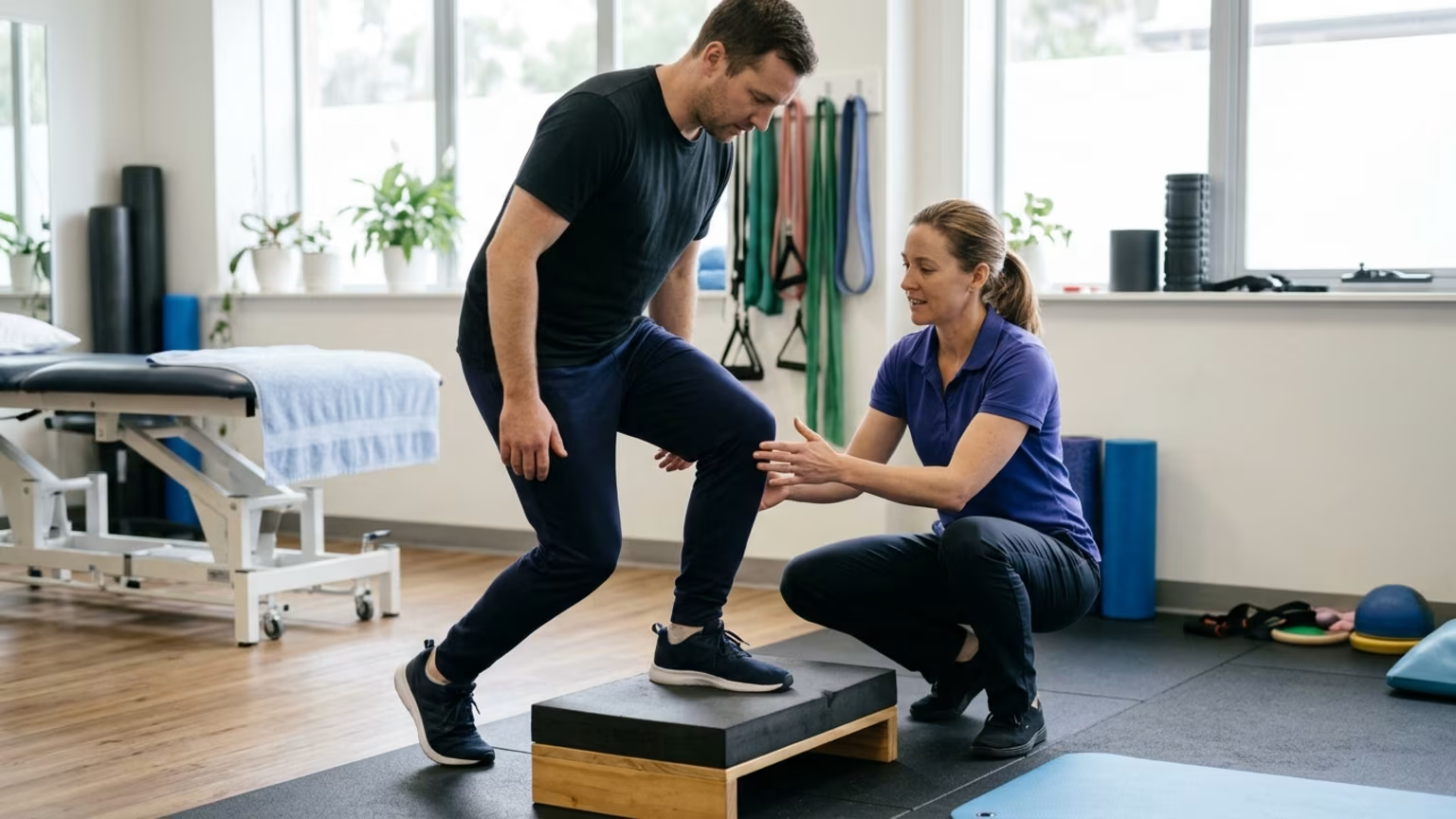


Read practical guidance on injury recovery, rehabilitation, mobility and rebuilding strength as you work your way back to activity.
Explore Resources