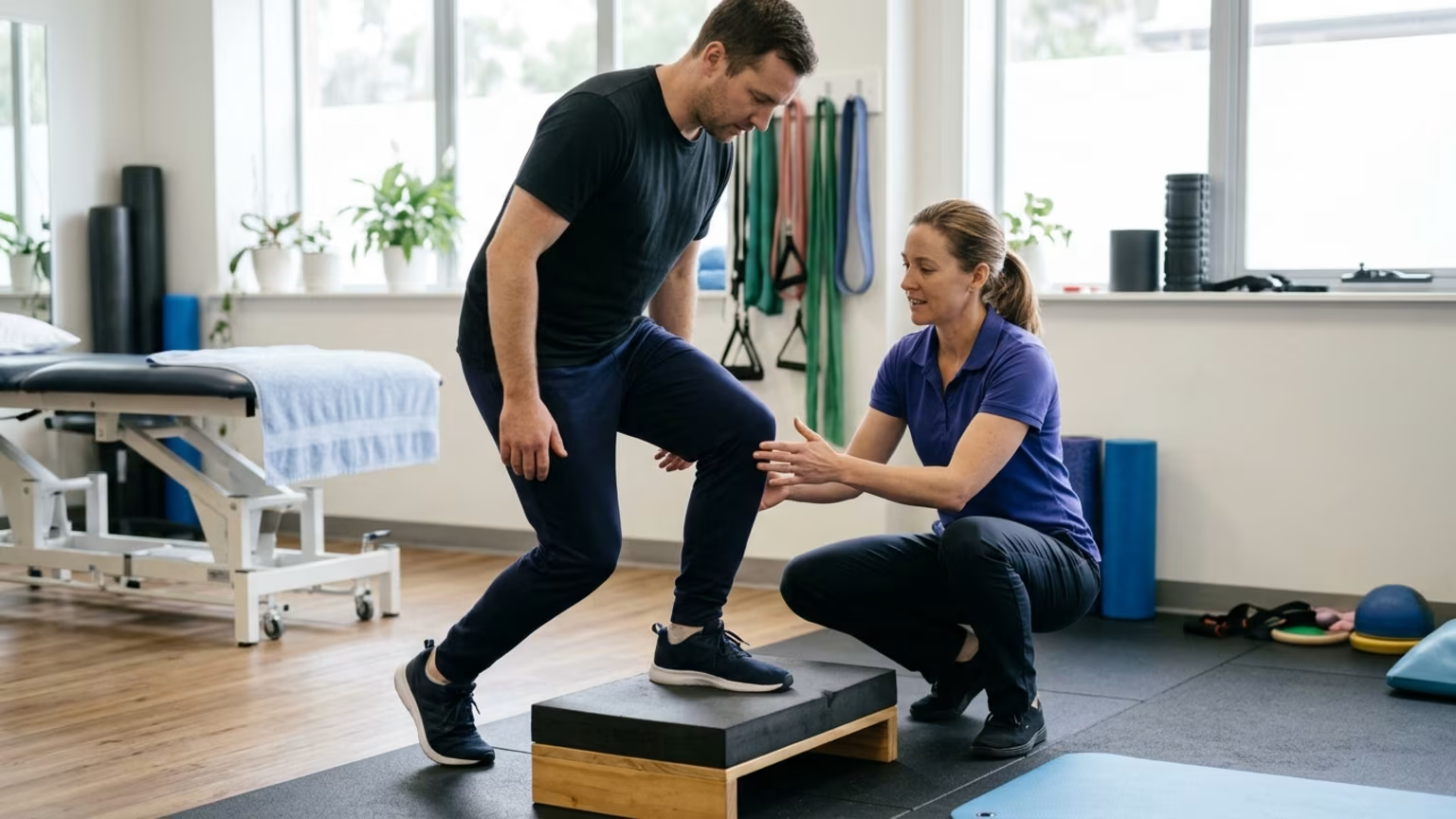

CN Physiotherapy explains how strength, mobility, coordination, and endurance can inform a gradual return to activity after a soft-tissue injury.





On November 23, 2026, CN Physiotherapy published “Muscle Strain or Something More? How to Recognize and Treat Soft-Tissue Injuries.” The clinic’s educational article recommends looking at strength, mobility, coordination, and endurance when judging whether someone is ready for demanding work or sport. Rather than relying on a set return date, it puts the focus on what the person can do and what the activity will ask of them.
The article is not a formal clinical guideline or a research study. Its value is in how it explains the gap between starting rehabilitation and getting back to a demanding activity. A date tells you when you hope to be back. A review of function asks what you’re ready to do now and where there’s still work to do.
The idea of looking beyond the calendar is not new. Earlier recommendations on hamstring strain rehabilitation included an assessment of function as part of the return-to-sport decision. CN Physiotherapy brings that idea into a broader discussion of soft-tissue injury. The clinic notes that these injuries can happen suddenly or develop after repeated loading without enough recovery.
It helps to separate the questions that come up during recovery. “How long has it been?” is a question about time. “Does it hurt less?” is a question about symptoms. “Can I handle what this activity requires?” is a question about function.
Those questions are related, but the answers don’t always settle the same decision. Having a date in mind may help with planning for work or recreation. It doesn’t show whether a movement is well controlled or whether someone can keep doing it for as long as the activity requires. That distinction is at the heart of using milestones alongside recovery timelines.
CN Physiotherapy describes a progression from low-load muscle contractions toward resistance exercises, movements that resemble the intended activity, and faster movements. The article also discusses restoring mobility and building balance and coordination. In plain terms, the aim is not just to make an exercise harder. It is to make the work more relevant to what the person wants to get back to.
Resistance, speed, and control describe different parts of a task. Being able to do a movement slowly tells you something about how it goes at that pace. It doesn’t answer how it would go faster or under greater resistance. Likewise, doing a movement once is a different question from being able to repeat it for as long as the activity calls for.
A 2026 ICCUS Society consensus statement offers a more specific example for athletic hamstring injuries. The panel supports progressive loading based on each athlete’s progress. It recommends adding running and agility work gradually when relevant and weighing strength, endurance, the demands of the sport, and the athlete’s readiness. The panel also recommends monitoring symptoms alongside function and objective testing. Pain still has a place in the decision. It just doesn’t answer every question about readiness.
The ICCUS Society statement concerns athletes recovering from hamstring injuries. Running and changing direction make sense to consider when those movements are part of the sport an athlete wants to return to. They aren’t automatic milestones for an adult returning to ordinary daily activity. The panel notes limits to applying its advice more widely, so its sport-specific assessments shouldn’t be carried over to a different injury or to recovery after surgery.
The clinic article speaks more broadly about soft-tissue injuries. Its examples are most useful as a way to think about the next demand, not as a sequence everyone needs to follow. For demanding work, the question might be whether the person can sustain the movements the job calls for. For recreation, the question might be whether the activity calls for a faster pace than the person has practiced in rehabilitation.
In each case, starting with the activity you want to return to gives the conversation a clearer focus. Returning to some parts of an activity is a different goal from returning to all of it at the usual pace or for the usual length of time.
“Am I ready?” can be hard to answer without naming what comes next. A more focused discussion starts with the activity and the part of it that’s still in question. That might be moving against resistance, getting enough motion for the task, moving with control, or keeping up the effort. A qualified clinician can help decide which of those demands matters for the injury and the goal.
The areas CN Physiotherapy highlights give readers a vocabulary for that discussion:
These are discussion prompts, not tests to try at home. They can help distinguish a question about raising resistance from a question about moving faster or doing an activity for longer. A clinician can explain which change is relevant and what they would look for before considering it. That’s more specific than treating a return to activity as one decision about everything the person used to do.
CN Physiotherapy also stresses the need to distinguish a possible strain from a more serious injury. If symptoms persist or worsen, or it’s unclear whether the injury is a strain, clinical assessment is more appropriate than trying the activity at full intensity to see how it goes.
A functional assessment can help inform the next step. It does not confirm complete tissue healing or predict an exact recovery date. The hamstring recommendations also don’t establish that any one test can settle whether someone is ready to return. A result is most useful when the clinician can explain which part of the activity it addresses.
That leaves room for a useful answer even if the full return is still uncertain. A visit may clarify one part of the task while leaving another open. Knowing which demand still needs to be assessed gives the next conversation a clearer purpose than simply setting a new date.
Today, write down one question for your next visit: For the activity I want to get back to, what would you look for before I take the next step?
The clinician overseeing rehabilitation judges which signs of progress matter for the next activity. ReboundBody explains how recovery milestones relate to strength, mobility, and return to activity. Its independent articles give active adults in midlife and later life plain-language context for conversations about progress and setbacks with their healthcare team.

Follow ReboundBody for practical articles on injury recovery, rehabilitation, mobility and rebuilding strength. New posts turn research into clear ideas for the road back to activity after injury or surgery.


Read practical guidance on injury recovery, rehabilitation, mobility and rebuilding strength as you work your way back to activity.
Explore Resources