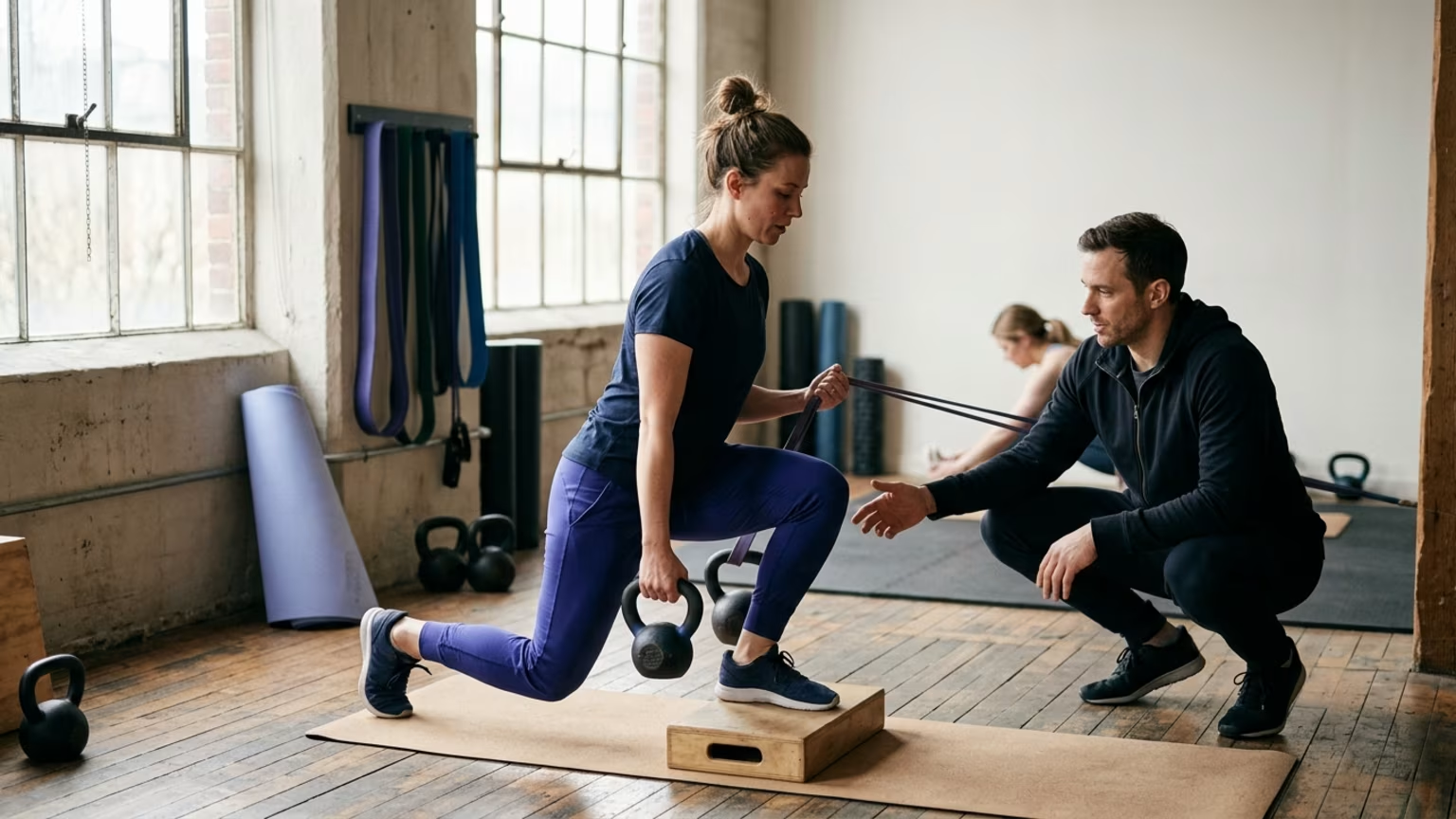

A 2021 review found no significant difference between strength training and stretching for improving range of motion. Learn what this means for your recovery.





You sit on the living room floor pulling a resistance band around your foot. Your knee feels stiff after a long period of inactivity. You lean forward until you feel a distinct pull in the back of your leg. You hope this daily tension will eventually translate into easier walking.
This common scene highlights a familiar approach to physical recovery. Many active adults assume that stretching is the best way to regain lost movement. When a joint feels tight, the standard advice is often to stretch the surrounding tissues. We are taught that pulling a muscle is the primary method for returning it to a normal length.
This belief makes intuitive sense for anyone recovering from a physical setback. A stiff muscle often feels like a tight rubber band that simply needs pulling. It is very natural to worry about how strength and fitness change during an exercise break. Stretching offers an immediate physical sensation that feels productive. It gives you something highly actionable to do when you feel frustrated by a lack of progress.
Stretching is also accessible for most adults navigating physical recovery. It requires very little equipment and can be performed almost anywhere. Many people rely on it as their main tool for managing daily stiffness. They wake up, feel tightness in their joints and immediately begin a familiar stretching routine.
A 2021 systematic review and meta-analysis evaluated different methods for improving range of motion. The researchers compared the effects of strength training with the effects of stretching. This review included 11 randomized controlled trial articles and looked at 452 participants. The goal was to see if one method produced better mobility outcomes than the other.
The authors of the review reported an interesting finding regarding these two approaches. They found that the estimated difference in range of motion improvement between strength training and stretching was not statistically significant. The effect size was recorded as negative 0.22. The 95 percent confidence interval ranged from negative 0.55 to 0.12, and the p-value was 0.206.
In statistical terms, this means the researchers saw no meaningful difference between the two methods for this outcome. The authors reported no difference between the approaches in their overall effect on range of motion. Neither approach proved definitively superior for increasing how far a joint could move. The review also looked deeper into specific types of movement to see if nuances existed.
The researchers conducted subgroup analyses to test the results under different physical conditions. They checked for differences based on active versus passive range of motion. They also looked closely at specific movement patterns and individual joint analyses. Across all of these targeted subgroups, the review found no between-approach difference.
The results remained consistent regardless of the specific joint or the type of movement being measured. The researchers also noted no difference when adjusting for the risk of bias in the included trials. This suggests that strength training might play a role similar to stretching for overall movement gains. However, this finding is based on a specific set of trials rather than a broad clinical population.
The idea that stretching alone handles mobility is a persistent concept in fitness and recovery. People often categorize strength training and flexibility as completely separate physical qualities. Stretching is usually viewed as a way to loosen tight joint structures. Strength training is traditionally seen as a way to make tissues stiffer or more rigid.
This strict division oversimplifies how our bodies actually work during daily physical activities. Building consistent physical capacity requires muscles to move through different functional lengths. When you lift a weight, the opposing muscles must lengthen to allow the movement to happen. The body learns to control that new movement, which is why range of motion is not the whole story.
Historical fitness programs often reinforced this artificial divide between strength and flexibility. Stretching was assigned exclusively to the warm-up or cool-down phases of a workout. Resistance exercises were reserved solely for building muscle mass and force production. This history helps explain why many recovering adults hesitate to use strength exercises for mobility purposes.
Furthermore, early rehabilitation experiences often focus heavily on regaining basic motion through passive methods. A physical therapist might manually stretch a joint before the patient is allowed to lift weights. This chronological order can create a lasting impression that stretching is the foundation of all movement. It is easy to see why people continue prioritizing stretching long after their initial injury has healed.
While the 2021 review provides a helpful check on the evidence, it requires careful interpretation. The researchers explicitly cautioned that the included studies were very heterogeneous. This means the individual trials varied significantly in their study designs and training protocols. The participant populations also differed widely across the 11 randomized trial articles.
Because of this significant variation, the authors stated that further research was warranted. The review page does not provide a breakdown showing how many participants were recovering from orthopedic injury. It also does not say how many participants were recovering from surgery. Without this detail, we cannot confidently claim that the findings represent adults aged 35 to 75 with orthopedic problems.
The available summary simply does not establish that these findings apply directly to rehabilitation patients. The results also focus entirely on range of motion outcomes. The review does not tell us if either approach is better for pain relief or tissue healing. It also does not measure return to sport readiness, fall prevention success or post-surgical outcomes.
Another limitation is the presence of other cited but inaccessible research. The source material identifies a 2023 systematic review and meta-analysis on resistance training and range of motion. However, the results of that 2023 review are not provided in the available text. Because those findings are missing, they should not be quoted or used to guide your recovery plan.
A defensible takeaway from the research is that stretching is not your only option. In the reviewed trials, strength training and stretching did not differ significantly for improving range of motion. This finding can prompt a very useful conversation with your physical therapist or doctor. You can discuss whether your specific goal is passive flexibility or active control of your available range.
Passive flexibility refers to how far a joint can be moved by an outside force. Active control refers to your ability to move the joint yourself using your own muscle strength. The evidence summarized here does not actually test that distinction as a specific rehabilitation outcome. However, understanding movement types in rehabilitation is vital for your long-term physical success.
Readers recovering from an injury should treat this review as general context rather than personal advice. It is not personal clearance to change your exercises, alter your physical load or increase your range. The review does not establish an appropriate plan for any specific medical diagnosis. It also does not offer guidance for different stages of post-operative recovery.
You should never use these findings as an excuse to push into painful or restricted movement. The evidence does not justify disregarding the explicit instructions of your surgeon or physical therapist. Rebuilding movement is a complex process that changes depending on the tissues involved. You must create a personal recovery plan that respects your unique medical situation and physical limits.
The 2021 review offers a helpful perspective on how different exercises affect human movement. It challenges the common assumption that static stretching is the only effective route to better mobility. However, the variation in the studied populations limits how confidently this translates to clinical rehabilitation. The available evidence does not support presenting strength training as a universal replacement for prescribed stretching.
The lack of significant difference in the study does not mean the methods are completely interchangeable. Every individual, joint, injury and recovery stage presents unique physical requirements. You might need stretching for certain tight tissues and strengthening for other areas. Finding the right balance requires a thorough evaluation by a qualified healthcare professional.
Your focus should always be on safe and progressive improvement over time. Bring these concepts to your clinical team and ask how they apply to your specific condition. They can help you determine the best mix of stretching and strengthening for your current capacity. Following their professional guidance ensures you rebuild mobility safely and effectively.
Determining whether to prioritize stretching or strength training for joint mobility requires a clear understanding of your physical limits. ReboundBody addresses the fear of reinjury or doing too much too soon by offering evidence-aware context about your recovery options. We explain rehabilitation concepts so you can safely discuss your next steps with your medical provider. Browse Resources

Follow ReboundBody for practical articles on injury recovery, rehabilitation, mobility and rebuilding strength. New posts turn research into clear ideas for the road back to activity after injury or surgery.



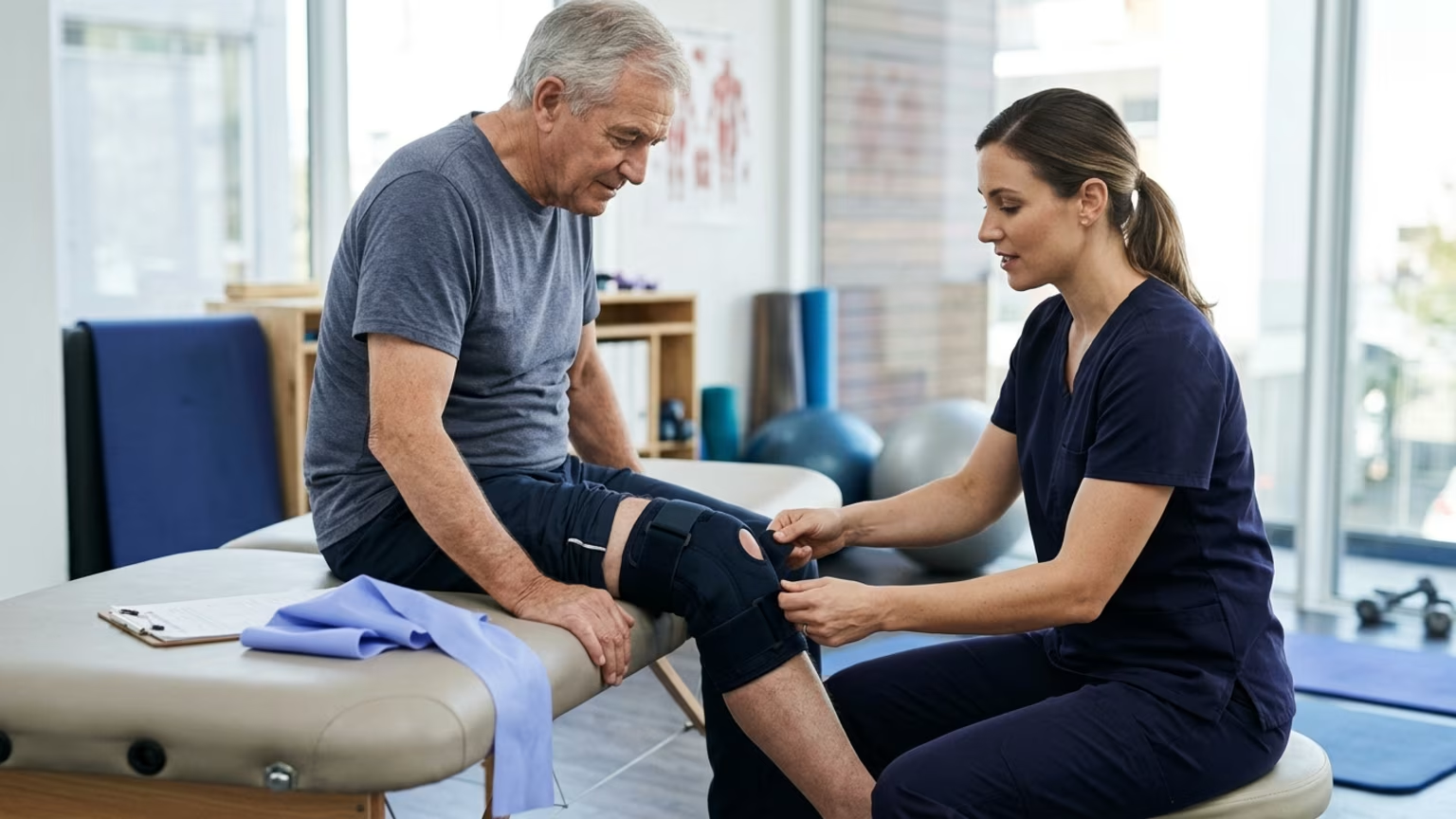
Read practical guidance on injury recovery, rehabilitation, mobility and rebuilding strength as you work your way back to activity.
Explore Resources