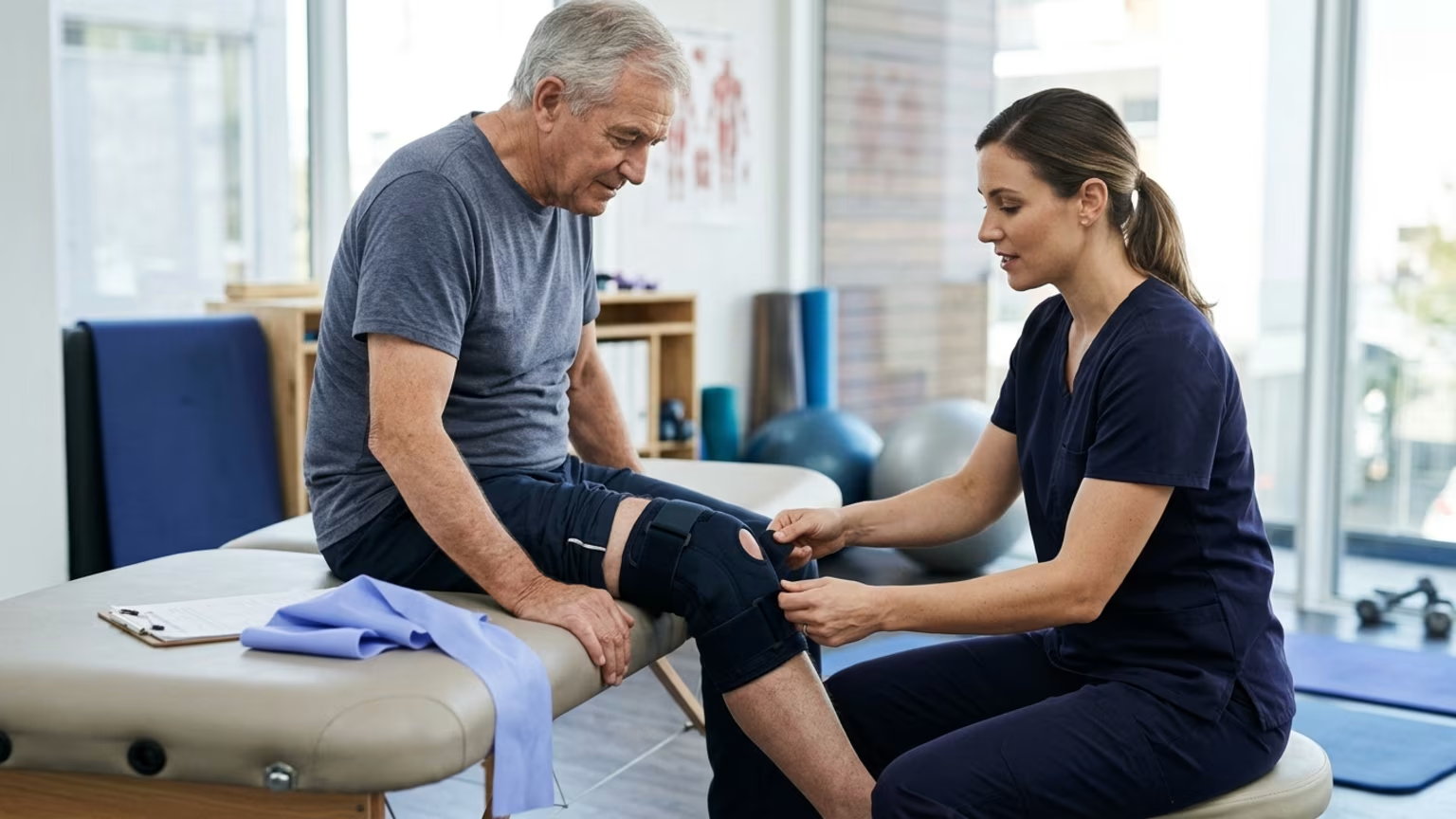

A recent NDTV report on a high-profile knee injury highlights how to safely adapt your physical routine and recognize when to seek medical evaluation.





In October 2026, health coverage from NDTV addressed exercise choices and knee protection after a high-profile fall. NDTV reported that Amitabh Bachchan, age 83, slipped and injured his knee while filming Kaun Banega Crorepati 18. The actor stated that the injury was not severe. However, he noted having a little bit of difficulty standing up after the incident.
As a result of this physical discomfort, the actor delivered his opening television monologue while seated. NDTV used this specific event to outline age-appropriate activity and important knee-protection measures. The resulting health coverage emphasized low-impact activity and building strength around the hips and knees. It also highlighted the importance of adapting any exercise routine to your current physical capacity.
Public conversations about high-profile injuries often provide a helpful starting point for general health education. Seeing a familiar figure modify their activities can encourage others to respect their own physical limitations. It serves as a practical reminder that movement routines must occasionally be adjusted based on daily symptoms. This thoughtful approach helps active adults avoid unnecessary joint irritation during recovery.
A sudden physical setback can cause immediate concern about long-term joint health. People often worry that difficulty standing after an injury proves they have a severe, permanent condition. NDTV cautioned that difficulty standing after an injury does not establish that someone has arthritis. It also does not automatically indicate another age-related joint condition.
It is common to assume that joint pain simply means your cartilage is wearing out. However, NDTV presents knee osteoarthritis as a complex condition involving changes to multiple joint tissues. It is not just a simple mechanical wearing down of the joint surface over time. Instead, the entire joint environment responds to stress, inflammation, and prior injuries.
Understanding these mechanics can help you make better decisions about your daily movement. The article describes specific age-related changes that may affect your overall knee function over time. For example, joint cartilage can become thinner and generally less resilient as we get older. When this protective tissue loses its resilience, the joint may become more sensitive to impact.
Muscles around the knee can also weaken over the years, particularly the quadriceps. NDTV connects these physiological shifts with possible stiffness, daily discomfort, reduced mobility, and less joint stability. These interconnected factors explain why joints often feel stiff after a physical setback and why full recovery requires patience.
New information from medical professionals often helps clarify why certain symptoms occur after a fall. A separate report from The Indian Express quoted Dr. Phadnis explaining the mechanics of post-injury stiffness. Dr. Phadnis noted that difficulty standing can result from pain, swelling, stiffness, or temporary restriction of knee movement. He stated that this difficulty does not automatically indicate a serious injury.
These acute symptoms are often a protective response from your nervous system. The body may restrict movement to prevent further tissue irritation while it assesses the situation. This clinical perspective encourages a more measured response to temporary joint discomfort. The joint may simply need time for the initial inflammation to settle down.
Instead of stopping all movement completely, the focus shifts to careful physical adaptation. NDTV recommends adapting your exercise choices to your age and current fitness level. The coverage also suggests adjusting activities based on your physical condition and any past injuries. Furthermore, it notes that medical conditions should guide these exercise choices.
The article treats this television event as a prompt to adjust activity to present symptoms and ability. It advises against treating age alone as a strict exercise prescription for every individual. This individualized approach helps people find a safe baseline for their daily movement. It allows recovering adults to maintain activity without overloading their sensitive joints.
These recommendations apply broadly to adults managing joint wear or navigating recent physical setbacks. The NDTV article identifies previous knee injuries and excess body weight as common factors associated with joint problems. Repetitive joint stress and muscle weakness also play a significant role. The article notes that family history is another important element to consider.
People managing any of these risk factors must pay close attention to their daily joint function. The advice provides a highly sensible framework for adults in midlife and beyond. It encourages a proactive approach to maintaining physical capacity as the body changes. Understanding these specific risk factors is a key part of managing your reinjury risk during active rehabilitation.
However, joint protection is not exclusively a concern for older adults. NDTV notes that younger people can also develop osteoarthritis. This is particularly true after a significant joint injury occurs early in life. Anyone who has experienced a structural knee issue should carefully consider how they plan their activity.
When dealing with a sensitive knee issue, selecting the right type of movement is critical. NDTV specifically names walking, swimming, and cycling as effective lower-impact options. These specific activities may be easier on painful knees for some people. Lower-impact activity can help maintain cardiovascular health without overloading a healing joint.
Walking provides a functional way to maintain joint mobility and overall health. Swimming removes almost all weight-bearing stress while still allowing for full joint articulation. Cycling offers smooth, predictable movement that can help strengthen the legs with very minimal impact. However, these exercises must still be carefully adapted to a person’s individual fitness level.
Building proper physical support around the joint is another vital step in the recovery process. NDTV highly recommends specific strength and mobility work to protect the knee area. The coverage emphasizes warming up properly and strengthening muscles around the hips and knees. The hip muscles help control the alignment of the leg during walking and standing.
Strong hip and thigh muscles help absorb the physical forces that would otherwise travel directly into the knee joint. When the hips are strong, they prevent the knee from experiencing unnecessary rotational stress. This critical structural support is exactly why gradual strength progression in rehabilitation is so highly encouraged by professionals.
Pacing your activity is just as important as choosing the right lower-impact exercises. NDTV explicitly advises against training through significant pain during your physical routine. An occasional ache after an unusual activity is not necessarily a serious medical problem. Some mild soreness is often an expected part of rebuilding physical capacity.
However, pushing past sharp or worsening pain can severely delay the healing process. Adapting your exercise to your current daily symptoms is the safest way to maintain long-term physical capacity. It requires paying close attention to how your body responds both during and after the workout.
Because multiple tissues are involved in joint health, the physical symptoms can vary widely from day to day. NDTV lists several possible symptoms associated with knee osteoarthritis. These include general pain, stiffness, localized swelling, and a noticeably reduced range of motion. Patients may also experience a feeling that the knee is weak or simply gives way during activity.
While general movement advice is helpful, it has clear clinical limitations. The NDTV article does not provide a prescribed exercise progression, specific sets, or repetitions. It also does not offer a defined timeline for recovery or a specific return-to-sport protocol. This means individuals must still rely on personal assessment and professional guidance for structured programming.
The general advice provided in health coverage is never a substitute for individualized clinical guidance. This is especially true after a surgical procedure or a significant structural injury. Every recovery journey requires an approach tailored to the person's unique anatomical needs. Moving forward safely requires ongoing communication with a qualified medical professional.
There are specific physical warning signs that require immediate professional medical attention. NDTV states that persistent pain, localized swelling, severe stiffness, and joint instability warrant medical assessment. Restricted movement is another clear reason to seek a professional clinical evaluation.
After an acute injury, the article flags difficulty bearing weight or an inability to move the knee normally. Significant swelling in the days following an incident should also be reviewed. A knee that gives way unexpectedly is listed as a critical reason to seek immediate evaluation. These symptoms often point to issues that require targeted medical intervention.
The report in The Indian Express also quoted Dr. Phadnis regarding these specific warning signs. He advised medical evaluation for severe pain, significant swelling, difficulty bearing weight, and instability. He also noted that physical locking of the joint requires a professional review.
It is important to differentiate between expected exercise soreness and actual clinical warning signs. Expected soreness typically fades after a few days of rest or light movement. Warning signs persist and often disrupt your normal mechanical function during daily tasks. Symptoms like structural locking or sudden giving way suggest that the internal joint structures need review.
Recognizing these specific differences helps prevent minor physical issues from becoming severe complications. A qualified healthcare professional can help interpret these complex joint symptoms safely and accurately. They can perform physical tests to determine if difficulty standing is due to temporary stiffness or a structural problem.
Taking this essential step ensures that your recovery efforts are safe, effective, and properly monitored over time. Professional guidance removes the guesswork from your rehabilitation process. It allows you to focus on healing without the constant worry of causing further structural damage.
Take a moment today to review your weekly physical routine and identify any exercises that force you to push through significant joint pain. Replace one of those movements with a lower-impact option to see how your knee responds.
Assuming that every instance of post-injury stiffness indicates severe structural damage can lead to unnecessary fear and physical inactivity. ReboundBody addresses the difficulty understanding clinical terminology and research findings, offering independent editorial guidance to help you properly interpret joint symptoms and safely adjust your physical routines. Browse Resources

Follow ReboundBody for practical articles on injury recovery, rehabilitation, mobility and rebuilding strength. New posts turn research into clear ideas for the road back to activity after injury or surgery.



Read practical guidance on injury recovery, rehabilitation, mobility and rebuilding strength as you work your way back to activity.
Explore Resources