

Recent guidance from UT Southwestern emphasizes that movement mechanics and strength, not just pain relief, shape knee recovery and long-term joint health.





A clinical feature published on October 8 2026 outlines how physical movement mechanics shape long-term knee recovery. The Newswise article was authored by UT Southwestern sports medicine physician Kelechi Okoroha. He serves as chief of the Division of Sports Medicine and is an associate professor of orthopaedic surgery. The central update clarifies that general sports participation is not associated with a higher risk of osteoarthritis. However, specific joint injuries can increase this risk for active adults.
The UT Southwestern article identifies several specific injuries that may elevate the risk of future arthritis. These physical setbacks include anterior cruciate ligament tears, meniscus tears, articular cartilage defects, and fractures involving the joint line. Experiencing one of these specific injuries changes the structural environment of the joint. The guidance helps separate normal physical activity from the unique consequences of severe joint trauma.
Active adults often worry that years of playing sports will inevitably destroy their cartilage. This fear frequently stems from older medical models that viewed joint health simply as mechanical wear and tear. Under that previous mindset, patients were often told to stop moving to preserve their joints. Earlier guidance frequently treated knee pain as an isolated symptom to be managed with passive rest.
Rehabilitation efforts historically prioritized basic pain relief and immediate tissue healing over restoring complex movement patterns. We now understand that the biological environment of the joint changes significantly after an initial injury. Okoroha describes several specific contributors to post-injury arthritis that go beyond simple wear and tear. These primary factors include the initial physical trauma and the natural inflammation that occurs during early healing.
The formation of scar tissue can also alter how joint structures glide past one another. Furthermore, changes in joint stability after recovery can place abnormal stress on the surrounding cartilage. These mechanical shifts explain why a past injury might influence joint health decades later. A joint that heals with altered mechanics will experience different daily physical forces.
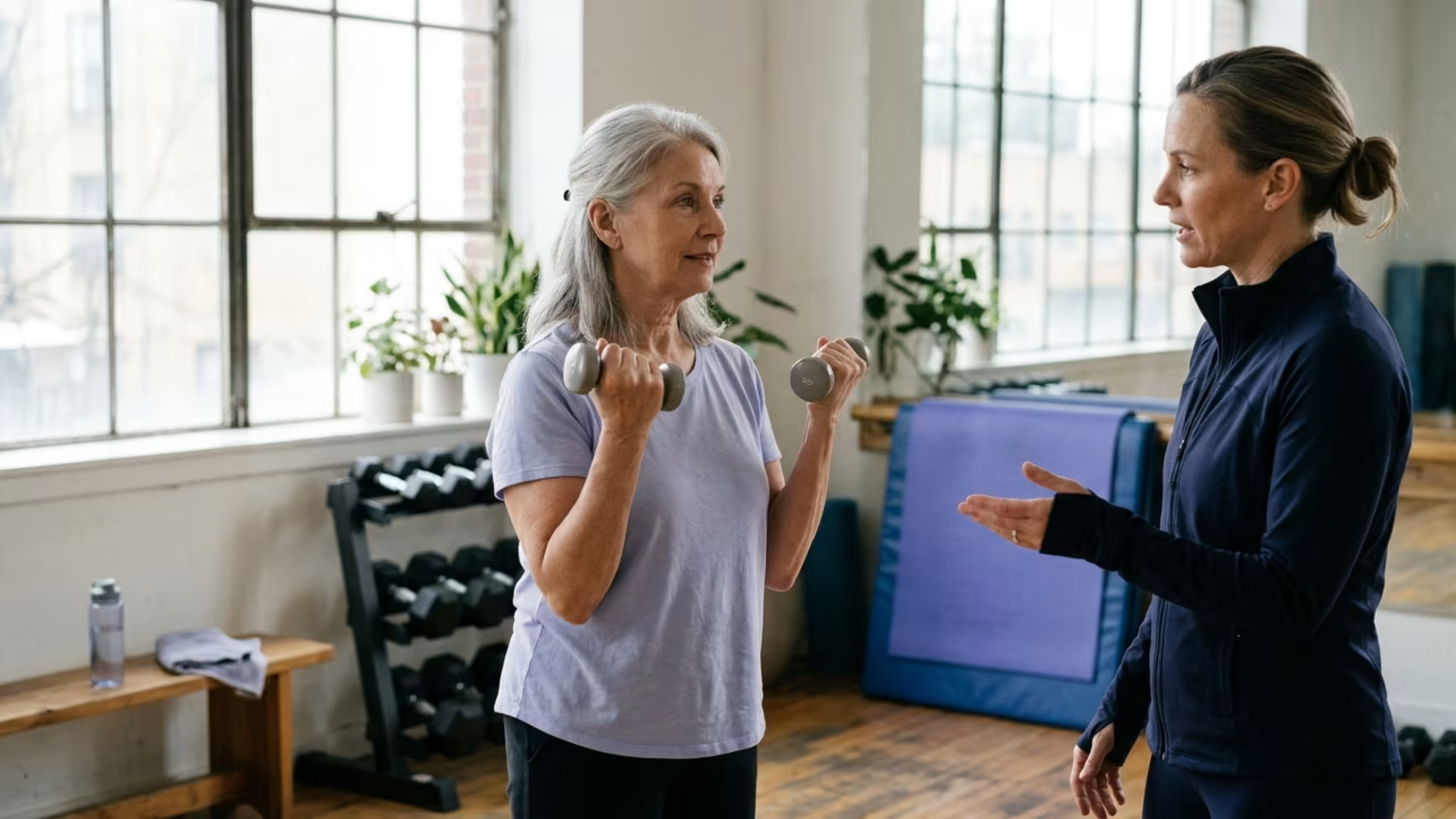
The recent UT Southwestern guidance emphasizes a functional approach to physical rehabilitation. The focus shifts toward actively optimizing how the leg operates in daily life. Okoroha notes that physical therapy should target strength, range of motion, swelling, and movement patterns. Following a surgical procedure, restoring proper joint mechanics is a primary and stated goal.
This comprehensive approach ensures that the entire leg works together to support the recovering knee. The article outlines specific training examples that address multiple components of human movement. A successful program requires dedicated strength work for the core, glutes, quadriceps, and hamstrings. These specific muscle groups work in harmony to absorb physical shock and keep the leg aligned.
The guidance also highlights the importance of practicing balance, landing mechanics, cutting motions, and overall body control. Recovering patients are advised to incorporate injury prevention and gradual recovery strategies by slowly increasing workout intensity and volume. Cross-training is also highly recommended to maintain fitness without overloading a single joint. This structured physical approach prevents the body from relying on poor compensatory habits.
Beyond postoperative care, the UT Southwestern feature strongly recommends the use of prehabilitation. Prehabilitation involves engaging in targeted physical therapy before a scheduled surgery. This proactive step helps prepare both the physical joint and the patient for the upcoming recovery process. It allows patients to enter the operating room with optimal physical capacity.
Patients who begin their surgical journey with better motion and muscular strength often experience smoother recoveries. While prehabilitation cannot guarantee a perfect outcome, establishing better tissue capacity beforehand provides a stronger foundation. This proactive concept changes how patients approach their surgical timelines and preparation. Active preparation replaces passive waiting during the weeks leading up to an operation.
This clinical guidance applies directly to adults managing the physical aftermath of severe knee trauma. It is highly relevant for individuals recovering from complex structural damage like meniscus tears or joint fractures. The advice is also tailored for patients actively preparing for an upcoming orthopaedic procedure. It helps these individuals understand arthroscopic knee surgery recovery timelines by highlighting the work required before the operation.
However, it is important to recognize the exact scope and limits of this medical update. The UT Southwestern article serves as clinician-authored guidance rather than a presentation of original trial data. The author shares clinical perspectives on joint management without providing exact risk percentages for later arthritis. The guidance acknowledges that certain injuries may increase long-term risk without offering guaranteed timelines.
Furthermore, the assertion that prehabilitation leads to smoother recovery is presented as an expert clinical observation. The article does not cite a specific effect size or promise a universal outcome for every patient. It is designed to provide practical management strategies rather than absolute medical certainty.
For active adults, this information highlights the importance of looking beyond temporary pain relief. If you are returning to activity after a setback, you should discuss functional movement goals with your clinician. Ask your physical therapist whether your current plan adequately addresses both muscle strength and movement quality. You might need to refine how you land from a jump or how your knee tracks during a squat.
The UT Southwestern update also provides clear care-seeking guidance for lingering joint symptoms. Okoroha advises patients to contact a doctor if their joint symptoms persist or flare up more frequently. Medical attention is also warranted if physical symptoms begin to interfere with daily life or hobbies. Addressing warning signs early can help prevent further irritation to the delicate joint cartilage.
Specific red flags include a feeling of joint instability, catching sensations, locking, and persistent mechanical symptoms. When structural damage does progress to arthritis, the treatment approach is highly patient-specific. The UT Southwestern article describes a generally conservative-first philosophy for managing arthritis symptoms. Initial treatments typically involve physical therapy, activity modification, and progressive strength building.
Surgical intervention is typically considered only when conservative treatments fail to provide adequate relief. Surgery may also be an option when symptoms substantially interfere with essential daily activities. You can read more about coordinating medical care in our guide to chronic conditions and injury recovery. A conservative approach ensures that all physical rehabilitation options are explored first.
While the value of physical therapy is clear, there is no single exercise program that works for everyone. The exact dosage and type of exercise required for osteoarthritis remain highly individualized. On September 14 2026, the American College of Rheumatology announced updated osteoarthritis guidance. This update covers knee, hip, and hand disease and revises their previous 2019 guideline.
The ACR announcement strongly recommends exercise and self-management for patients navigating joint disease. However, the announcement does not prescribe a specific, universal physical routine for every knee patient. In the September 2026 announcement, ACR principal investigator Sharon L. Kolasinski, M.D., emphasized the need for personalized care. She noted that the updated recommendations recognize that there is no single treatment pathway for every person.
Instead, the guidelines support informed discussions tailored directly to the individual patient. The ACR clearly states that its recommendations are intended to inform clinical judgment rather than replace patient choice. A recent 2026 review in Frontiers in Surgery further illustrates this need for customized rehabilitation. The review describes knee osteoarthritis rehabilitation as a process that potentially combines several different training styles.
A comprehensive program might include progressive resistance training, aerobic conditioning, aquatic therapy, flexibility work, and neuromuscular training. The exact combination of these exercises must be carefully tailored to the individual. The prescription should account for disease severity, functional capacity, existing health conditions, current symptoms, and personal goals. This tailored approach allows patients to rebuild physical capacity at a safe and effective pace.
The October 2026 update from UT Southwestern reminds us where joint recovery truly begins. A history of sports participation does not automatically dictate a future of joint pain and restricted mobility. By shifting the focus away from isolated pain and toward movement mechanics, active adults gain a clearer path forward. Healing is an active process that requires ongoing attention to how you move.
Deciding how to safely transition from clinical physical therapy back to independent exercise requires careful planning. ReboundBody addresses the uncertainty about the transition from formal rehabilitation back to normal activity, helping you understand joint mechanics and movement quality. We translate clinical recovery guidelines into clear educational context without making medical promises, so you can confidently organize your next steps with your healthcare team.

Follow ReboundBody for practical articles on injury recovery, rehabilitation, mobility and rebuilding strength. New posts turn research into clear ideas for the road back to activity after injury or surgery.


Read practical guidance on injury recovery, rehabilitation, mobility and rebuilding strength as you work your way back to activity.
Explore Resources