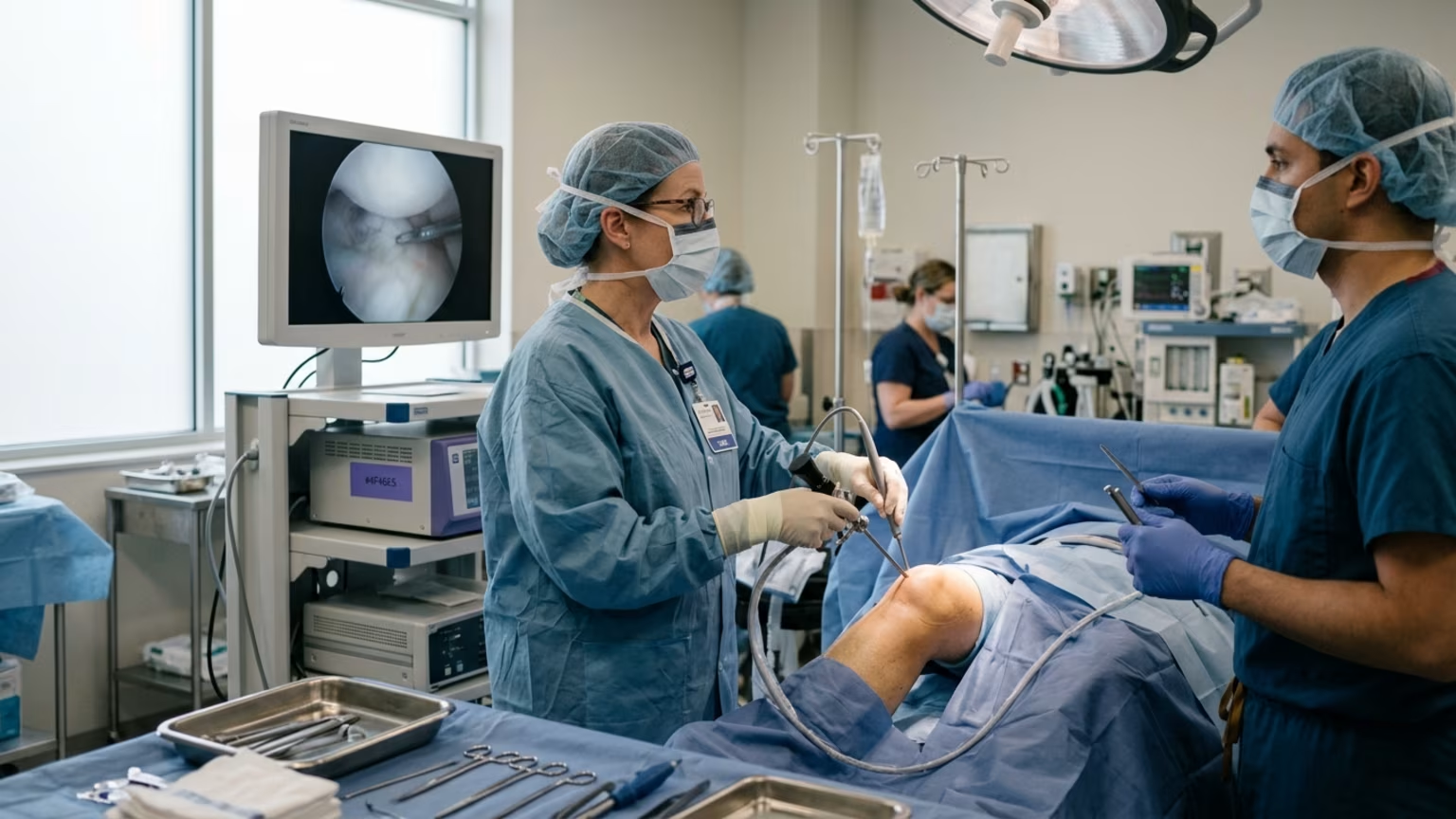

A review of the Epoch Times guide to knee arthroscopy recovery, explaining how timelines, weight-bearing, and rehabilitation depend on the specific procedure.





On October 4, 2026, The Epoch Times published a patient guide to knee arthroscopy. The article reviews preparation, postoperative care, and rehabilitation for this common operation. It clarifies a critical point for active adults returning to movement. Recovery timelines vary significantly based on the specific work done inside the joint.
Rather than providing a single universal schedule, the publication stresses that recovery depends on the exact surgical intervention. Patients face very different paths depending on whether their procedure involves a minor treatment, a tissue repair, or a full reconstruction.
People often search for a standard recovery calendar after joint surgery. They want a simple timeline that dictates when they can walk, drive, and exercise. However, assuming every arthroscopic procedure follows the same timeline can lead to confusion. Different guides show how much timelines vary based on the specific surgical approach.
Koru Hospital provides a recovery guide that clarifies this common misunderstanding. Their guide distinguishes full weight-bearing after many simple procedures from protected weight-bearing for weeks after repairs or reconstructions.
A separate recovery guide from After Surgery echoes this variation. It notes that many people can bear weight soon after surgery unless instructed otherwise. The ability to bear weight immediately is often a surprise to patients who expect total immobilization.
This guide estimates four to six weeks for a simple trim to heal. In contrast, it warns that a repair or a more involved procedure can potentially take several months. These distinct timelines show why patients cannot rely on general estimates for their personal rehabilitation. A person healing from a simple trim will navigate their daily routine differently than someone protecting a delicate repair.
Understanding your specific surgical category helps you plan your return to daily activity. This knowledge is a necessary step when Preparing for Orthopedic Surgery: A Recovery Planning Checklist. Planning for the correct timeline reduces the stress of unexpected physical limitations.
A major theme across current guidance is identifying exactly what happens inside the operating room. A simple trim removes a small piece of damaged tissue from the knee. According to the After Surgery guide, patients recovering from a simple trim typically heal over four to six weeks. Because the remaining tissue is relatively stable, the joint can tolerate movement and weight much sooner.
In contrast, a surgical repair involves stitching torn tissues back together. Koru Hospital notes that this approach often requires protected weight-bearing for weeks. The newly repaired tissue needs adequate time to fuse and strengthen before it can support your full body weight. This is why a repair or a more involved procedure can potentially take several months of dedicated rehabilitation.
The Epoch Times guide provides practical steps for immediate recovery at home. The publication advises keeping the wound clean and dry during the early stages. It also recommends keeping the leg raised over the first few days. Patients are advised to use ice as directed, use walking aids as needed, and follow the prescribed rehabilitation plan.
These immediate care steps help manage expected postoperative changes in the joint. For preparation, the guide suggests confirming medication instructions with the surgical team well before your appointment. It advises following eating and drinking instructions closely prior to the operation. Furthermore, patients should only take specifically approved medications on the day of surgery.
The article also outlines how the extent of the surgery impacts practical milestones in daily life. For example, the Epoch Times article gives a one-to-three-week driving estimate after minor surgery. It clearly states that more extensive repairs or reconstructions generally require longer periods before a patient can safely drive. This reinforces the idea that functional milestones are tied directly to biological tissue healing.
The publication includes perspectives from practicing clinicians to add context. Orthopedic surgeon Nolan Horner states that arthroscopy typically causes less initial pain and scarring than open surgery. Horner adds that it may allow faster recovery, while final outcomes are often comparable.
Orthopedic surgeon Jorge Chahla identifies quadriceps strength and psychological readiness as factors that may affect recovery and engagement with rehabilitation. Physical therapy often requires repetitive exercises that can feel challenging in the early weeks. Mental preparation plays a significant role in how well a person tolerates these physical demands. Maintaining consistent quadriceps strength is equally important for supporting the healing joint during movement.
These recommendations apply directly to patients addressing specific mechanical problems within the knee joint. The Epoch Times guide notes that arthroscopy is used for selected issues. These include meniscal tears, ligament injuries, and loose joint fragments. Active adults facing these structural problems can use this guidance to understand their expected path backward to movement.
However, the guidance sets clear limits on who might benefit from this surgical approach. The Epoch Times article cautions that arthroscopy is not routinely recommended for degenerative meniscal tears or routine osteoarthritis treatment. It does note that arthroscopy might still be considered if osteoarthritis occurs alongside another treatable mechanical problem. This distinction is crucial for older adults managing long-term joint wear.
The publication shares specific data to contextualise expected surgical outcomes over time. The Epoch Times article reports that a 2021 meta-analysis found a 19% failure rate for traumatic, nondegenerative meniscal repairs at four to six years. The summary states that the pooled failure rate rose from 12% in the first year to 19% at four to six years. This data demonstrates that repairing torn cartilage is a long-term process rather than a guaranteed permanent fix.
Additionally, the article summarises the findings of the FIDELITY trial regarding degenerative conditions. According to the Epoch Times article's summary of FIDELITY, partial meniscectomy did not produce meaningful 10-year improvement over diagnostic arthroscopy for degenerative meniscal tears. Because of these nuanced outcomes, orthopedic surgeon Ryan M. Siwiec argues that knee pain treatment should be individualized. He notes that conservative options may be appropriate before surgery in many cases.
Active adults preparing for joint surgery should use this information to ask precise questions. You should ask your surgeon to identify the specific procedure planned for your knee. Knowing whether you are having a simple trim or a complex repair will define your personal rules for bearing weight. It will also dictate the initial boundaries of your physical therapy routine.
You must confirm wound care, medication, and exercise instructions directly with your surgical team. A general patient guide cannot serve as a personal clinical protocol. Navigating incision care after orthopedic surgery requires specific medical guidance based on your exact operation. Your doctor will provide the precise timeline for when you can shower, change dressings, and begin moving the joint.
Patients should view physical recovery as a steady progression of clinical milestones rather than a rigid calendar. Your readiness to drive or return to work will depend on regaining quadriceps strength and passing objective physical tests. If your goal involves restoring mobility after orthopedic surgery, your rehabilitation team will evaluate your joint stability before clearing you. Treat return-to-driving and return-to-work estimates as conditional targets that adjust based on your progress.
If you have persistent or degenerative knee symptoms, ask your medical team what problem the surgery is intended to address. Discuss what nonsurgical options have been considered for your situation. A structured prehabilitation and preparation plan might be an appropriate first step before committing to an operation. Building strength before a procedure can sometimes improve your postoperative experience.
While general guides offer helpful frameworks, some aspects of population-level data remain difficult to quantify precisely. The Epoch Times article calls arthroscopic knee surgery one of the most common orthopedic procedures in the United States. However, it provides no annual procedure count or other data to quantify that claim. Furthermore, the reported study statistics in the publication are not accompanied by full underlying citations.
This lack of exhaustive data underscores a core reality of orthopedic rehabilitation. Every joint heals at its own pace based on the specific tissue treated, biological factors, and physical therapy adherence. Recovery guidance should never be collapsed into a universal schedule that ignores individual circumstances. Healing is a highly individual process that requires ongoing evaluation by qualified healthcare professionals.
Your specific functional progress will always dictate your daily rehabilitation steps. Focusing on steady physical improvements is a safer approach than chasing a standardized calendar date.
Understanding whether you need a few weeks or several months to heal changes how you plan your return to movement. ReboundBody addresses the uncertainty about the transition from formal rehabilitation back to normal activity, helping active adults build realistic expectations before discussing their next phase of recovery with a qualified healthcare professional. Browse Resources

Follow ReboundBody for practical articles on injury recovery, rehabilitation, mobility and rebuilding strength. New posts turn research into clear ideas for the road back to activity after injury or surgery.


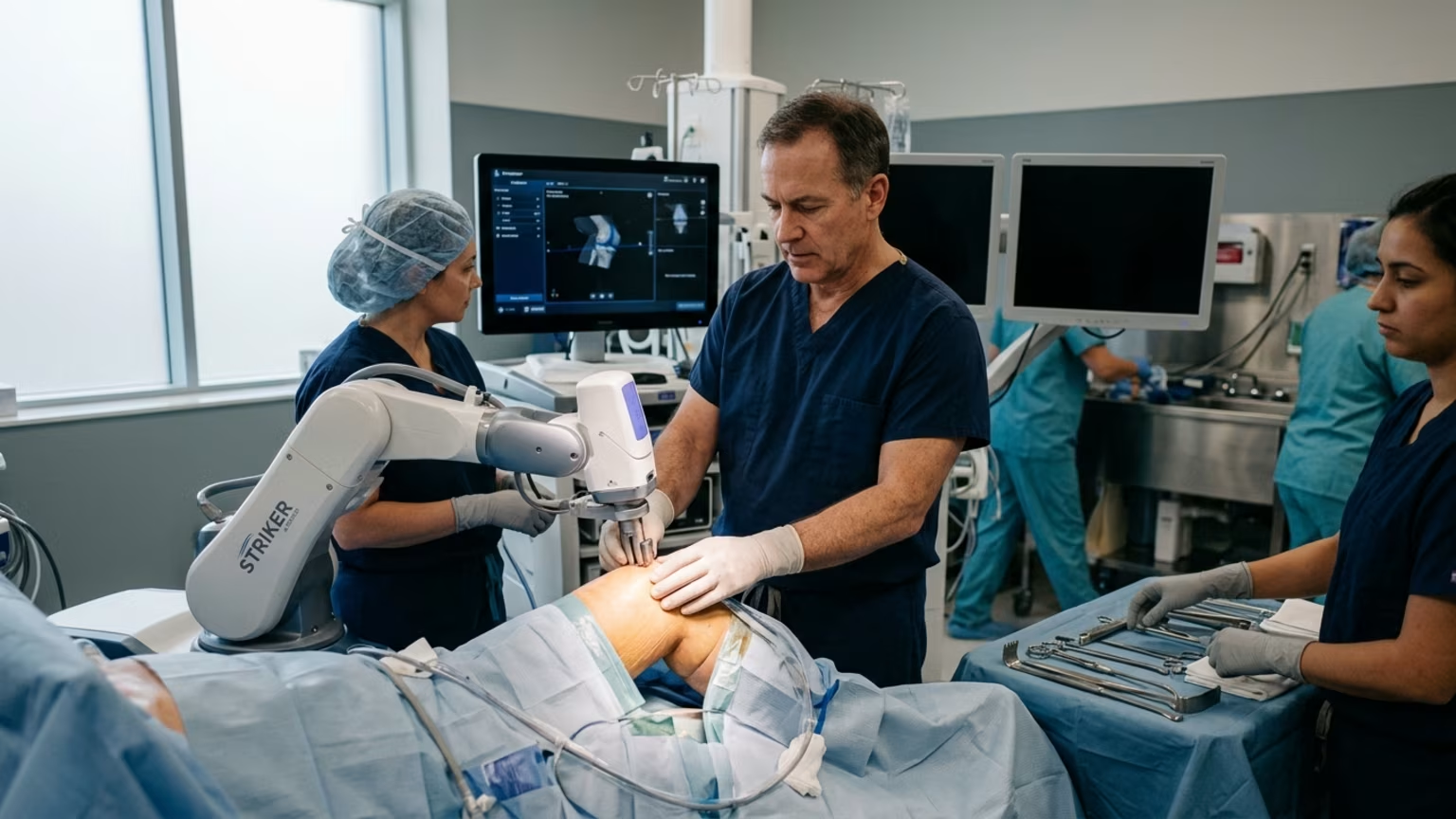



Read practical guidance on injury recovery, rehabilitation, mobility and rebuilding strength as you work your way back to activity.
Explore Resources