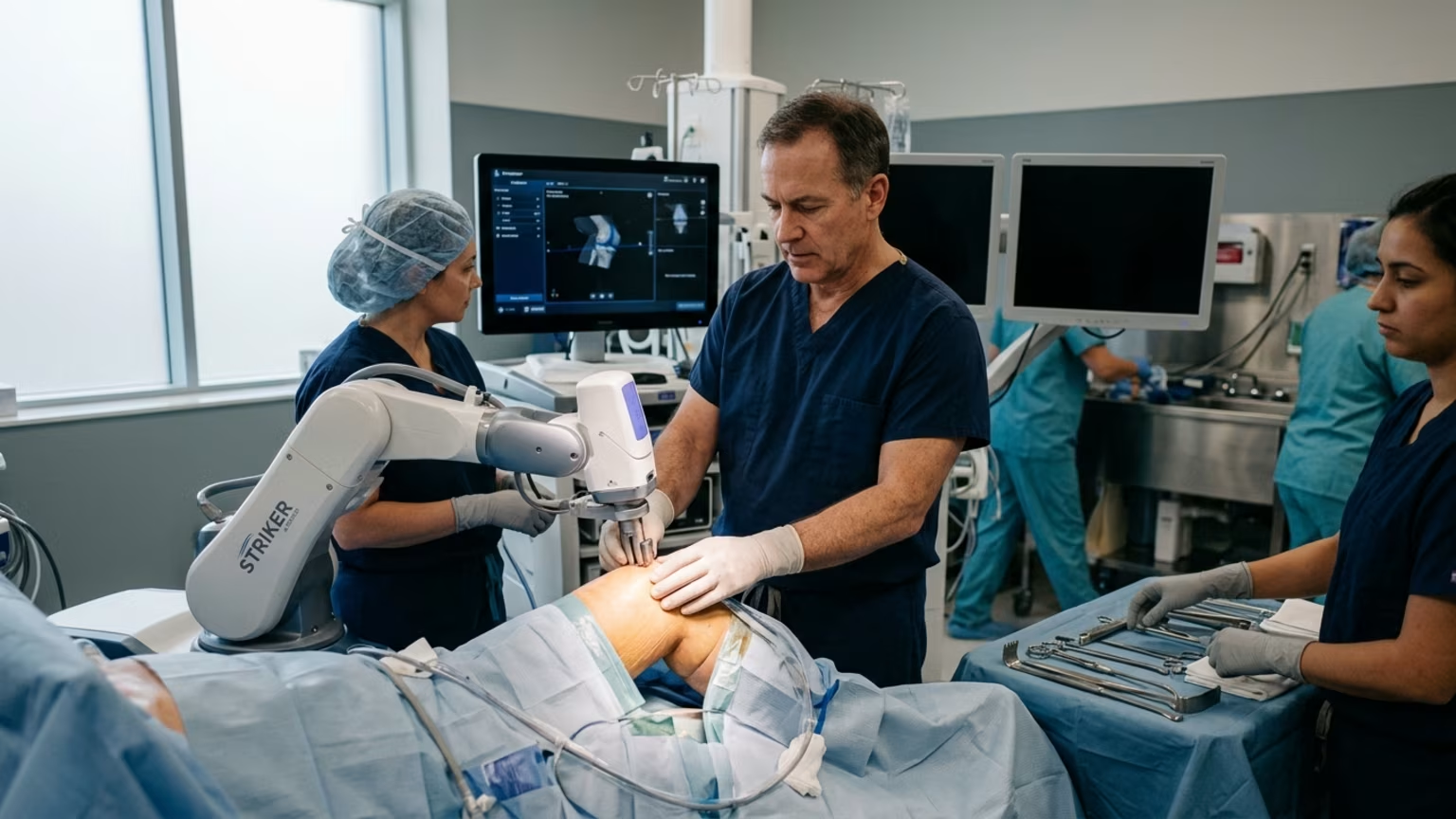

The RACER-Knee trial found that robotic-assisted knee replacements offered no clinically meaningful patient-reported benefit over conventional surgery at 12 months.





In 2026, a major orthopedic study published in The Lancet evaluated whether robotic assistance actually improves knee replacement outcomes. The RACER-Knee trial was a pragmatic, multicentre, masked randomised trial that compared two distinct surgical methods. Researchers wanted to know if using a highly precise robotic arm leads to a better subjective recovery than using conventional surgical instruments. They found that robotic assistance did not provide a clinically meaningful patient benefit at the 12-month mark.
The trial was extensive, involving 339 people across 10 different hospitals in Great Britain. Thirty-three surgeons participated in the study to ensure the results reflected a broad range of real-world clinical skills. The trial was designed to be both participant-masked and assessor-masked to prevent any personal bias from influencing the final data. This careful design means neither the recovering patients nor the medical evaluators knew which specific surgical method had been utilized.
These findings directly challenge a common assumption held by many active adults preparing for a joint operation. Patients often believe that a more technologically advanced procedure will automatically speed up their rehabilitation timeline. The researchers tested whether the technical precision achieved in the operating room actually translates into a better physical experience for the patient. The conclusion offers a clarifying look at what individuals should realistically expect from modern joint replacement technology.
Before this publication, the medical community lacked comprehensive comparative data on patient experiences following these two procedures. Robotic systems have become increasingly common in operating rooms worldwide over the past several years. Clinics frequently highlight these advanced tools when discussing joint replacement options with their patients. The appeal of a robotic arm is easy to understand for anyone facing a major physical intervention.
Patients naturally hope that increased surgical precision might reduce early joint pain or limit unnecessary tissue damage. They want to return to their normal daily activities as quickly and safely as possible. However, earlier data had not definitively proven that this technical precision actually changed how a patient felt during daily life. The operating assumption remained that better technical measurements would equal a better functioning knee a year later.
This ongoing uncertainty often left patients feeling pressured to seek out specific surgical technology for their procedure. They wondered if choosing a conventional procedure meant accepting a lower quality of care or a harder recovery. Understanding orthopedic surgery types is a complex process, and marketing claims often outpaced the available clinical evidence. The RACER-Knee trial was created specifically to answer this ongoing debate and provide clear guidance.
The trial specifically compared Mako robotic-arm-assisted surgery with conventional-instrument total knee replacement. The primary measure of success for the study was the Forgotten Joint Score at 12 months. This unique assessment tool asks patients how frequently they are actually aware of their artificial joint during daily activities. A higher score indicates that the patient rarely thinks about their knee while walking, climbing stairs or resting.
The researchers had prespecified a 12-point target difference to determine if the robot offered a clinically meaningful advantage. The actual results revealed a much smaller difference between the two surgical groups at the one-year mark. The mean score for the robotic group was 49.2, while the conventional surgery group scored a slightly higher 50.2 on average. The adjusted mean difference between the two groups was negative 1.5 points.
This negative 1.5-point difference had a confidence interval ranging from negative 7.5 to 4.5 points. This means the numerical difference actually favoured conventional surgery, though the overall result was not statistically significant. News coverage indicated that the robotic assistance was indeed technically more precise during the actual operation. However, that millimeter-level precision advantage did not result in a meaningful difference in the primary patient outcome.
Evaluating any surgical procedure also requires looking carefully at the associated safety data. The trial record describes the safety profiles of both patient groups as remarkably similar. Exactly 16 participants in each group reported serious adverse events during the study period. This indicates that neither surgical method introduced a significantly higher rate of major medical complications.
Costs and operating times did reveal some noticeable differences between the two surgical approaches. The study record notes that robotic-assisted replacement was more costly as delivered in routine clinical practice. Specifically, Medical Update Online reported an average cost difference of about 950 British pounds for the procedures.
The same news report noted that robotic procedures took an average of 10.5 minutes longer to complete. Extra time in the operating room means extra time under anesthesia, which is an important consideration for surgical planning. While the safety profiles were similar, the added financial cost and operating time did not yield a better subjective recovery. These practical factors are important variables for patients to weigh when consulting with their medical team.
These trial findings apply directly to a specific group of surgical patients. The RACER-Knee study focused entirely on people diagnosed with advanced knee osteoarthritis. Osteoarthritis causes the protective cartilage in the joint to wear away, leading to significant stiffness and pain over time. These individuals had reached a point where they required a total knee replacement to restore basic daily function.
The trial only tested the Mako robotic system against conventional instruments. Therefore, the findings should not be automatically generalised to every surgical robot currently available on the market. Different robotic platforms use different software, mapping techniques and surgical instruments during an operation. The results also do not apply to partial knee replacements or procedures addressing different joint conditions.
The results reflect the experiences of this specific demographic within the British healthcare system. Healthcare systems, post-operative rehabilitation protocols and hospital practices can vary widely between different countries. An active adult in the United States might experience different clinical pathways or insurance requirements. Every patient brings a unique physical history and set of functional goals to the operating room.
This clinical update provides valuable perspective for anyone weighing their joint replacement options. The trial does not support assuming that robotic assistance will automatically produce a better result by one year. Patients can use this information to ask highly specific questions during their surgical consultations. You can ask your orthopedic surgeon why they recommend a particular technique for your individual case.
It is also entirely appropriate to discuss how a chosen method impacts your broader surgical plan. The trial record supports asking about costs, but it does not establish what a specific patient or insurer would pay. Understanding your potential financial responsibilities and expected time under anesthesia helps create a realistic framework. Technology is an impressive tool, but it is never a substitute for a structured physical rehabilitation program.
Your functional recovery will always depend heavily on your personal dedication to movement and physical therapy. You will still need to rebuild muscle strength, improve joint flexibility and manage post-surgical swelling. Reading a comprehensive knee replacement recovery guide can help you prepare for the hard work ahead. You can also review our broader surgery and rehab articles to better understand the tissue repair process.
The one-year mark is a critical milestone, but it does not represent the end of the healing journey. The University of Bristol research record notes that longer-term follow-up for this trial is currently ongoing. It remains uncertain whether functional differences between the two surgical methods might emerge after five or ten years. Anyone planning a procedure can read about life after joint replacement to understand this extended timeline.
We also lack detailed comparative data on several important early recovery metrics. The initial publication record does not provide specific results for early walking milestones or daily rehabilitation needs. It does not detail whether one group achieved a maximum range of motion faster than the other. The primary focus was strictly the patient-reported joint awareness score at 12 months.
Active adults often want to know exactly when they can safely resume specific physical hobbies. The current report does not contain data regarding a faster return to work or a faster return to recreational sport. The medical community will need to wait for further long-term data to form a complete picture of robotic assistance. Until then, patients should base their expectations on consistent rehabilitation rather than surgical technology alone.
A joint replacement is a profound physical intervention that requires immense patience and structured effort. Surgical tools will continue to evolve and become more precise over time. However, the biological reality of tissue repair remains constant regardless of the instruments used. The body heals on its own schedule, quietly reminding us that true recovery relies on gradual physical progress.
Building a realistic rehabilitation timeline based on the latest surgical data requires careful translation, and ReboundBody provides the independent editorial context needed to make sense of these clinical updates. We address the difficulty understanding clinical terminology and research findings, helping you confidently prepare for the physical work of joint recovery. Browse Resources

Follow ReboundBody for practical articles on injury recovery, rehabilitation, mobility and rebuilding strength. New posts turn research into clear ideas for the road back to activity after injury or surgery.



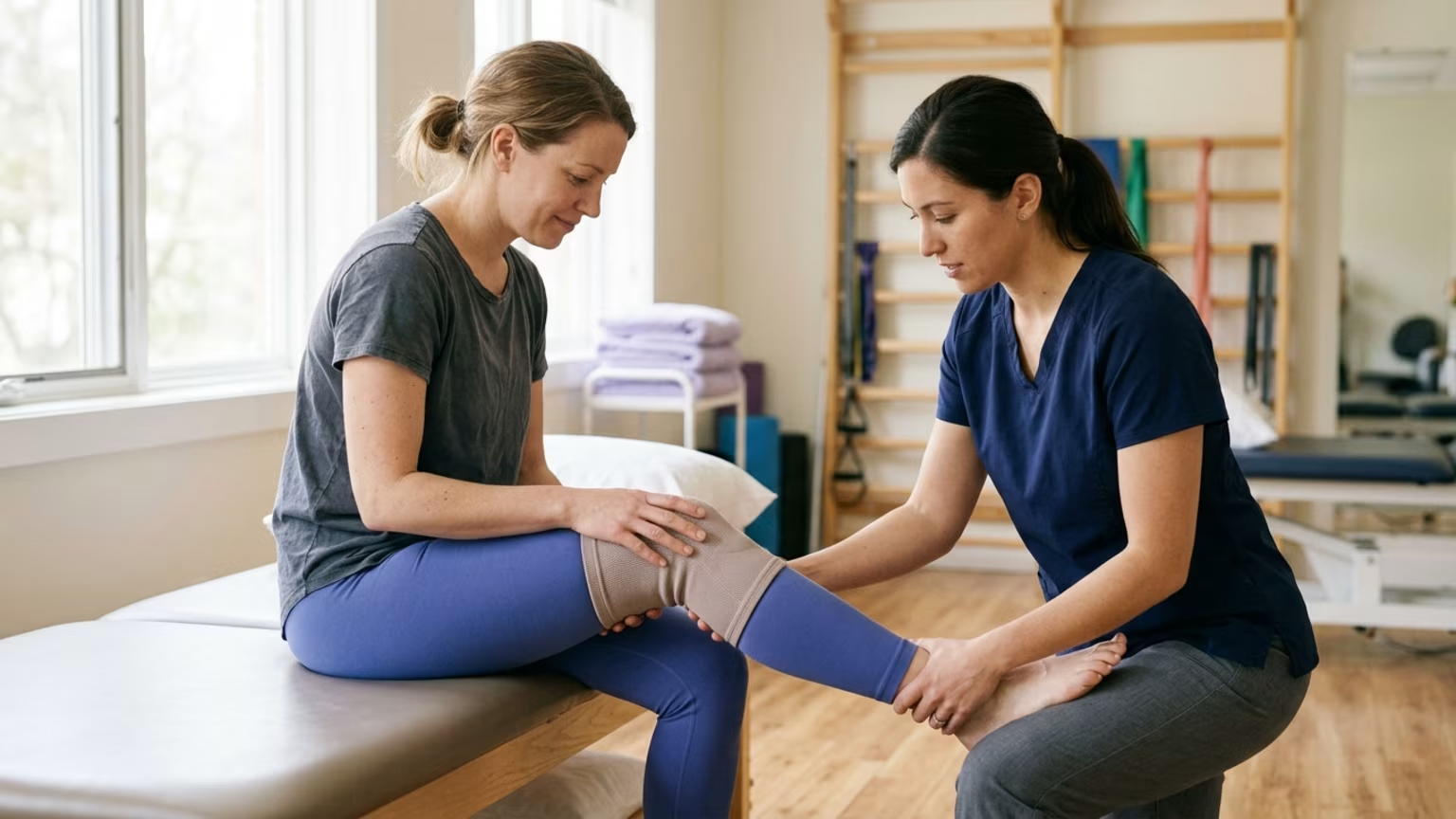
Read practical guidance on injury recovery, rehabilitation, mobility and rebuilding strength as you work your way back to activity.
Explore Resources