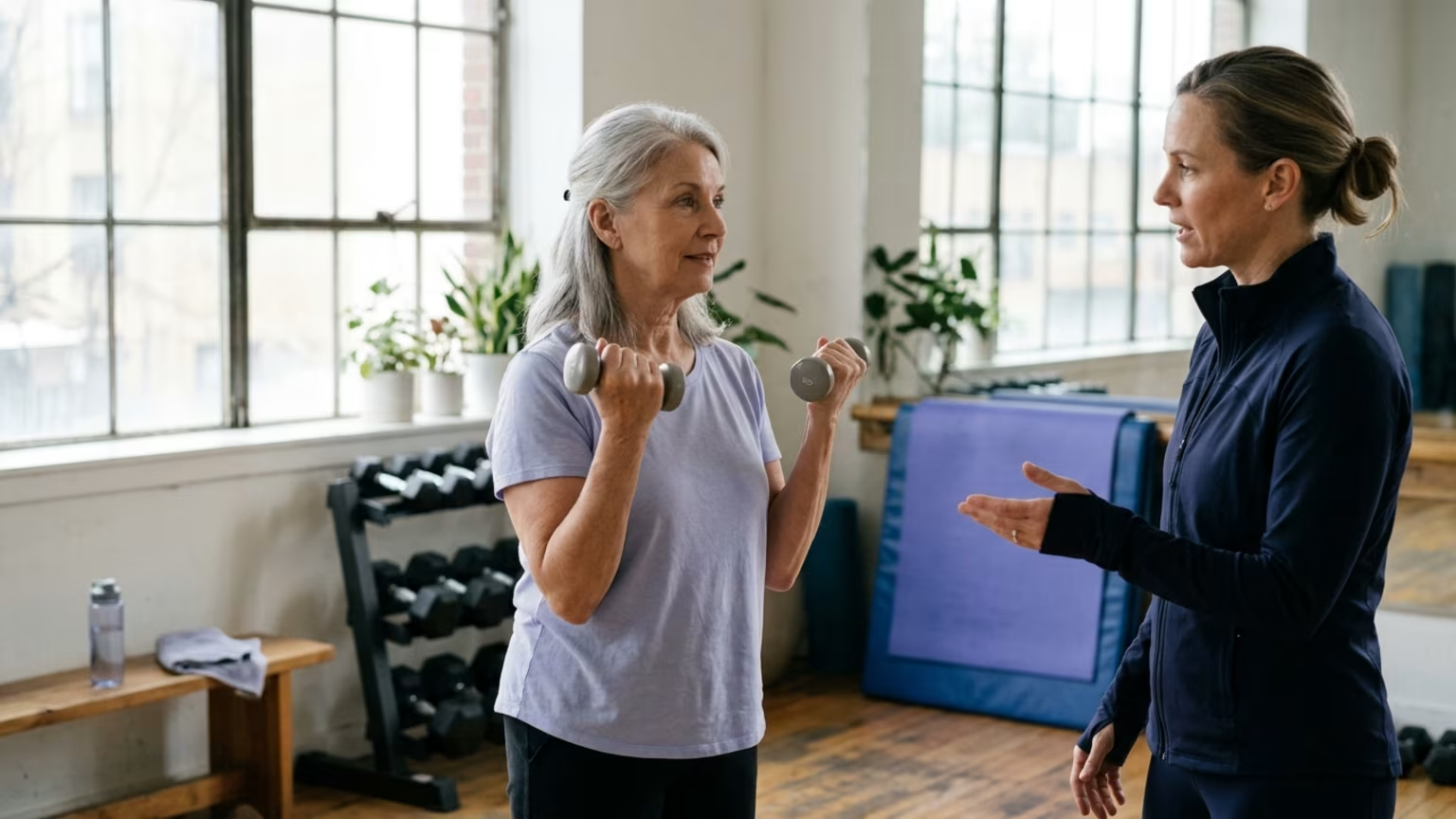

A recent report outlines four habits that may slow age-related muscle loss. Learn how functional strength training and adaptable movement support healthy aging.





On September 29, 2026, a FOX 5 Atlanta report highlighted four practical habits designed to help slow age-related muscle loss. The broadcast credited Melissa Rudy of FOX News Health for the reporting. It featured detailed insights from Jacob Zemer, a New York-based fitness coach. Zemer is a professional who primarily trains clients between the ages of 35 and 55.
The report grouped his physical preservation suggestions into four distinct daily areas. These included eating adequate protein, maintaining regular strength training, getting sufficient sleep, and finding adaptable activities. Finding activities a person can still do when injured was presented as a crucial long-term habit. Together, these four practices form a practical foundation for maintaining physical capacity over time.
To provide context for these habits, the report referenced established national health standards. The US Physical Activity Guidelines offer clear baseline targets for general adult fitness. According to the broadcast, these federal guidelines recommend working all major muscle groups at least two days per week. This establishes a clear frequency for maintaining muscular health and function.
Beyond resistance work, the federal guidelines outline specific aerobic activity targets for adults. The report notes that individuals should aim for 150 to 300 minutes of moderate-intensity aerobic activity weekly. Alternatively, people can target 75 to 150 minutes of vigorous aerobic exercise each week. These federal numbers serve as general public health goals for active adults navigating daily life.
Understanding these baselines helps individuals evaluate new fitness advice effectively and safely. Federal recommendations represent broad population health targets rather than individualized coaching protocols. They provide a reliable framework for adults looking to structure their weekly routines. However, they are not automatic starting points for people returning from a prolonged physical absence.
The recent report expands on these basic guidelines by highlighting specific functional movements. It identifies squats, lunges, push-ups, pulling movements, and loaded carries as highly beneficial exercises. Loaded carries are frequently referred to as farmer's carries in fitness and rehabilitation settings. The article attributes clear benefits for everyday strength, grip, balance, and stability to these movements.
Structuring a workout around these actions mirrors the physical demands of daily life. Improving grip strength through pulling movements and loaded carries is especially relevant for aging adults. Zemer noted that two 30-minute weight-training sessions a week may help maintain existing muscle. However, he cautioned that this specific volume may not be enough to build new muscle.
This distinction provides a realistic expectation for what minimal training volumes can actually achieve. It allows busy individuals to focus on physical maintenance without feeling pressured to spend hours in the gym. Recognizing the difference between maintaining capacity and building new tissue helps set appropriate recovery milestones.
Beyond exercise selection, the report highlighted specific recovery and nutrition habits. Zemer recommended seven to nine hours of quality sleep for active individuals. He clarified that an occasional shorter night of sleep does not mean someone will immediately lose muscle. This caveat helps reduce unnecessary anxiety around perfect sleep tracking for fitness enthusiasts.
For nutritional support, the report detailed a specific coaching approach to dietary intake. Zemer suggested 0.8 to 1 gram of protein per pound of body weight. He specified that this elevated protein target is specifically for people who train and go to the gym. The report noted that sedentary individuals do not need to obsess over their daily protein intake.
This functional guidance targets a specific stage of the adult lifespan. The broadcast links age-related muscle loss partly to a general tendency to become more sedentary over time. It also describes hormonal changes approaching the 40s as one contributing factor to physical decline. Because Zemer primarily works with adults between 35 and 55, his perspective aligns directly with this demographic.
The physical shifts that occur during midlife require a deliberate approach to physical maintenance. As people age, their daily routines often involve significantly less spontaneous physical movement. The report emphasizes that muscle loss is closely tied to both physiological changes and decreased activity. However, the report does not cite formal clinical trials to establish the exact size of these hormonal effects.
Instead, the broadcast frames these age-related changes as practical realities that require consistent management. Acknowledging the role of a sedentary lifestyle empowers individuals to take action through targeted exercise. It shifts the focus from an inevitable physical decline to manageable physical adaptation. This perspective is vital for adults looking to maintain their independence in later life.
For adults rebuilding physical capacity after a setback, these four habits offer a highly useful framework. Prioritizing functional tasks like pushing and carrying helps translate gym work directly into practical life skills. Readers should carefully distinguish official health guidance from a specific professional's personal coaching recommendations. The two-day strength target and weekly aerobic minutes represent established federal guidelines.
Meanwhile, the specific protein ratios and 30-minute maintenance sessions represent Zemer's individual coaching methodology. These concepts are especially valuable when rebuilding fitness during orthopedic recovery after a period of rest. Incorporating loaded carries and lunges can directly support the everyday movement skills that help you stay active and independent as you age. Building physical capacity requires consistent, incremental adjustments to your daily habits.
The distinction between moderate and vigorous aerobic minutes also allows individuals to tailor their cardiovascular work. Someone returning from an injury might prefer longer sessions of moderate work over shorter, vigorous sessions. Considering how muscle preservation works aligns with broader questions about how strength and fitness change during an exercise break. The report strongly advises people not to stop all physical activity completely after an injury.
Instead, it suggests finding suitable substitute activities that remain entirely possible despite physical limitations. This encourages a highly proactive mindset rather than assuming every physical setback requires total rest. Navigating these choices is a central challenge of injury recovery after 50: how age, health, and activity interact. Maintaining modified movement patterns helps preserve existing muscle tissue while delicate biological structures heal.
Applying this advice requires careful judgment and a realistic understanding of personal physical limits. Finding ways to safely load the body is the ultimate goal of functional strength training.
While the suggestion to keep moving is broadly helpful, the report leaves several practical questions unanswered. It does not provide injury-specific substitute exercises or outline a structured return-to-exercise protocol. It also lacks clear methods to help readers distinguish tolerable activity from movements that might actively worsen an injury. This missing context is critical for adults navigating complex physical rehabilitations.
Additionally, the broadcast does not specify appropriate loads, progressions, or modifications for functional movements like squats. Its broad advice should never be treated as individualized medical clearance or a substitute for clinical care. The protein and sleep suggestions are general guidelines rather than highly individualized medical prescriptions. People managing significant pain or postoperative restrictions should always seek personalized guidance from qualified healthcare professionals.
The September FOX 5 broadcast opened with a highly relatable premise about slowing age-related physical decline. By focusing on adequate protein, regular strength practice, sufficient sleep, and adaptable movement, adults can build resilient routines. These four daily habits are not rigid medical laws or guaranteed shields against the aging process.
Instead, they serve as reliable guideposts for maintaining long-term physical capacity. When combined with realistic expectations and careful modifications, these steady practices help active adults navigate midlife confidently. They provide a clear, sustainable foundation for managing the changing physical demands of an active lifestyle. Integrating these steps thoughtfully ensures a balanced approach to long-term physical health.
Evaluating how to safely adapt broad fitness advice for age-related muscle loss requires careful interpretation of your physical limits. ReboundBody helps active adults navigate the confusion about recovery timelines and what normal variation can look like, providing the independent editorial context needed to safely adjust daily habits. We clarify the difference between general coaching suggestions and realistic physical rehabilitation milestones.

Follow ReboundBody for practical articles on injury recovery, rehabilitation, mobility and rebuilding strength. New posts turn research into clear ideas for the road back to activity after injury or surgery.




Read practical guidance on injury recovery, rehabilitation, mobility and rebuilding strength as you work your way back to activity.
Explore Resources