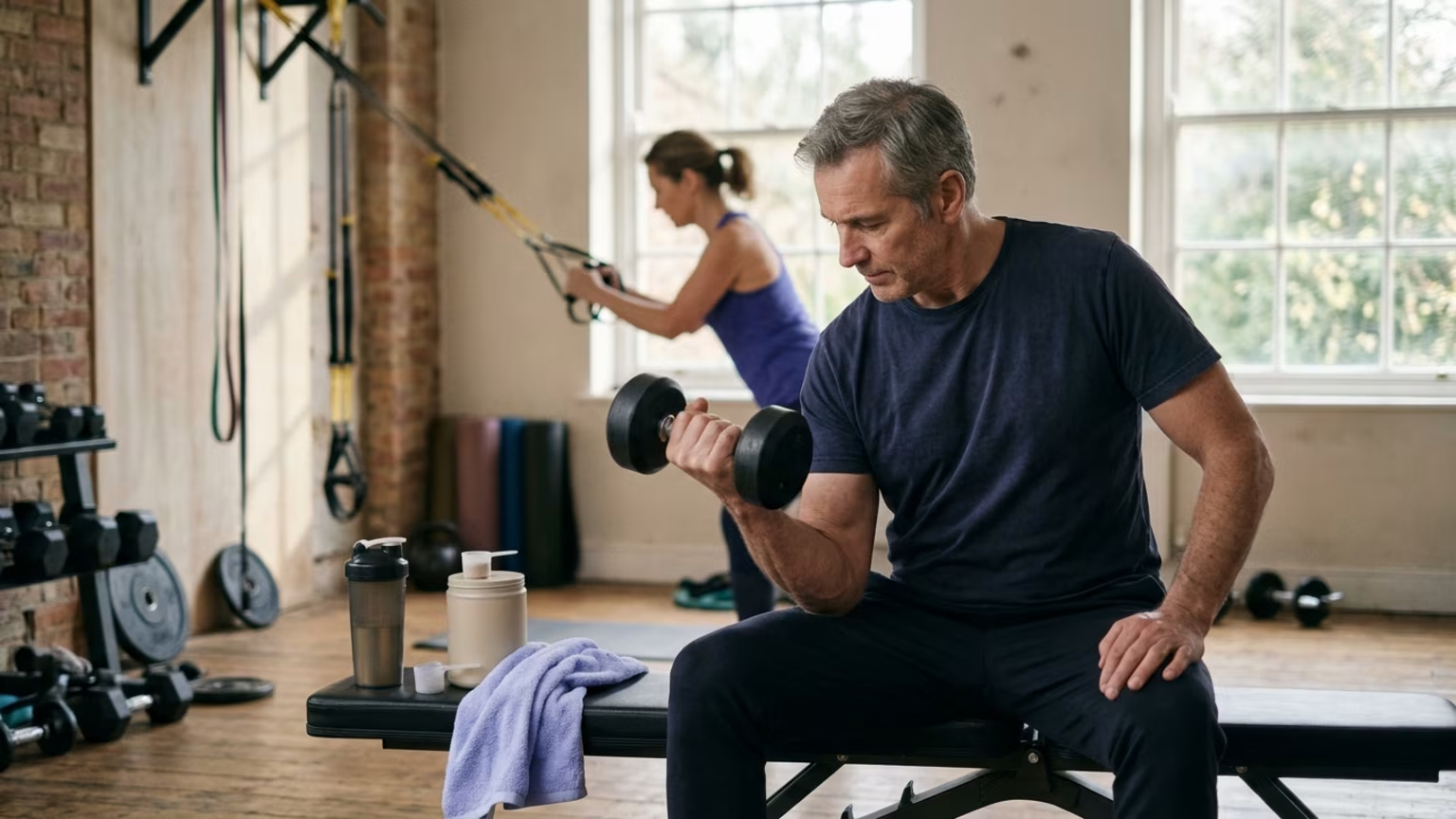

A 12-week study found creatine may help adults ages 45 to 65 build lean tissue and strength. Learn how these findings apply to physical recovery.





On August 11, 2026, a new 12-week study detailed by Texas A&M University reported on how daily creatine supplementation affected middle-aged and older adults. Researchers evaluated 64 healthy adults between the ages of 45 and 65. The participants were randomly assigned to take 10 grams of creatine monohydrate daily or a placebo. The findings showed that creatine was associated with measurable gains in lean tissue and physical strength over the observation period.
Active adults recovering from physical setbacks often struggle to maintain lean tissue. During periods of reduced activity or modified training, preserving muscle becomes a central challenge for anyone navigating a musculoskeletal problem. A loss of muscle mass can slow down the overall rehabilitation timeline and affect joint stability. Medical professionals and rehabilitation specialists routinely emphasize progressive resistance training to combat physical detraining.
Supplementation strategies have frequently focused on younger athletic populations rather than older adults managing joint limitations. Products like creatine are well documented in sports performance contexts for building explosive physical power. However, applying these performance aids to midlife adults requires specific evidence based on that demographic. Many products tested on younger athletes do not account for the biological realities of aging.
Historically, the fitness industry has heavily promoted various supplements to accelerate tissue repair. Many active adults find it difficult to evaluate these products against established nutrition guidelines. Understanding how these tools function in older adults helps clarify realistic expectations for a safe physical recovery. You can read more about evaluating nutrition tools in our guide to protein for rebuilding strength.
Before this recent publication, questions remained about whether older adults could effectively maintain lean tissue while trying to reduce body fat. Maintaining muscle in a calorie deficit is notoriously difficult for active adults. Rebuilding physical capacity safely demands clear clinical data over general fitness trends. The need for structured research into active aging and muscle preservation drove investigations into common athletic supplements.
The study structure allowed researchers to observe outcomes in participants who chose to join an exercise-and-diet program and those who did not. According to Texas A&M University, participants assigned creatine who did not join the exercise program still saw physical changes. They gained about 2.4 pounds of lean tissue over the 12 weeks. Furthermore, this non-exercising group improved their leg-press and bench-press strength during the study.
The results were distinctly more pronounced when supplementation was paired with regular physical activity. The reported exercise-and-diet program combined resistance and aerobic training three times a week. It also featured a diet carefully designed to create a modest calorie deficit. In this specific group, the creatine participants gained nearly 3 pounds of lean tissue and reduced their overall fat mass.
The study report says these exercising participants experienced greater strength gains in the leg press and bench press. They also improved their time to exhaustion when compared with the exercise group that did not take creatine. In a report from RTTNews, the authors are quoted as saying the findings may have important implications for older adults. The authors noted implications for those seeking to reduce body fat while maintaining muscle mass.
While resistance and physical strength metrics improved, the findings did not translate to all forms of cardiovascular fitness. Texas A&M University reports that creatine did not appear to provide an additional benefit for aerobic capacity in this study. The university noted that this aerobic capacity result is consistent with known supplement mechanics. Creatine is primarily recognized for enhancing muscular strength and power rather than cardiovascular endurance.
Understanding the studied population is critical before applying these findings to an individual rehabilitation plan. The research exclusively examined 64 healthy adults ages 45 to 65. It did not test a cohort recovering from surgery, an orthopedic injury, or a recurring musculoskeletal problem. Therefore, these findings do not establish that creatine improves specific formal rehabilitation outcomes.
The study structure also included an important variable regarding the physical activity component. Participants chose whether they wanted to join the exercise-and-diet program. Because the exercise assignment itself was not randomized, comparisons between the people who exercised and those who did not require careful interpretation. The reported result is specific to this 12-week study and its voluntary participants.
Applying findings from healthy participants to injured populations requires recognizing biological differences. A joint recovering from surgery responds differently to mechanical load than a healthy joint does. Supplements that support normal muscle growth may not interact with healing tissue in the same predictable way. Patients must rely on their medical team to determine if general fitness data applies to their recovery.
Safety context is also an important factor when interpreting how this applies to older adults. According to Texas A&M University, the principal investigator Richard Kreider has studied creatine for more than 30 years. The university reports that a separate 2025 analysis by Kreider and colleagues reviewed 685 clinical trials. That review found no significant difference in reported side effect rates between creatine and placebo participants.
For an adult rebuilding strength after a physical setback, this study offers preliminary context. The reported results provide a concrete reason to ask a clinician whether creatine is appropriate for your specific situation. However, it should never be treated as a direct substitute for an individualized rehabilitation program. Supplementation cannot replace appropriately prescribed strengthening exercises guided by a professional.
The strongest improvements in this 12-week study occurred when creatine was combined with a structured routine. This detail reinforces the importance of structured physical progression over passive supplementation alone. If you are cleared to exercise, resistance training remains the foundation of a safe return to activity. You can review our guidelines on rebuilding muscle power with age to understand how structured movement supports physical function.
Because individual health circumstances vary greatly, people recovering from surgery or injury should discuss supplement use carefully. You should raise the topic with your healthcare team rather than assume the study dose applies safely to you. Medical conditions, current medications, and specific care plans can all affect whether a supplement fits your recovery. Discussing these findings with your providers ensures you make safe and informed decisions.
Navigating physical recovery often requires input from multiple medical specialists. Taking news about nutritional supplements to your primary care physician or physical therapist allows them to contextualize the data for your body. You can learn more about finding the right guidance in our breakdown of who helps with injury recovery. A clear understanding of your medical constraints is essential when evaluating any new fitness publication.
Active adults must also recognize the difference between general fitness progression and clinical rehabilitation. Rushing to add performance supplements without addressing underlying joint mechanics can complicate a safe return to sport. Real physical recovery demands a measured approach to increasing load over time. To better understand this process, read about why safe athletic recovery demands structured physical progression.
Several crucial questions remain open regarding how these findings translate to everyday physical recovery. The trial lasted exactly 12 weeks, which means longer term physical effects are not established by this report. Recovery from a significant orthopedic injury often takes many months or even years. The available evidence does not confirm if lean tissue gains continue at the same rate beyond this short window.
The specific dose used in the study also presents a distinct limitation for readers seeking immediate guidance. Participants took 10 grams of creatine monohydrate per day during the trial. This reported finding does not determine an appropriate or safe dose for any individual person outside the research setting. Anyone considering this supplement must work directly with their doctor to establish proper dosing parameters.
Additionally, the exact magnitude of strength improvement remains unclear from the provided public summaries. The source accounts do not supply precise strength effect sizes, specific confidence intervals, or adverse event details for this study. Readers should avoid assuming that these findings quantify a predictable or guaranteed amount of strength recovery for their own joints. Individual responses to both supplementation and exercise can vary widely.
Finally, the original study title included cognitive function as a tested variable alongside physical composition. However, the available news summaries do not supply results for that specific metric. The university summary describes no cognitive results, so readers should not assume this study demonstrated specific cognitive benefits. Future reports may clarify these metrics, but the current data primarily highlights changes in physical strength and lean tissue.
Navigating physical recovery requires separating broad fitness trends from realistic medical guidance. While new studies provide helpful context, your safe return to activity relies on structured routines and professional oversight. Discussing new clinical evidence with your medical team ensures your rehabilitation remains focused on your individual physical needs.
Evaluating new clinical studies on muscle supplementation requires careful interpretation, and ReboundBody provides the objective context needed to understand these physical findings. We address the difficulty understanding clinical terminology and research findings, helping you translate general fitness news into realistic recovery concepts. We offer clear editorial guidance so you can make more informed decisions alongside your medical team.

Follow ReboundBody for practical articles on injury recovery, rehabilitation, mobility and rebuilding strength. New posts turn research into clear ideas for the road back to activity after injury or surgery.




Read practical guidance on injury recovery, rehabilitation, mobility and rebuilding strength as you work your way back to activity.
Explore Resources