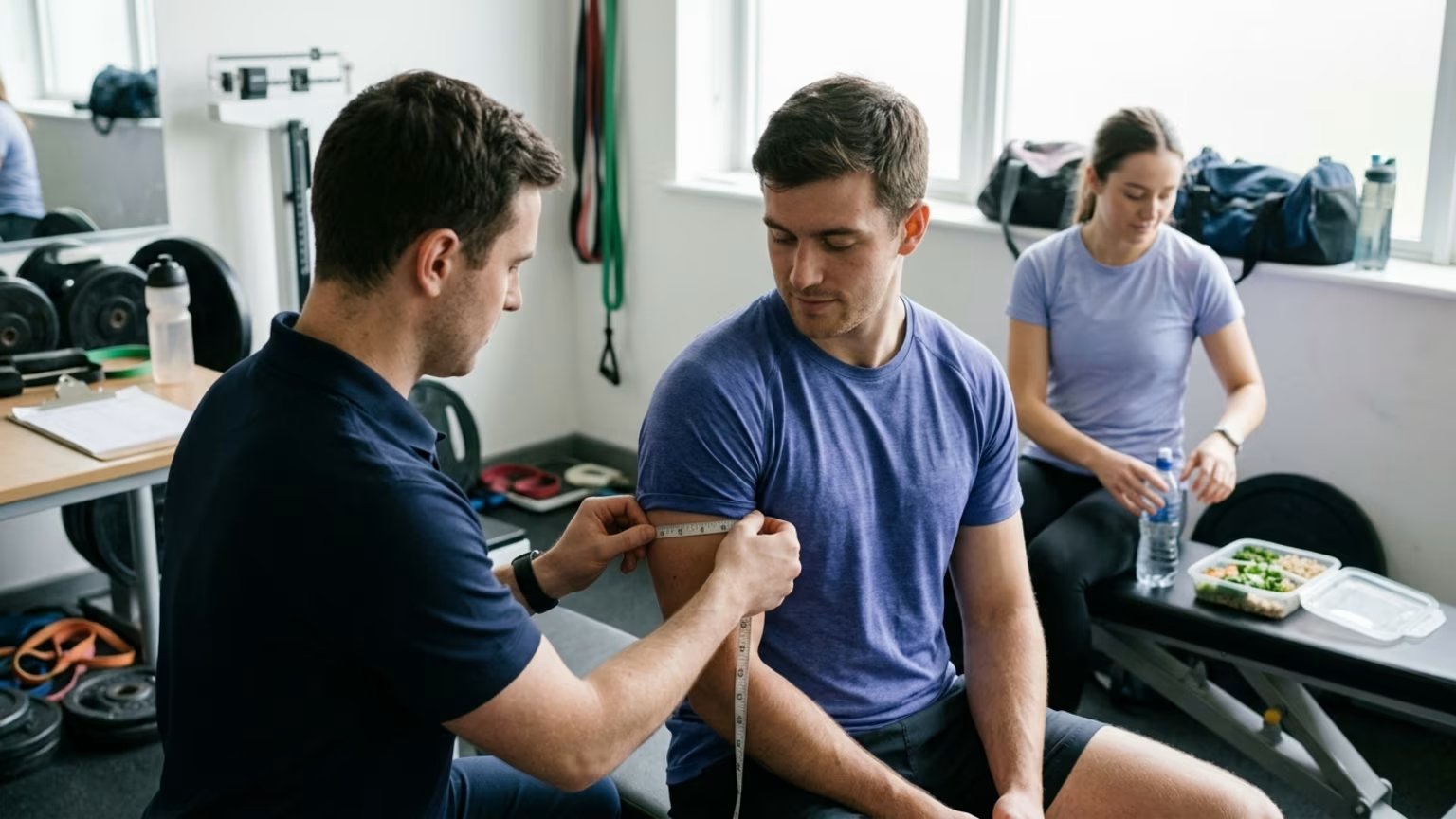

A 2026 trial found both vegetarian and omnivorous diets improved strength in adults over 55. Learn how protein and resistance training support muscle recovery.





In 2026, researchers at Amsterdam University of Applied Sciences published new findings in The American Journal of Clinical Nutrition. The study focused on how different nutritional habits influence physical adaptation during structured exercise. ScienceAlert reports that the trial specifically enrolled 108 adults who were aged 55 and older. The core objective was to observe the effects of a vegetarian diet versus an omnivorous diet.
The trial lasted for exactly 12 weeks. During this three-month window, the participants completed a supervised resistance training program. They were instructed to lift weights three times a week. Researchers tracked their physical progress and measured changes in their muscle tissue over time.
The researchers wanted to see if dietary choices altered the physical outcomes of the exercise program. Diet is often considered a critical variable in physical conditioning. This trial provided a controlled environment to track the participants closely. The final results offered new data points for older adults who want to maintain their physical independence.
The study provides a modern look at how an aging body responds to mechanical loading and nutritional support. As people age, natural changes in muscle biology require careful attention to physical maintenance. The Amsterdam research team wanted to quantify how different food choices might support that ongoing maintenance. Their findings offer a helpful snapshot for older adults considering a new strength routine.
Recovering physical capacity after a setback requires a combination of structured movement and supportive nutrition. Older adults are frequently advised to increase their daily protein to maintain physical strength. This macronutrient serves as a core building block for bodily tissues. However, the source of that protein has often been a subject of intense debate.
Many active adults wonder if plant-based diets can support the demands of heavy physical rehabilitation. Past fitness advice often favored meat and dairy as primary sources for tissue repair. Some popular fitness programs have strictly promoted omnivorous eating as the only practical way to regain strength. This strict perspective has left individuals who prefer a vegetarian lifestyle feeling unsure about their physical recovery prospects.
The conversation around evaluating commercial recovery supplements versus whole foods is ongoing in the medical community. People want to know if avoiding animal products limits their long-term physical progress. Before this new report, the specific difference between these diets during a controlled exercise program was less clear. The fitness community often relied on broad assumptions rather than controlled physical trials.
Many online articles rely on aggressive language to convince readers that a single nutritional path is mandatory. This often creates anxiety for patients who are already dealing with the stress of physical rehabilitation. The fear of doing things incorrectly can cause people to abandon their fitness routines altogether. Clear data helps reduce this anxiety by showing exactly what different approaches can achieve in a controlled setting.
This new trial attempts to provide more specific numbers for an aging population. It adds a layer of controlled observation to a topic that is often clouded by strong personal opinions. Understanding these baseline findings helps active adults make calmer decisions about their daily habits.
During the 12 weeks, all 108 participants received specific dietary counseling from the research team. The researchers advised both groups to consume at least 1.2 grams of protein per kilogram of body weight per day. This specific target was designed to support the physical demands of the three weekly training sessions. Meeting this target required conscious effort from the participants.
At the end of the trial, both diet groups improved their physical function. ScienceAlert reports that both groups showed clear gains in leg-press strength. Both groups also improved their performance on a standard chair-stand test. The report notes no statistically significant between-group difference for these practical physical performance measures.
However, the trial did note a difference in actual tissue growth. Average arm-and-leg muscle gain was reported as 0.38 kg in the vegetarian group. In contrast, the omnivorous group recorded an average gain of 0.66 kg. According to the report, this means the meat-eating group gained about 70 percent more muscle tissue.
Interestingly, the report says higher protein intake was associated with greater muscle gain among the vegetarian participants. The authors suggested that the omnivorous group might have reached a biological point where additional protein provided no extra physical benefit. Both diets clearly supported progress when paired with resistance bands, free weights, and machines. The new evidence confirms that structured training is a powerful stimulus for older adults.
The absence of a statistically significant difference in physical performance is a very important detail. It suggests that sheer muscle mass is not the only factor that dictates functional strength. Neuromuscular adaptations play a massive role in how the body generates force during a chair-stand test. You can read more about how neuromuscular signaling may relate to age-related muscle weakness to understand this complex relationship.
Understanding the exact study population is vital before applying these results to your own physical routine. The trial looked specifically at 108 adults aged 55 and older. This age group often faces natural physical changes and slower muscle growth. The researchers focused on this specific demographic to test realistic interventions for aging adults.
Crucially, the report characterizes these participants as predominantly healthy. The study was not designed as an orthopedic injury rehabilitation trial. These individuals were not actively recovering from a joint replacement or a major physical trauma. They were completing a standard fitness program rather than clinical physical therapy.
Because of this distinction, the report notes uncertainty about how well the findings apply to other populations. A body healing from a surgical incision has entirely different metabolic demands than a healthy body starting a gym routine. Readers should recognize that a surgical recovery timeline involves biological complexities that this specific trial did not measure.
It is also critical to remember that this group had professional oversight during the trial. They received structured guidance that most independent gym members do not automatically have. The supervision likely helped them perform the resistance exercises safely and effectively. This controlled environment reduces the risk of joint strain that can easily occur during independent workouts.
The trial only observed these predominantly healthy adults over a short 12-week window. The participants also had the benefit of formal dietary counseling throughout the entire process. This controlled clinical environment is very different from managing a diet independently at home. It is important to remember these boundary lines when reading the headline numbers.
For adults rebuilding their physical capacity, this trial offers a moderate and practical takeaway. The findings show that both vegetarian and omnivorous diets can support improvements in physical function. You do not necessarily need to eat meat to get functionally stronger in your daily life. Both groups successfully improved their leg-press strength and chair-stand performance.
However, the study target of 1.2 grams of protein per kilogram of body weight should not be viewed as a universal medical rule. It was simply a benchmark used by the researchers for this specific 12-week period. Your own biological needs might be very different based on your personal medical history. Readers should not treat this number as an individualized prescription for their own physical recovery.
If you have a low appetite or specific dietary restrictions, you should discuss protein targets with a clinician. The study authors cautioned that the suitability of a plant-based diet can depend heavily on your individual context. Older adults with limited energy intake might need careful guidance on protein quality. A registered dietitian can help you select the best whole foods for your specific physical situation.
Active adults should prioritize gradual progression when starting any new physical program. You do not need to radically overhaul your diet on the first day of your training routine. Small nutritional adjustments often yield better long-term compliance than strict and sudden dietary restrictions. Working with a professional allows you to build a plan that respects both your physical goals and your personal food preferences.
Ultimately, the results do not prove that one single diet is universally superior for everyone. Rebuilding muscle power with age requires consistent effort and adequate overall nutrition. You can achieve functional physical progress on either diet with the right professional support.
While the trial provides helpful insights, it also leaves several important questions open for future researchers. ScienceAlert notes that the original report does not provide the statistical test or uncertainty estimates for the muscle-gain comparison. Because of this missing data, the 70 percent difference in muscle growth should not be presented as absolute scientific proof. The difference is a reported average rather than a definitive guarantee of results.
The report also lacks specific granular details about the daily habits of the participants. The ScienceAlert article does not provide the exact average protein intake for each separate group. We do not know exactly how strictly every participant followed their dietary counseling during the week. The report does not offer detailed adherence data for the full 12-week period.
Furthermore, the researchers could not pinpoint the exact root cause of the muscle-gain difference. It remains unclear if the vegetarian group gained less muscle simply because they ate less total protein. The difference might also be related to the quality and amino acid profile of the plant proteins consumed. The report explicitly says the study could not determine which of these two factors was responsible.
Without precise adherence data, experts cannot say if the vegetarian participants found it harder to meet the protein target. Eating 1.2 grams of protein per kilogram of body weight often requires careful meal planning for plant-based eaters. If some participants struggled to consume enough food, their muscle growth would naturally be lower. This practical challenge is an important variable that future nutritional studies should track more closely.
We also do not know what happened to these adults after the 12 weeks officially ended. There is no follow-up data to show if the strength gains were maintained over a longer period. Rehabilitation is a very long process, and short-term trials only show a small portion of that timeline. Future research will need to address these gaps to provide clearer clinical guidelines for aging adults.
To start applying these concepts today, you can simply track your daily protein intake for two days this week to create a baseline measurement for your next medical appointment.
Tracking physical performance and muscle tissue growth during recovery requires a realistic understanding of your biological limits. ReboundBody addresses the confusion about recovery timelines and what normal variation can look like. We explain rehabilitation and strength rebuilding through clear, evidence-aware content so you can safely return to activity. Browse Resources

Follow ReboundBody for practical articles on injury recovery, rehabilitation, mobility and rebuilding strength. New posts turn research into clear ideas for the road back to activity after injury or surgery.



Read practical guidance on injury recovery, rehabilitation, mobility and rebuilding strength as you work your way back to activity.
Explore Resources