

Rebuilding strength and balance after a hospital stay requires careful pacing. Learn how to manage hospital deconditioning safely with professional guidance.





On October 1, 2026, the Fall Prevention Foundation published an article detailing how physical capability changes during a hospital stay. The publication, which was updated on October 2, 2026, focuses on a process known as hospital-associated deconditioning. This condition involves a noticeable decline in strength, endurance, balance and overall daily function. It can occur during or immediately after a period of hospitalization, often catching patients by surprise.
The organization identifies several common factors that consistently contribute to this physical decline. Bed rest, limited walking, acute illness and prolonged inactivity are primary drivers of hospital-associated deconditioning. When people spend most of their time resting in a hospital bed, their bodies quickly adapt to that reduced physical demand. This biological adaptation can leave recovering patients feeling unexpectedly weak or unsteady when they finally return home.
Understanding this physical shift is a critical step for active adults recovering from orthopedic surgery or serious injury. Recognizing that deconditioning is a documented medical phenomenon can help you make sense of your current physical limitations. It provides a clear, rational reason why your first steps at home might feel significantly more difficult than you anticipated. Acknowledging this reality allows you to approach your physical rehabilitation with patience and highly realistic expectations.
Dealing with muscle weakness can feel incredibly isolating when you are focused on healing from a specific injury. You might interpret this general fatigue as a sign that your actual surgical site is not recovering properly. However, recognizing deconditioning as a separate, expected consequence of bed rest helps separate joint healing from overall muscle fatigue. This perspective allows you to focus on gradual strength rebuilding without unnecessary panic.
Historically, complete rest was considered the most important requirement for recovery after a major illness or physical setback. Patients often stayed in bed for long, uninterrupted periods until they felt fully healed and ready to move. Medical professionals now recognize that prolonged inactivity can actually slow down the overall recovery process. The lack of movement during a hospital stay often creates new physical challenges that require careful management.
Before these recent updates, many recovering adults assumed they could quickly resume their normal routines once discharged. This assumption often led to deep frustration when they found everyday tasks suddenly exhausting or physically impossible. The traditional approach of complete rest sometimes left people entirely unprepared for the physical demands of living at home. It became clear that a more proactive strategy was necessary to protect long-term mobility and overall physical safety.
The current medical consensus prioritizes a careful, heavily monitored return to movement as soon as it is safely possible. The NIH fall-prevention page advises regular physical activity that includes both muscle-strengthening and targeted balance exercises. The NIH also notes that physical or occupational therapists can help people select and use assistive devices safely. This shift toward guided movement helps bridge the gap between acute hospital care and everyday physical independence.
Understanding this history helps contextualize why your surgeon or physician might now push for early, supervised movement. The shift away from prolonged bed rest represents a massive change in how physical rehabilitation is fundamentally managed. Medical professionals now balance the need for tissue healing with the absolute necessity of maintaining muscle mass. People who understand the essential movement patterns for rebuilding everyday strength can better navigate this transition.
The new evidence highlights just how rapidly the human body responds to a sudden lack of physical activity. The Fall Prevention Foundation points to a controlled study involving older adults placed on strict bed rest. These individuals showed a substantial decline in knee-extensor strength after just 10 days of physical inactivity. While the specific numerical results were not detailed in the accessible text, the functional impact on mobility was clear.
The underlying mechanics behind this rapid physical strength loss are relatively straightforward and predictable. Reduced movement directly translates to significantly less physical work for the major leg and trunk muscles. When these core and lower-body muscles are not engaged regularly, they rapidly begin to lose their functional capacity. Furthermore, spending less time standing upright translates to fewer opportunities for the nervous system to practice balance.
The physical consequences of this inactivity extend beyond just the primary leg muscles used for basic forward walking. The stabilizing muscles in your trunk and hips also weaken rapidly when they are not actively supporting your body weight. This loss of core stability is a major reason why standing up can feel suddenly unsafe after a hospital stay. Your nervous system simply has not had the daily practice required to coordinate these complex stabilizing muscle contractions.
To address this decline, the Foundation attributes balance confidence to a structured process called graded exposure. This method involves the repeated practice of manageable tasks followed by an increased physical challenge under professional guidance. The organization cautions that full recovery after hospitalization may take weeks to months rather than only a few days. They strongly recommend gradual, personalized rehabilitation instead of assuming that patients can immediately return to prior activity levels.
This information specifically targets older adults and individuals recovering from acute illness or prolonged hospital stays. The available evidence focuses on a population that has experienced a significant, forced interruption in their normal daily movement. It directly applies to patients navigating the complex transition from a highly monitored clinical setting back to their homes. The physical challenges described are specific to those who have lost strength due to mandatory medical bed rest.
The findings are highly relevant for active adults in midlife and later life facing extended orthopedic rehabilitation. If you have recently undergone joint surgery, you most likely experienced some degree of required postoperative bed rest. This clinical guidance helps explain the profound weakness you might feel during your initial at-home recovery phase. It offers vital context for why your legs might feel heavy, uncoordinated or unstable when you first stand up.
It is also important to recognize that hospital-associated deconditioning affects patients differently based on their prior fitness levels. An active adult might notice this decline more acutely because the contrast from their baseline is so significant. However, their previous physical activity often provides a solid foundation for their eventual rehabilitation journey. Understanding this specific context prevents recovering patients from comparing their unique hospital recovery to generic fitness advice.
However, it is strictly important to avoid generalizing these specific findings beyond the studied hospital population. The guidance does not apply to healthy, active individuals seeking to optimize a general cardiovascular fitness routine. It also does not serve as a universal fall-prevention strategy for the broader, non-hospitalized public. The recommendations are tailored specifically for those managing the direct physical aftermath of clinical inactivity and medical treatment.
The practical implications of these findings emphasize extreme caution and professional collaboration during your ongoing recovery. You should view any new physical weakness or unsteadiness as a reason to consult your medical team immediately. It is absolutely not a signal to restart an old workout routine independently in an attempt to force progress. The Foundation suggests rehabilitation examples like ankle pumps and seated leg extensions to help rebuild initial physical strength.
However, patients must practice only those specific exercises explicitly approved for their unique medical condition. Your current physical abilities, active surgical precautions and strict weight-bearing status must dictate your daily physical activity. Always seek direct care-team approval before beginning or progressing any rehabilitation movements, stretches or strength exercises. This cautious, steady approach helps protect delicate healing tissues while you slowly regain your baseline physical function.
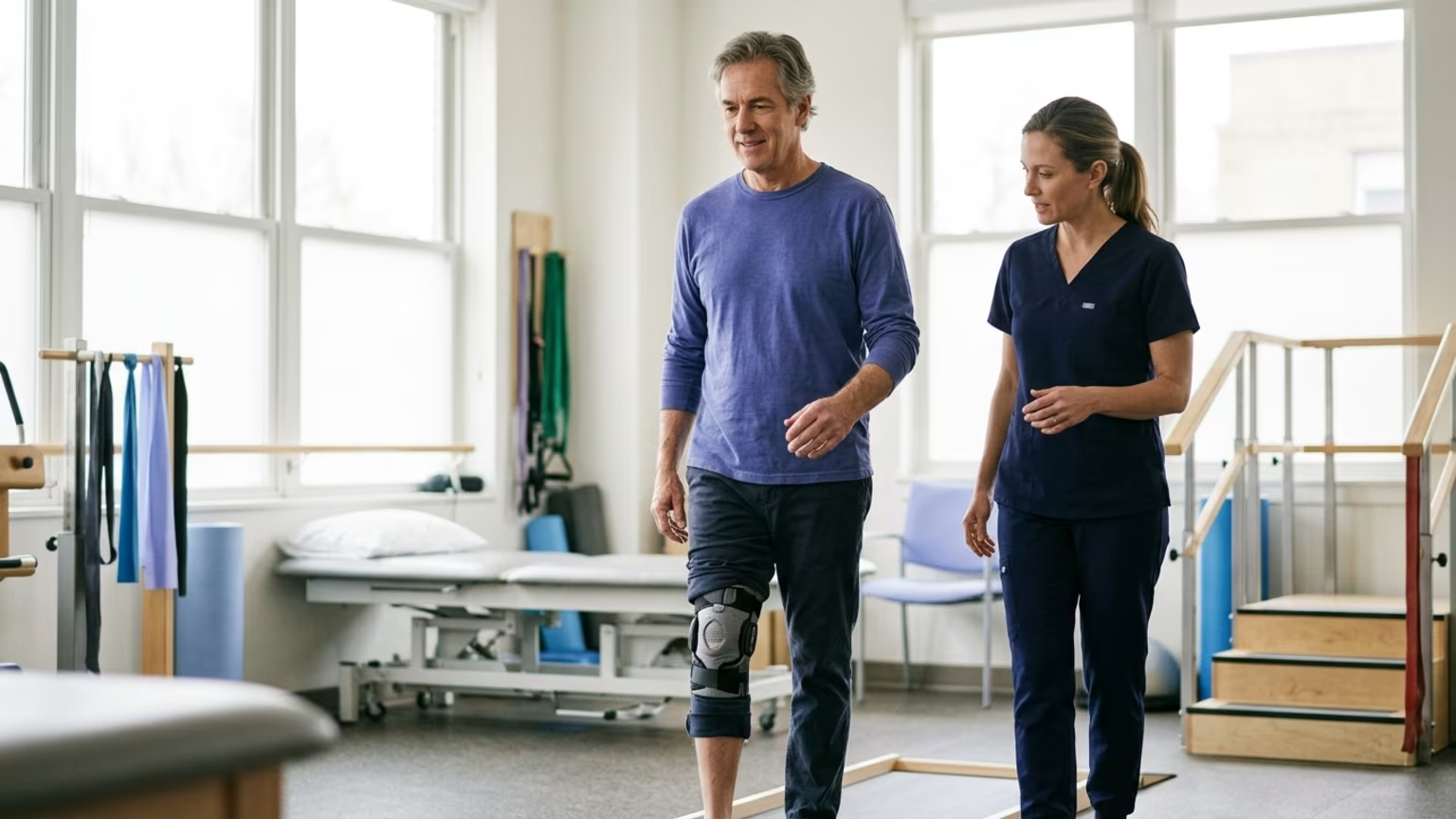
A qualified physical therapist can properly demonstrate safe movements and help you determine appropriate support, rest and repetitions. The Foundation points to home-based or outpatient physical and occupational therapy as excellent, evidence-based recovery resources. These professionals can directly address strength, balance, difficult transfers and your overall home setup. They ensure you are moving safely while rebuilding steady movement during your most essential everyday tasks.
The psychological aspect of this rehabilitation approach is just as important as the physical exercises themselves. Working closely with a licensed professional provides the necessary reassurance to move confidently despite feeling physically weaker than normal. This guided support helps you slowly rebuild trust in your body after a significant period of clinical vulnerability. Incorporating a long-term plan for strength and mobility is always a collaborative effort with your healthcare providers.
While the current clinical guidance heavily supports a cautious return to movement, several areas of medical uncertainty remain. The reviewed evidence does not provide a validated, universal timeline for fully resolving hospital-associated deconditioning. The Foundation carefully notes that recovery takes weeks to months, but individual physical healing rates will vary significantly. There is simply no standard mathematical formula to predict exactly when you will regain your pre-hospital baseline strength.
The exact exercise dose required to optimally rebuild physical function is also not firmly established by this research. The evidence does not confidently prescribe a specific number of repetitions or exact minutes of activity for the general population. The Foundation’s 10-day bed rest example lacks the specific numerical results needed to accurately quantify the exact strength loss. We know the physical decline is substantial, but we cannot safely predict the precise percentage of muscle loss for any one individual.
Furthermore, while guided physical movement is highly recommended, its absolute certainty of completely preventing falls remains scientifically unclear. The available medical research does not conclusively prove that a specific post-discharge exercise plan will completely eliminate all fall risks. You must continue to prioritize environmental safety, properly use prescribed assistive devices and faithfully follow your care team's specific instructions. You should approach your rehabilitation as a way to improve daily function rather than a perfect shield against all future accidents.
If you are currently recovering from a hospital stay and feeling unsteady, contact your primary care doctor today. Ask them if a referral for physical or occupational therapy is appropriate for your specific rehabilitation needs.
Safely reintroducing daily movement after a hospital stay requires an understanding of how to pace your physical recovery. ReboundBody addresses the uncertainty about the transition from formal rehabilitation back to normal activity by offering clear, evidence-aware context about strength rebuilding. We help you comprehend these clinical concepts so you can navigate your physical limitations and make informed choices alongside your medical team.

Follow ReboundBody for practical articles on injury recovery, rehabilitation, mobility and rebuilding strength. New posts turn research into clear ideas for the road back to activity after injury or surgery.




Read practical guidance on injury recovery, rehabilitation, mobility and rebuilding strength as you work your way back to activity.
Explore Resources