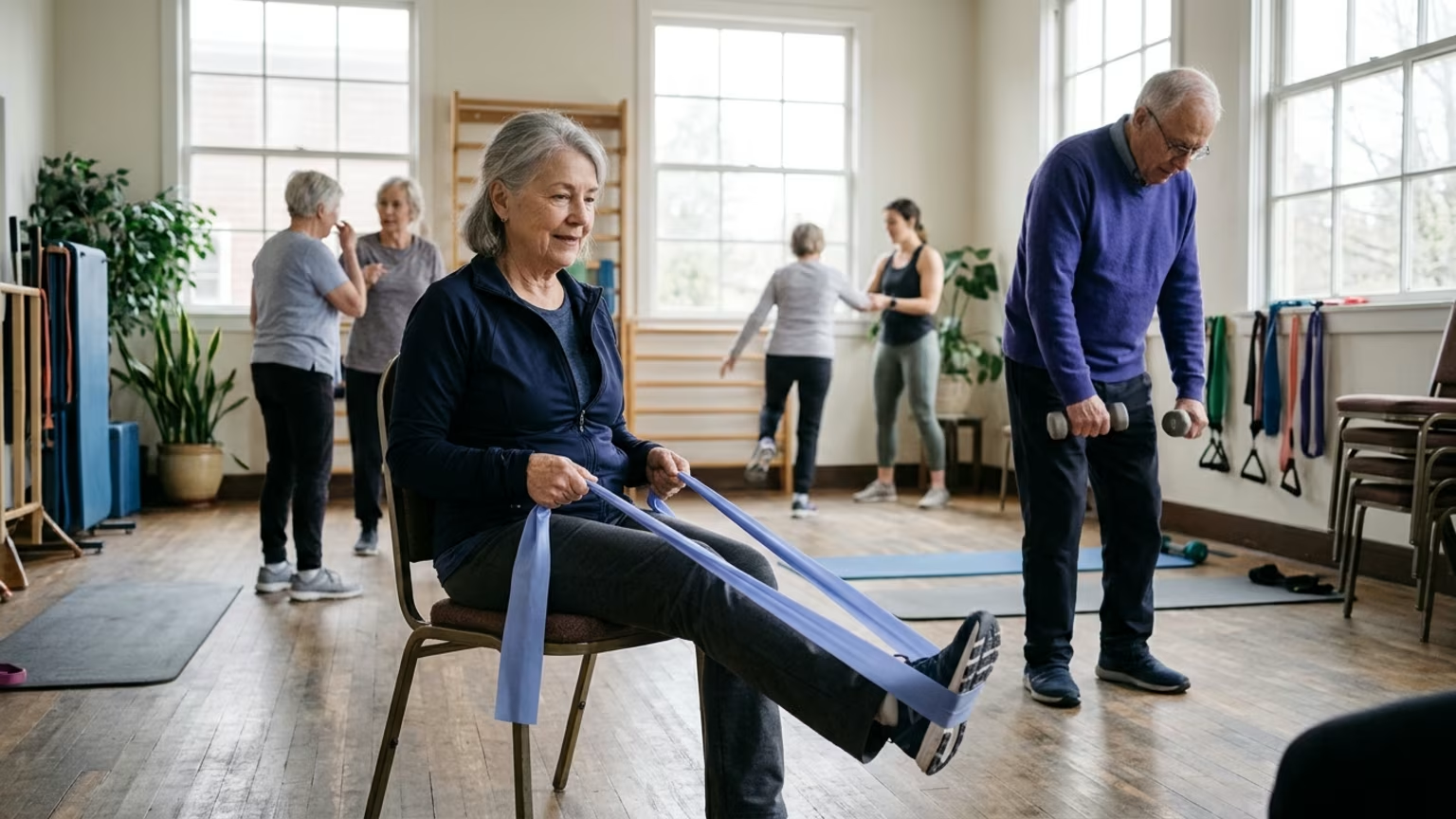

HHS plans a 2027 supplement on steps and strengthening. Understand the current framework and questions to discuss when returning to activity after rehab.





As of its October 14, 2026 update, the U.S. Department of Health and Human Services (HHS) described a planned 2027 supplement to the second edition of the Physical Activity Guidelines for Americans. Its focus is steps and muscle-strengthening activity. HHS says the supplement will reflect newer research and build on the existing guidelines.
That development gives the discussion about walking and active aging a useful point of reference. Walking can be one way to pursue aerobic activity. The HHS supplement page also treats muscle strengthening as a distinct subject rather than another name for accumulating steps.
For adults returning to movement after an orthopedic setback, the useful question is broader than how much walking to do. It is how walking fits with other activity goals as recovery moves toward everyday life. Understanding the federal framework helps separate those questions before turning them into a personal plan.
The planned supplement adds to an established set of guidelines. It does not replace them.
A 2026 CDC report in Preventing Chronic Disease describes the existing federal aerobic benchmark as:
The wording matters. This benchmark uses time and intensity to describe aerobic activity. It is not expressed as a daily step total.
That distinction helps explain why a conversation about walking can become confusing. A person may be talking about steps while a guideline is discussing minutes of activity at a certain intensity. Those are different ways of describing movement.
Before considering any future step guidance, it helps to identify which measure a claim actually refers to. A statement about meeting an aerobic benchmark is not automatically a statement about muscle-strengthening activity. The existing framework and the planned supplement address related subjects without making them interchangeable.
The policy development adds a focus on steps and strengthening. HHS says its forthcoming supplement will draw on current scientific research and evidence. The agency has also sought public comments to inform that work.
For readers, the useful addition is a clearer way to organize questions about activity:
Keeping those questions separate avoids asking one measure to stand for an entire recovery plan. A step total describes steps. The aerobic benchmark describes a different activity measure. Strengthening needs its own place in the discussion.
This is not a reason to dismiss walking. It is a reason to be precise about what a walking goal is intended to address.
The distinction also changes how to read a headline about being “active enough.” Enough for an aerobic benchmark is a more specific claim than enough for every goal involved in returning to normal activity. The federal material provides categories for that discussion rather than a single score for recovery.
The CDC report offers an example of how federal benchmarks are used in population research. It analyzed 2024 National Health Interview Survey data on leisure-time aerobic activity among U.S. cancer survivors.
That population matters. The analysis was not a study of people selected because they were recovering from orthopedic injury or surgery. Its findings should not be used to estimate activity levels among orthopedic patients or predict their recovery outcomes.
The federal framework also has a different purpose from an individual rehabilitation plan. General activity guidance does not establish which movements are appropriate after a particular operation or injury. Nor does it establish when someone should work toward the public-health benchmark.
For a reader in recovery, those decisions depend on a discussion of current abilities and any restrictions with a qualified professional. The distinction is between understanding a broad activity goal and deciding how it applies now.
ReboundBody’s explanation of the stages of postsurgical physical therapy provides related context for that conversation. The federal numbers belong in the background of an individualized discussion rather than serving as a replacement for it.
The practical value of this update is a more organized conversation with a physical therapist, physician or other qualified professional. It does not require turning the guideline categories into a new routine on your own.
A useful discussion can begin with the activities already in the recovery plan. The next question is which goals those activities are intended to address and what remains relevant as formal rehabilitation ends.
A starting question is: “What role does walking serve in my current plan?”
That keeps the discussion tied to purpose rather than a number alone. It also leaves room to ask how existing restrictions affect activity choices and how broader aerobic goals relate to the current stage of recovery.
Another useful question is which measure the treating professional wants to discuss. A step total and a benchmark expressed in minutes should not be treated as the same target without clarification. Understanding the measure comes before interpreting progress against it.
The separate federal focus on muscle-strengthening activity makes this a reasonable question: “Does my plan address strengthening as well as aerobic activity?”
The follow-up belongs with the treating professional: which movements are appropriate now, and how do they fit with current restrictions? This keeps the conversation specific without borrowing an exercise program from a general health headline.
It also makes the transition out of rehabilitation easier to discuss. A person can ask which goals remain part of recovery and which belong to a longer-term return to activity. ReboundBody’s discussion of strength in the wider readiness picture addresses that broader topic.
Balance can be included where it is relevant to age, current function or concerns about falling. The useful question is whether it belongs in the person’s plan and how a qualified professional would assess that need.
That is a discussion prompt rather than a recommendation to begin a balance routine. It keeps the focus on the person’s circumstances instead of assuming that everyone needs the same set of activities.
The transition itself deserves attention too. “What still needs to be addressed before my usual activities become the main focus?” is a different question from whether a weekly activity total has been reached.
ReboundBody’s article on milestones and readiness for different activities offers context for that distinction. The aim is to understand what the plan is working toward rather than to collect more targets.
As of the cited HHS update, the supplement remained forthcoming. No new federal daily step target had been established in the cited materials. The final recommendations and their detailed wording were still pending.
There are also questions that this evidence does not answer. It does not quantify how adding strength or balance work changes orthopedic recovery outcomes. It does not compare a walking-only program with a specific rehabilitation plan or prove that walking alone is insufficient for every person in recovery.
Those boundaries matter when interpreting future coverage. A supplement about population activity guidance and a study about a particular recovery program would answer different questions. The planned federal update should be read for what it eventually recommends rather than for conclusions attached to it before publication.
As guidance develops, the central distinction remains useful: walking can have a place in aerobic activity while other recovery goals deserve their own discussion. A fuller view of movement does not make a walk less worthwhile. It simply leaves room for the rest of the return to everyday life.
A federal activity target does not settle the transition out of rehabilitation, so ReboundBody approaches that gap through recovery education rather than personal treatment advice. For midlife and older adults uncertain about resuming normal activity, its coverage of mobility and strength rebuilding offers context for understanding recovery goals and preparing questions for qualified healthcare professionals.

Follow ReboundBody for practical articles on injury recovery, rehabilitation, mobility and rebuilding strength. New posts turn research into clear ideas for the road back to activity after injury or surgery.


Read practical guidance on injury recovery, rehabilitation, mobility and rebuilding strength as you work your way back to activity.
Explore Resources