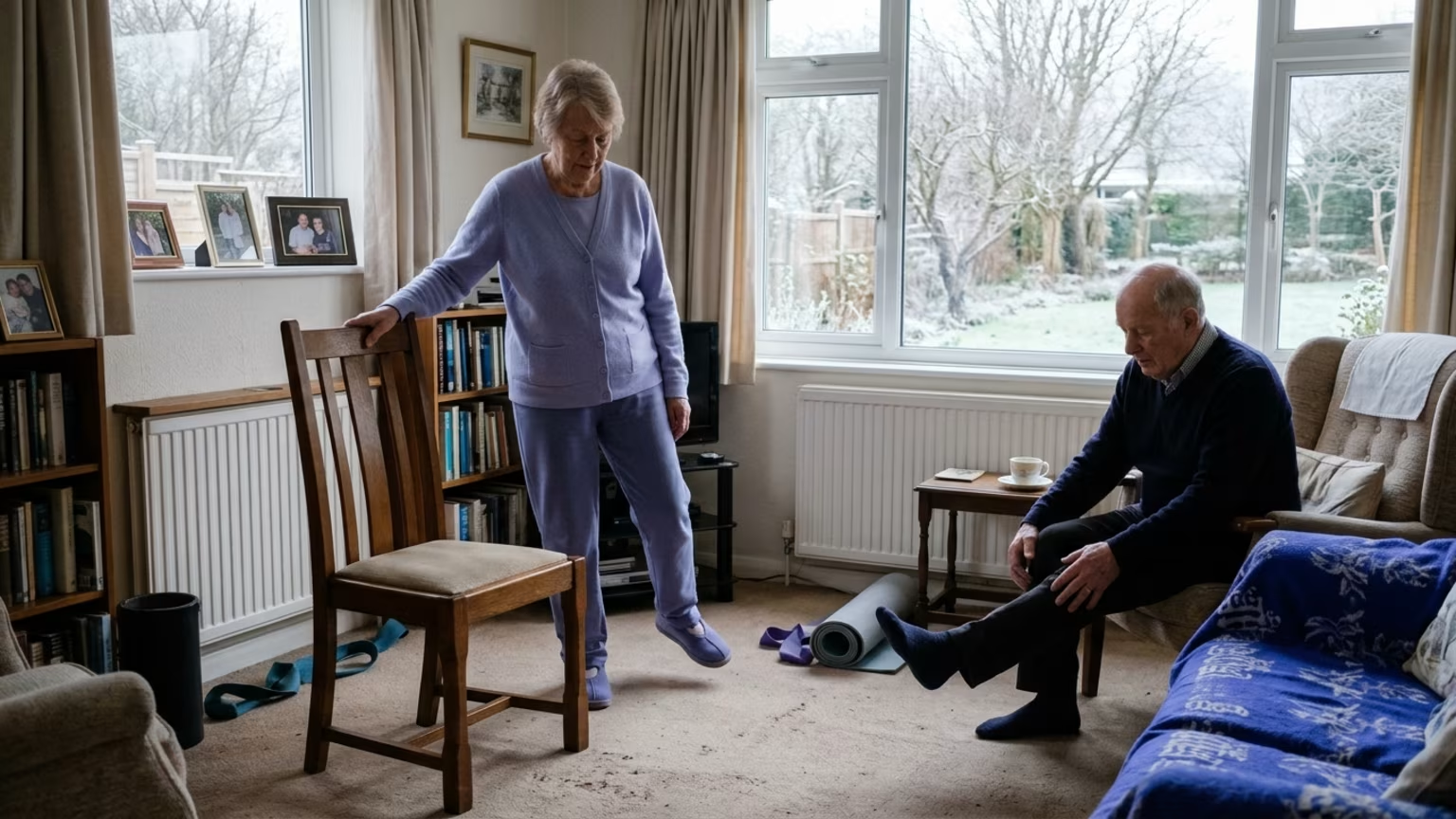

An NHS Trust’s winter advice emphasizes manageable movement, strength and balance. Learn how to place the message in recovery context.





On 18 November 2026, University Hospitals of Morecambe Bay NHS Foundation Trust (UHMBT) published advice encouraging older adults to keep moving through winter and break up long periods of sitting. The Trust puts particular emphasis on strength and balance activities. It says these can support everyday tasks and help reduce fall risk.
Colder weather and darker evenings are the setting for the message. UHMBT points to manageable movement and enjoyable activities as ways to remain active when spending more time indoors may be tempting.
For adults rebuilding activity after an orthopedic setback, the useful issue is how to read that message. It offers a seasonal perspective on staying active while keeping daily independence in view.
The broader idea is already part of public-health advice. The World Health Organization’s physical-activity fact sheet says that any amount of activity is better than none and that all activity counts. It also says people of all ages should limit sedentary time and that muscle-strengthening activity benefits everyone.
WHO describes sedentary behavior as low-energy activity while awake. Sitting, reclining and lying down are examples. Its fact sheet also lists reduced fall risk among the benefits associated with regular activity in adults and older adults.
That background helps explain why the winter message is not only about formal workouts. It brings together ordinary opportunities to move and a particular focus on strength and balance. Reading those as related ideas is more useful than reducing the advice to a single exercise target.
There are separate questions here: how much of the day is spent sitting and what kinds of activity are included. The Trust’s message gives attention to both. ReboundBody’s discussion of everyday movement alongside planned exercise offers related background on those categories.
What UHMBT adds is a practical winter frame: how to keep movement possible when outdoor activity becomes harder. Its suggestions include a short walk, dancing at home or another enjoyable activity. It also points to indoor choices suited to a person’s abilities when conditions make going out difficult.
Three parts of that message are worth separating:
The seasonal value is in keeping those ideas visible together. An enjoyable activity is one part of the message. Attention to strength and balance is another.
A useful reading avoids an all-or-nothing choice between a full exercise routine and no movement at all. Instead, the message opens a discussion about manageable activity when the usual options are less appealing or harder to access.
The Trust does not identify walking or dancing as the preferred choice for everyone. They are examples within a broader message about finding suitable activity. That distinction keeps the focus on the person rather than on copying the example.
The winter advice is aimed at older adults thinking about activity in daily life. For ReboundBody’s audience, that may overlap with a period of rebuilding movement after injury or surgery. The shared concern is returning to ordinary life with realistic expectations.
The Trust also describes support from its Community Rehabilitation and Therapy teams. According to UHMBT, these teams provide rehabilitation and advice after an appropriate referral to help adults maintain independence at home.
That service information belongs to the Trust’s own healthcare setting. A US reader can take the activity themes as general context without assuming the same referral arrangements apply locally.
Readers leaving formal rehabilitation may find the independence theme especially relevant. The question is not simply whether to exercise again. It is how everyday movement fits alongside the care already guiding their recovery.
For related background on one part of that discussion, ReboundBody covers balance practice and safe progression.
The most useful application is a focused conversation about ordinary activity. UHMBT advises starting gradually and choosing activities that are safe and appropriate to the person’s abilities. Those principles leave room for individual care rather than assuming everyone begins winter in the same place.
Walking and dancing are examples in the Trust’s message. They make activity sound approachable without ranking one option above another. For someone returning after a setback, the discussion can begin with which familiar activities fit their current recovery plan.
Questions for a qualified healthcare professional might include:
These questions keep the seasonal message connected to the reader’s actual situation. They also separate the wish to become more active from the clinical decisions about how that return should happen.
For someone uncertain about leaving formal rehabilitation, that distinction matters. Understanding where everyday activity fits is a different task from selecting a new exercise routine. The conversation can begin with the activities the person hopes to return to and the advice already in place.
The Trust separately encourages people to break up long periods of sitting. That makes sitting time a topic in its own right, rather than something to consider only after choosing a workout.
For a recovery discussion, the useful question is what movement is already suitable during the day. That keeps the conversation grounded in current abilities and existing care.
The message is broader than finding a replacement for an outdoor exercise session. It also invites attention to the long stretches between activities. Keeping those two topics separate can make the guidance easier to discuss clearly.
UHMBT identifies clear reasons to seek healthcare advice: having fallen, feeling unsteady or being unsure which activities are suitable. These are points for qualified assessment rather than reasons to copy a general list of exercises.
That emphasis is relevant to readers who are uncertain about the move from formal rehabilitation back to normal activity. A conversation can focus on what has already been agreed and what still needs clarification.
ReboundBody also places strength and balance within broader fall-prevention context for readers seeking related educational background.
The main limit is the type of publication. UHMBT has issued practical public guidance, not a new clinical guideline or research report. There is no studied participant group or trial result behind this particular winter article.
It gives no workout prescription, target number of minutes or sessions, or quantified fall-risk reduction. The suggested activities therefore should not be presented as a tested winter program with a measured benefit.
It also does not explain how to modify activity for a particular injury, operation, pain level or recovery stage. General public-health recommendations from WHO do not supply those missing personal details.
That leaves important questions open: which activity is suitable now and how should it change as recovery progresses? Those questions belong in the reader’s care discussions. The winter reminder provides context for them rather than an individual answer.
The distinction matters when assessing recovery headlines more broadly. Advice about staying active and evidence that a specific program changes outcomes are different kinds of information. Keeping them separate makes it easier to understand what a source is offering.
Clear information. Realistic expectations. Room for individual recovery.
Winter activity decisions during recovery rest with the reader and their healthcare team; ReboundBody adds independent educational context to inform that discussion. Its coverage helps adults understand the uncertain transition from formal rehabilitation to ordinary activity through clear explanations of movement and strength rebuilding, with realistic expectations rather than medical promises.

Follow ReboundBody for practical articles on injury recovery, rehabilitation, mobility and rebuilding strength. New posts turn research into clear ideas for the road back to activity after injury or surgery.






Read practical guidance on injury recovery, rehabilitation, mobility and rebuilding strength as you work your way back to activity.
Explore Resources