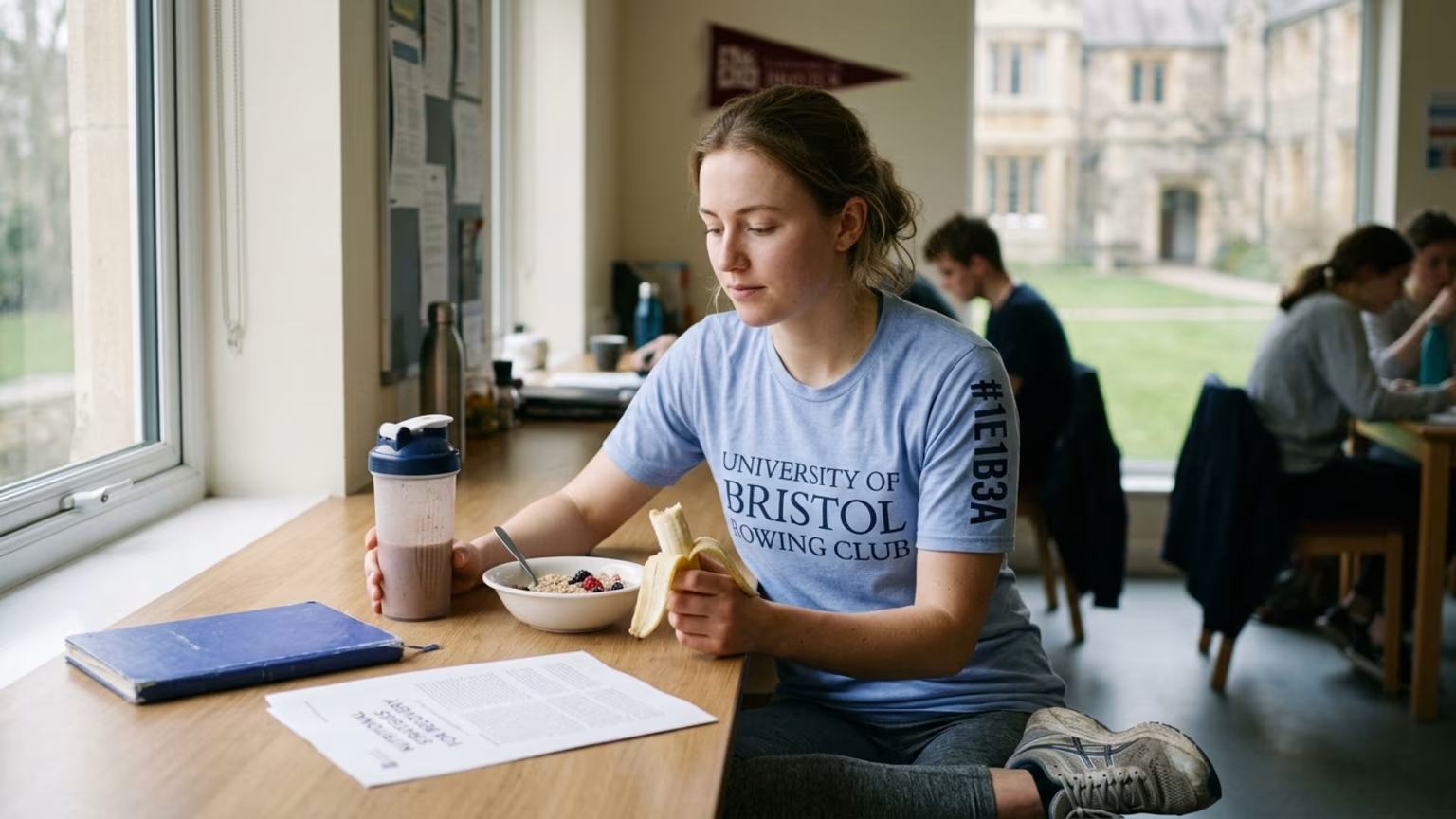

A recent University of Bristol interview outlines why prioritizing sleep and fueling can support physical adaptation and injury rehabilitation for active adults.





On October 2, 2026, the University of Bristol published a detailed practitioner interview titled “Inside the England Camp.” The institution updated this publication on October 3. It features Dr Suzanne Scott, who is a Bristol lecturer in Anatomy and Movement. Scott also serves as a movement coach with the England men’s senior football team.
The article outlines an evidence-informed framework for physical rebuilding and performance. It highlights the importance of adequate rest, sleep, and carbohydrate availability around activity. It also emphasizes the value of plant foods and protein for physical adaptation. These practitioner observations provide a helpful perspective on fueling and sleep during physical rehabilitation.
Before adopting new practitioner observations, it is helpful to understand the biological reality of reduced activity. A period of extreme inactivity often follows a severe orthopedic injury or surgical procedure. A 2026 review provides critical context about this specific physical challenge. It describes how muscle loss occurs during disuse and argues for combining resistance exercise with proper nutrition.
The physical impact of extreme inactivity can appear quite rapidly. The 2026 review reports that cited earlier studies found about 1.6 kg of lean-mass loss after one week of strict bed rest. Strict bed rest is not identical to a standard orthopedic recovery. However, this measurable loss illustrates why the body requires active support after a physical setback.
The same review indicates that higher protein intake may be relevant during periods of bed rest. It cautions that its suggested range should not be treated as an individualized recommendation. Every recovering person requires specific clinical context before adopting dietary targets. This evidence highlights why standard nutrition must often adapt during formal rehabilitation.
The recent Bristol publication is a practitioner Q&A rather than a controlled clinical trial. It does not report new research findings or supply specific study citations. Instead, it offers Scott’s evidence-informed observations drawn from her professional coaching practice. Her broad message to the general public is to prioritize regular rest and good nutrition.
Scott acknowledges that real-world factors can easily disrupt these foundational health habits. She notes that work, family, and economic pressures can make a consistent recovery routine difficult. Uncontrollable broken sleep can also frustrate a person's attempts to rest fully. Despite these challenges, she advises people to treat sleep as a crucial part of daily life.
To improve sleep quality, she recommends allowing dedicated time to wind down before bed. In the interview, she states that inadequate rest may affect how the body adapts to physical loading. She also observes that good sleep helps consolidate physical training gains. These statements reflect her professional experience rather than new trial results reported by the university.
Food timing serves as another vital element of Scott's recovery framework. She advises people to consider when they eat as well as what they consume daily. As a practical example, she suggests avoiding late eating as a way to support better sleep. The published article does not provide a strict clock-time cutoff for evening meals.
Regarding physical exertion, she recommends increasing carbohydrate intake directly around activity. She also advises consuming carbohydrates immediately afterward to support recovery. This timing helps reflect the intense demands placed on the body’s energy stores during movement. The article specifies no precise carbohydrate amount, preferred food type, or rigid timing window.
Her broader nutrition guidance encourages including plenty of plant foods in daily meals. She suggests choosing bright colours and leaning toward good protein sources where possible. The article does not quantify daily plant servings or establish a specific recovery effect from these foods.
Scott also addresses the complex nature of musculoskeletal pain during physical activity. She states that not all joint pain is inherently bad during the rebuilding process. She suggests that some physical discomfort may point to a need for targeted strengthening. Muscles sometimes simply need better preparation to handle everyday tasks or exercise loads.
However, she does not advise ignoring painful symptoms or forcing movement through serious discomfort. If a person is concerned about their physical pain, she recommends seeking a musculoskeletal practitioner. A qualified professional can ensure that physical loading and activity dosing are tailored safely. The Bristol article itself does not provide a medical diagnosis or a general rehabilitation protocol.
It is vital to recognize the specific population that inspired these observations. Scott’s elite-football examples involve demands that most ordinary people will never face. Her players navigate rapid match turnarounds and constantly changing physical workloads during a competitive season. The article does not show that these extreme demands apply directly to people recovering from standard injuries.
A person returning from an orthopedic surgery faces a completely different set of physical challenges. Fortunately, Scott frames her recommendations as adaptable guidelines rather than universal rules. She encourages readers to ask whether a specific practice is right for their individual situation. She also suggests verifying whether medical evidence actually supports a given recovery habit.
She explicitly warns against adopting new practices simply because an influencer recommends them. This cautious mindset is incredibly valuable for anyone navigating a long physical rehabilitation process. The core principles of sleep and fueling are beneficial, but they require careful adjustment for an injured body.
Active adults can use this framework to structure their daily recovery routines safely. Treat the Bristol piece as a helpful set of practitioner observations rather than a medical blueprint. It is not a post-operative diet plan or proof that a specific food instantly speeds healing. If you are cleared for activity, discuss your overall food intake with your clinician or dietitian.
This conversation is especially crucial if your recovery has significantly altered your normal daily habits. Orthopedic setbacks often cause reduced appetite, mobility limitations, or changes in usual eating patterns. Reviewing the importance of practical protein choices can help you maintain a solid nutritional baseline. The Bristol article itself does not give individualized nutrition targets for specific injuries.
You should also consider sleep and rest as part of the broader injury recovery conversation. Try to implement a calming wind-down routine if your daily schedule allows for it. Keep in mind that severe sleep disruption may sometimes fall outside your immediate control. Building a framework for pacing physical activity safely can help manage your energy levels during the day.
When it comes to physical exercise, avoid directly copying an elite athlete’s training routine. Instead, ask your treating clinician how to gradually progress your specific loading and daily activity. Understanding the concept of milestones in surgical rehabilitation can support a safer return to movement. Work closely with your healthcare team to build a timeline that respects your physical limits.
Finally, do not interpret general statements about joint pain as permission to ignore worsening symptoms. Scott's own advice emphasizes the importance of seeking professional help for concerning physical discomfort. Taking the time to understand structured physical progression is essential for long-term safety. Always consult a qualified musculoskeletal practitioner to evaluate any unexpected pain during your recovery journey.
Several practical limitations remain within this evidence-informed recovery framework. The Bristol article’s specific nutrition guidance is intentionally broad and highly flexible. It supplies no exact daily protein target, measured carbohydrate dose, or rigid meal schedule. Because it lacks these specific quantities, it should never be presented as a clinical prescription.
Furthermore, the biological realities of disuse remind us that nutrition is rarely a complete medical solution. While proper fueling can support the body during a period of reduced activity, it cannot replace formal rehabilitation. Relying entirely on dietary changes without addressing physical movement is unlikely to yield optimal recovery results over time.
True physical recovery remains an individualized process that depends heavily on clinical guidance and timing. Sleep, carbohydrates, and protein are foundational elements, but their precise application varies widely among patients. General practitioner observations provide a helpful roadmap for daily habits and overall health. However, a safe return to regular activity requires personalized medical oversight and structured physical rehabilitation. Relying on broad advice without adapting it to your specific clinical stage can lead to frustration. Always treat nutritional habits and sleep routines as supportive tools rather than primary cures for orthopedic injuries.
Translating broad practitioner observations about sleep and fueling into a practical daily routine often challenges patients trying to rebuild physical capacity, and ReboundBody helps simplify that planning process. We directly address the fear of reinjury or doing too much too soon, helping active adults understand their limits and confidently prepare for their next clinical visit. Browse Resources

Follow ReboundBody for practical articles on injury recovery, rehabilitation, mobility and rebuilding strength. New posts turn research into clear ideas for the road back to activity after injury or surgery.


Read practical guidance on injury recovery, rehabilitation, mobility and rebuilding strength as you work your way back to activity.
Explore Resources