

An October 31 opinion article pairs weight-bearing activity with strength work. Read its advice in context during a return to activity.





On October 31, 2026, the Daily Breeze published an opinion article by registered dietitian LeeAnn Weintraub on bone health and aging. Her message paired weight-bearing activity with strength training as complementary ways to load bones and support bone tissue. She also emphasized gradual resistance increases and choosing activities that match a person’s ability.
The Daily Breeze article connected bone health with maintaining mobility and independence. It placed exercise within a broader nutrition-and-lifestyle approach rather than presenting movement as the whole answer.
For adults returning to activity after an orthopedic setback, the useful question is how those parts fit together. The article offers a starting point for that conversation, especially when walking is already familiar but strength work feels less clear.
Before Weintraub’s article appeared, a professional discussion of osteoporosis care had addressed a wider set of exercise goals. In an October 6, 2026, ReachMD interview, a clinical expert discussed exercise selection and progression in relation to safety.
The expert said impact activity should be chosen with safety in mind and could begin at lower impact before progressing. The interview also supported professional guidance on exercise selection, intensity and progression.
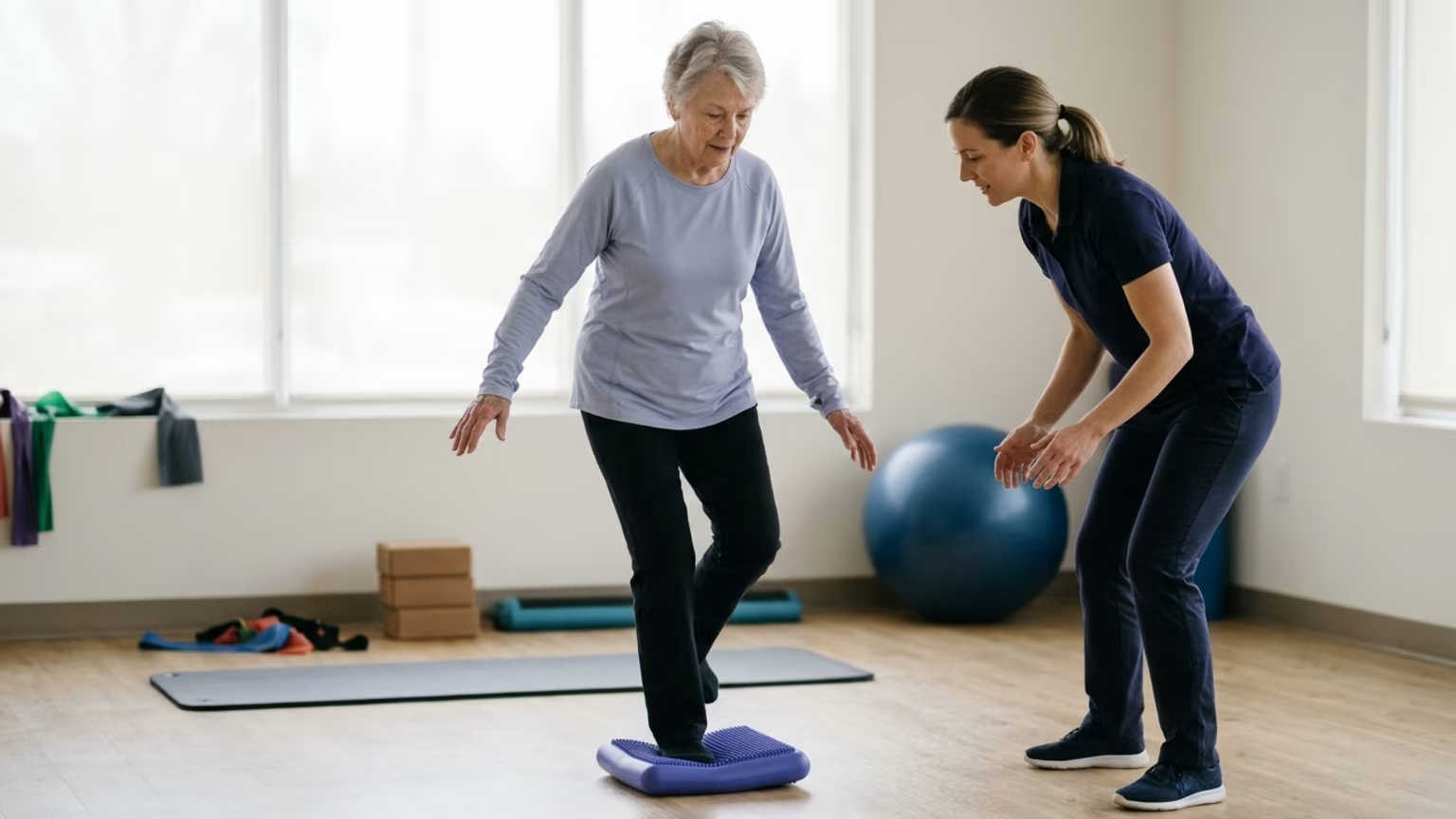
Just as important was the distinction between goals. When fracture prevention is the priority, the expert advised combining balance and functional training with strength work rather than relying on aerobic exercise alone. In that discussion, bone loading was one consideration among several.
That context helps explain why a bone-health message should not be reduced to accumulating walking time. The professional commentary placed balance and everyday function alongside strength. Weintraub’s later article brought weight-bearing movement and resistance work into a general healthy-aging discussion.
The two sources serve different purposes: one discusses osteoporosis exercise guidance, while the other offers public-facing advice about aging well.
Weintraub recommends 30 minutes of weight-bearing activity most days and strength training at least twice weekly. Those are her recommendations in the opinion piece. She also advises increasing resistance gradually and selecting activities according to fitness and ability.
Her examples of weight-bearing activity include:
The list shows the range of activities included in her message. It is better read as a set of possibilities than as a list every reader needs to complete. Her instruction to match activity to ability is central to understanding those examples.
Strength work appears beside weight-bearing movement rather than as a substitute for it. The practical addition is this pairing: bone-health activity is discussed in terms of both regular movement and resistance work. The article also makes progression part of the message instead of focusing only on a weekly schedule.
For a reader comparing exercise advice online, it helps to keep those elements separate. The schedule describes the author’s suggested frequency. Gradual resistance increases describe progression, while ability-matched selection concerns which activities belong in the discussion.
The article also includes calcium, protein and vitamin D within its broader approach. That keeps the exercise message in context: Weintraub is discussing several aspects of bone health rather than presenting one activity as a complete answer.
The Daily Breeze article addresses healthy aging and the role of bone health in mobility and independence. Its most direct audience is adults considering long-term habits, including regular walking and resistance work.
A reader returning from surgery or an injury brings a different question: how does general activity advice connect with the current stage of recovery? The same question matters after a recent fracture or during a recurring musculoskeletal problem. Those recovery situations require attention to current ability rather than an age-based exercise message alone.
Long-term bone-health education and return-to-activity decisions overlap, but they are not identical. One asks which habits deserve attention over time. The other asks how movement fits a person’s present circumstances and rehabilitation goals.
ReboundBody’s discussion of bone health within everyday recovery habits provides related reading on that broader connection. Keeping the two questions distinct makes it easier to bring a general article into a focused conversation with a healthcare professional.
The strongest practical use of this article is as a conversation starter. Its themes suggest questions about activity selection and progression, while the ReachMD interview adds balance and function when fracture prevention is a concern.
Weintraub’s advice to match activity to ability deserves as much attention as her suggested schedule. Her examples are options, not a ranking of which activity is best for a particular reader.
A useful question for a physician or rehabilitation professional is: “Which forms of weight-bearing activity fit my current situation?” This connects the general message to the individual decision without assuming that every activity on the list belongs in the same recovery plan.
Both sources address progression. Weintraub recommends gradual resistance increases, while the ReachMD expert discusses guidance on exercise selection and intensity as well as progression.
The question to bring forward is: “What should guide a change in resistance or impact in my situation?” This keeps the discussion focused on the reasoning behind progression rather than treating a general frequency target as the only measure that matters.
When fracture prevention is a priority, the ReachMD expert’s comments support asking how strength work connects with balance and functional training. The aim is to clarify the purpose of each part of an activity plan.
A useful question is: “Does my plan address balance and everyday function as well as strength?” That is more specific than asking whether walking is enough. It also avoids treating aerobic activity as a replacement for every other exercise goal.
For many readers, the concern is not simply completing exercise sessions. It is understanding how formal rehabilitation relates to normal movement and recreation.
Naming that concern gives a healthcare professional a clearer question to address. ReboundBody’s guide to linking recovery goals with daily life offers related context for thinking about function and activity rather than a schedule alone.
Weintraub advises consulting a physician before beginning a new exercise program. Personal decisions about adding activities or changing an existing recovery plan belong in that qualified-care conversation.
The central evidence limit is straightforward: Weintraub’s article is commentary, not a trial of its suggested exercise schedule. It does not report a group of people assigned to that schedule and followed for fracture outcomes. Supporting bone tissue should therefore not be treated as proof that the exact routine prevents fractures.
A broader uncertainty also remains. A search-result summary of the 2026 DVO guideline in BMC Endocrine Disorders describes exercise as important for people at increased fracture risk. That guideline was published on February 16, 2026. The summary says the most effective exercise strategy for fracture prevention remains undetermined.
The ReachMD interview provides expert commentary rather than an outcome study of Weintraub’s recommendations. Neither the opinion article nor that interview establishes a recovery timeline or a program for a particular operation, orthopedic injury or recent fracture.
The open questions are therefore specific: which combination of activities best serves a given person’s goals, how should progression be managed and how do bone-health aims fit existing rehabilitation? Those questions call for individualized professional guidance rather than a universal answer drawn from an opinion article.
Keep movement decisions informed, with room for the person behind the plan.
After considering bone-health activity, the next question is how it fits into life beyond formal rehabilitation, a transition ReboundBody covers in its recovery articles. For adults in midlife and later life facing uncertainty at that stage, its explanations of strength rebuilding and return to activity offer context for understanding milestones and discussing decisions with a healthcare team.

Follow ReboundBody for practical articles on injury recovery, rehabilitation, mobility and rebuilding strength. New posts turn research into clear ideas for the road back to activity after injury or surgery.




Read practical guidance on injury recovery, rehabilitation, mobility and rebuilding strength as you work your way back to activity.
Explore Resources