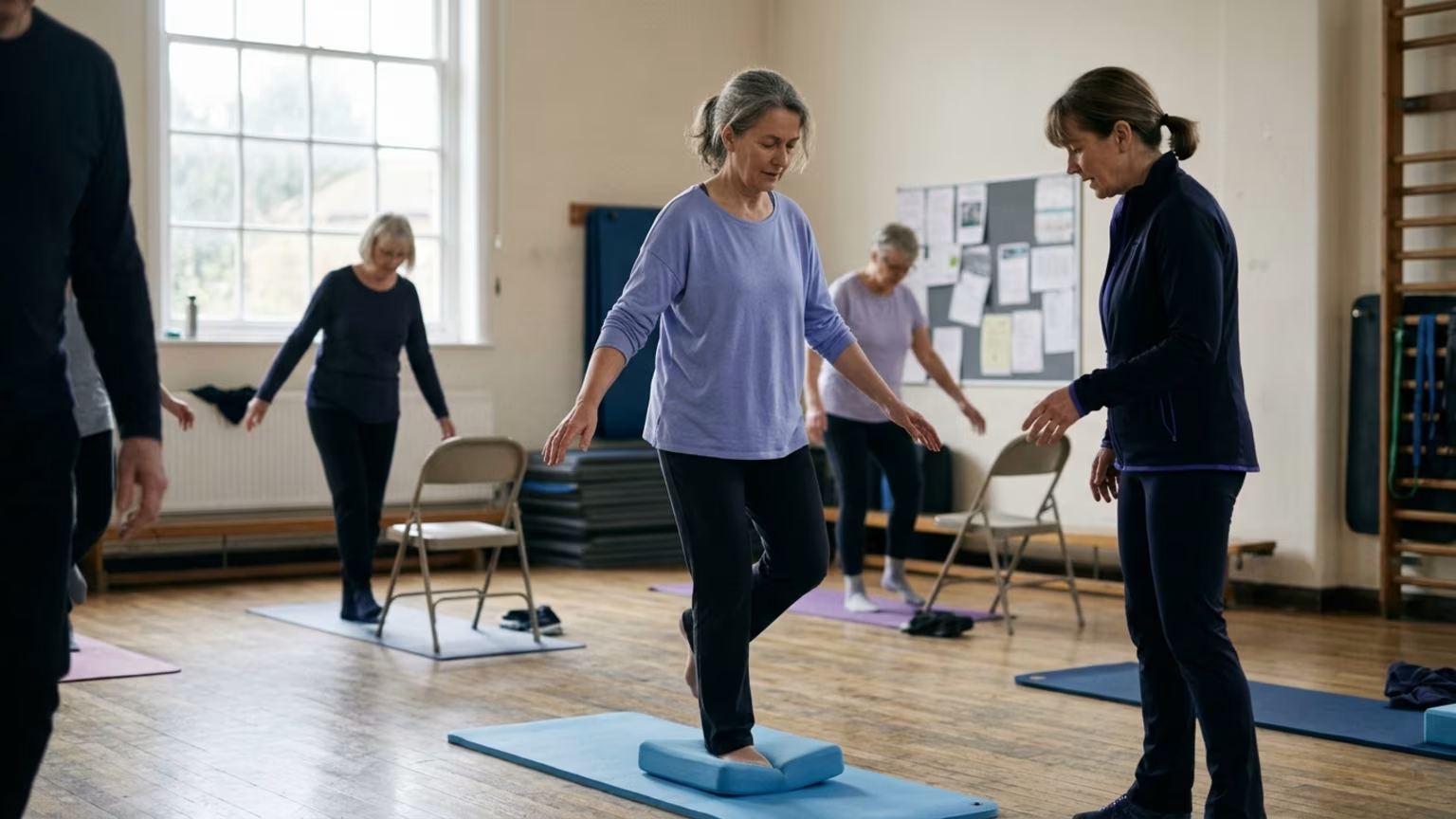

Recent reports argue that physical stability training should begin before older age. Learn how active adults can safely approach midlife movement control.





Physical stability is rarely discussed as a priority for adults in their thirties and forties. However, new editorial coverage suggests that individuals should begin focusing on movement control long before they reach their senior years. On October 6, 2026, the publication InsideHook released an article arguing that balance training should not be reserved exclusively for older adults. The publication reports that measurable changes in physical stability can begin much earlier in life than many assume.
According to the article, a Japanese standing-leg study found that eyes-open balance seems to peak at age 30. The same study indicates that eyes-closed balance peaks even earlier at age 28. The InsideHook piece also notes that other research identifies a tangible decline in physical stability around age 50. These reported numbers have sparked new conversations about when adults should start paying attention to their physical control.
The idea that stability might peak in our late twenties challenges the typical fitness narrative. Many active adults spend their thirties and forties focusing heavily on cardiovascular endurance or heavy resistance work. Physical control and stability are often treated as secondary concerns until a specific physical setback forces a change. The InsideHook article attempts to reframe this timeline by highlighting early changes in functional capacity.
By bringing these age-related claims to the forefront, the publication encourages readers to evaluate their current movement habits. The story acts as a timely prompt to include movement control in conversations about staying active. It positions physical stability as a constantly evolving skill rather than a static trait. This perspective is particularly relevant for adults who want to maintain their physical independence over time.
Historically, medical guidelines and fitness programs have treated balance training as a concern strictly for older populations. The primary focus of most stability research is the prevention of serious falls in adults over the age 65. Younger and middle-aged adults are rarely the subjects of dedicated physical control studies. This historical focus shapes how standard fitness programs are designed for the general public.
A 2025 review indexed in PubMed Central clearly illustrates this traditional research bias. That review looked at the cortical mechanisms underlying postural control across 37 different studies. It included 1,302 participants, but 788 of those individuals were older adults. The available data from that review does not establish a specific midlife age threshold or an actionable training prescription.
This heavy concentration on older populations leaves a significant gap in the scientific literature for active adults in midlife. A 2026 academic commentary published in the Journal of Clinical Endocrinology & Metabolism confirms this ongoing issue. The commentary notes that fall prevention is rarely studied in middle-aged adults. This lack of dedicated research leaves clinicians with a lack of evidence on which to base specific balance guidelines.
Because the scientific community has historically focused on older demographics, adults in their forties and fifties often lack clear direction. They are frequently left to guess how they should modify their routines to maintain physical control. Without established clinical benchmarks, it is difficult to know what normal variation looks like during midlife. The absence of targeted research makes it harder to develop effective preventative strategies.
The new InsideHook article frames physical control as a highly trainable part of everyday movement. It describes balance as a complex system involving muscles and joints alongside vision, the inner ear and proprioception. The publication links regular balance practice with improvements in ankle strength, core strength and range of motion. It also suggests that maintaining stability helps people walk faster and continue playing sports as they age.
To illustrate these points, the author shares several personal anecdotes about his own physical challenges. He describes a personal force-plate assessment that classified his balance as "at risk." He also recounts experiencing difficulty holding yoga poses and suffering a brief loss of balance after missing a step. These personal stories highlight how subtle changes in stability can impact daily activities.
To address his stability issues, the author discusses his experiences with various training methods. The story mentions conventional balance drills that utilize simple cones and taped lines. It also describes the author's experience using a Gibbon SlackBoard, which costs $230. The article describes this piece of equipment as enjoyable and engaging, while explicitly stopping short of calling it a must-own tool.
The author primarily relies on his own timed eyes-closed stands to measure his progress. Notably, the InsideHook story contains no quoted external researcher, clinician or trainer. Its conclusions and practical recommendations are presented entirely through the article’s narration and the author’s own experience. This anecdotal approach is common in general fitness media, but it lacks clinical rigor.
The findings and personal anecdotes in this report apply mostly to general fitness audiences looking to maintain everyday mobility. The InsideHook story does not provide a formal prescription for training frequency, duration or exercise progression. Its age-related claims should be treated carefully as reported numbers rather than established universal thresholds. The article itself notes there may be no need to identify an exact birthday when physical control begins to change.
The publication does not identify the underlying Japanese study by title, authors or journal. It provides no sample size or measurement protocol for those specific age-related findings. Therefore, readers should not assume that every person will experience a tangible decline exactly at age 50. The reported peaks at age 28 and 30 are interesting discussion points rather than strict biological rules.
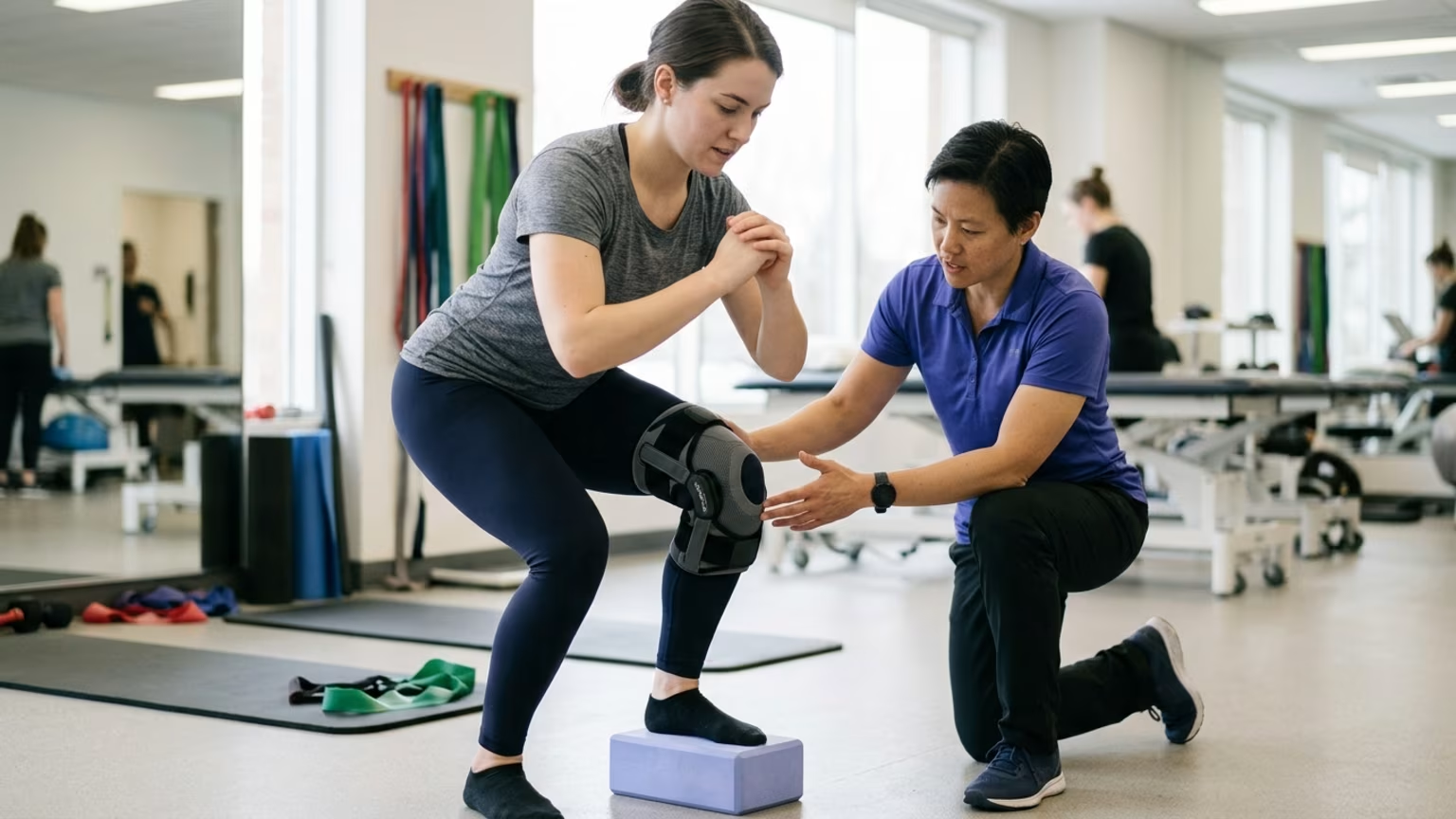
For readers recovering from an orthopedic injury or surgery, the story does not supply rehabilitation-specific instructions. A person managing a recurring knee issue has very different stability needs than a healthy adult testing their limits. Trying to replicate the author's eyes-closed stands or using unstable equipment could be inappropriate during early recovery. Healing joints require progressive loading strategies that are tailored to the specific injury.
General active adults can use this information to think proactively about their movement habits. However, individuals actively rehabilitating a joint must follow careful guidance from their healthcare team. The general examples provided in the article should never replace targeted medical advice. Building stability after a setback requires a structured and heavily monitored approach.
Active adults can view this information as a prompt to evaluate their current movement habits safely. You do not need to wait for a specific birthday to start thinking about joint stability. Working on physical control can be a practical part of reestablishing a consistent exercise routine following an injury. Readers can focus on simple exercises that challenge their base of support in a controlled environment.
Practicing weight shifts or narrow stances can help reinforce the connection between the brain and the body. These deliberate movements can complement a larger routine that successfully balances daily non-structured movement with dedicated workout sessions. You can incorporate basic physical control tasks into your weekly schedule without needing expensive equipment. Consistent, low-intensity practice often yields better results than infrequent, high-intensity balance challenges.
Balance work should be framed as one possible component of returning to everyday movement and recreation. It is not a replacement for condition-specific rehabilitation or an absolute assurance of improved athletic performance. Understanding these concepts helps you navigate the process of restoring physical steadiness for normal daily tasks with realistic expectations. Recognizing the limits of general fitness advice is crucial for long-term joint health.
It is always helpful to discuss these movement strategies with a qualified physical therapist. A structured approach helps you safely progress your training without overstressing vulnerable joints. Professionals can help you design a routine that addresses your specific physical deficits. This personalized guidance ensures that your stability practice actually supports your recovery goals.
Several critical questions remain open regarding how middle-aged adults should best train for physical stability. Because the InsideHook article does not explain the underlying testing protocols, its age-based findings cannot be thoroughly verified. It is unclear if the eyes-open, eyes-closed and age-50 measurements evaluate the exact same physical abilities. The term balance can refer to many different tasks, and different tests often yield varying results.
The story makes broad connections between stability training and outcomes like ankle strength, but it lacks clinical backing. It does not cite a specific intervention trial demonstrating that its featured equipment produces those specific functional benefits. The article’s discussion of the SlackBoard is essentially a product review rather than a proven clinical strategy. It does not provide evidence that a balance board is necessary or appropriate for joint rehabilitation.
The lack of injury-specific safety guidance leaves a significant gap for anyone navigating a structured rehabilitation program. Without formal clinical guidelines for adults between 35 and 64, individuals must rely on personalized advice. Healthcare professionals are currently the best resource for interpreting how stability concepts apply to your specific body. The exact timeline for when physical stability changes will continue to vary significantly from person to person.
Guidance in this area will likely evolve as more research finally focuses on middle-aged populations. Until more robust studies are published, active adults should view general fitness claims with a healthy amount of skepticism. Incorporating sensible movement control practice is a wise choice, provided it aligns with your physical capacity. The goal is to build physical resilience safely, avoiding unnecessary risks along the way.
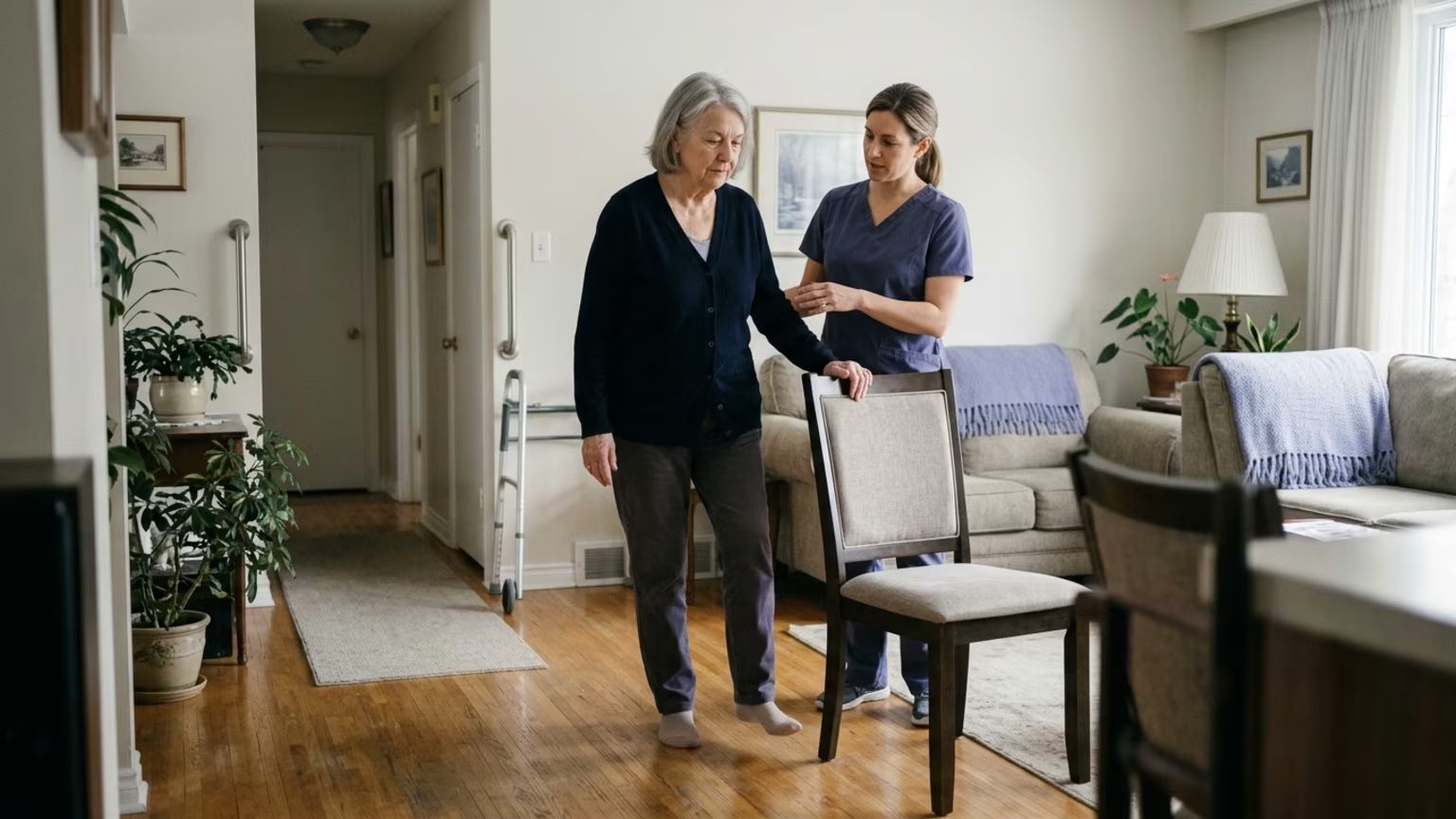
If you want to understand your current physical control, safely test your single-leg stance today. Stand next to a sturdy kitchen counter, place your hands lightly on the surface and slowly lift one foot. Notice which side feels more steady, and use that observation as a starting point for discussions with your therapist.
Assuming that a single reported age marks the universal start of physical decline can cause active adults to worry unnecessarily. ReboundBody addresses the confusion about recovery timelines and what normal variation can look like, helping you evaluate broad fitness claims objectively. We provide independent editorial context so you can safely incorporate stability practice without rushing your progress.

Follow ReboundBody for practical articles on injury recovery, rehabilitation, mobility and rebuilding strength. New posts turn research into clear ideas for the road back to activity after injury or surgery.




Read practical guidance on injury recovery, rehabilitation, mobility and rebuilding strength as you work your way back to activity.
Explore Resources