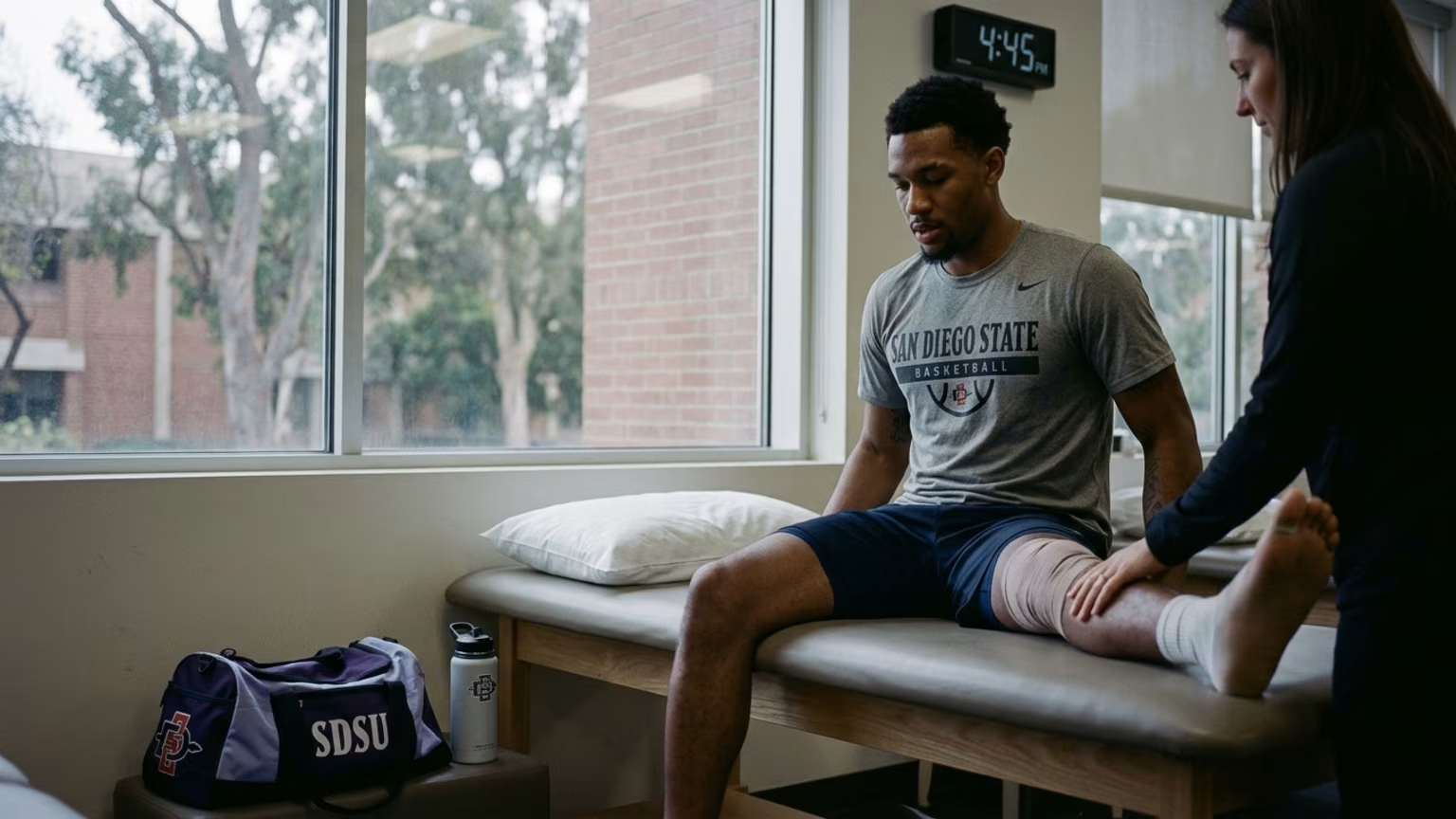

Nick Anderson’s rapid ACL recovery highlights an elite athletic protocol. This case shows why highly managed sports timelines are not everyday clinical guides.





In October 2026, the San Diego Union-Tribune reported on an unusually rapid recovery following anterior cruciate ligament surgery. San Diego State guard Nick Anderson tore his ACL during a non-contact drill in May and underwent repair surgery in early June. According to the publication, his rehabilitation has progressed much faster than typical cases. Just two months after his procedure, the player was already dunking a basketball.
The report noted that Anderson appeared to be two to three weeks ahead of a standard rehabilitation schedule. This specific athletic milestone offers a look at how accelerated protocols operate in elite collegiate environments. It also highlights the intense pacing that follows a major joint repair. Outlining this case provides a clear contrast to what normal recovery looks like.
To understand why this pacing stands out, it helps to look at the typical expectations for this type of knee injury. The San Diego Union-Tribune noted that a standard healing period for an ACL repair spans nine to 12 months. For most active adults, rehabilitation involves a slow and careful progression. Patients usually wait several months before attempting dynamic movements.
This cautious approach allows the repaired tissue to heal securely. In standard clinical settings, a safe return to activity requires careful load management. Clinicians typically establish strict criteria for when a patient can progress to running or jumping. A standard nine to 12 month window accounts for normal variation in biology, muscle atrophy, and movement confidence.
When a joint is immobilized after surgery, the surrounding muscles quickly lose strength and volume. Rebuilding that muscle mass is a foundational step before complex movements can be reintroduced safely. This rebuilding phase is a core component of restoring mobility after orthopedic surgery. Everyday athletes are typically advised to expect a long, gradual rebuilding phase.
Patients often look for clear schedules when they begin physical therapy. It is entirely normal to want a predictable map for the months ahead. However, human tissue heals at a rate governed by biology rather than a calendar. Maintaining consistent physical therapy habits matters far more than matching a rigid monthly schedule.
Anderson's case provides a detailed look at how an accelerated athletic protocol is structured. At the time of the October report, his daily routine included running on an anti-gravity treadmill. He was also performing some lateral movement drills and shooting in stationary positions. These activities represent the transition between controlled clinical exercises and sports actions.
Despite this rapid progress, Anderson's projected practice date was simply a personal estimate. He estimated that he might become a full practice participant by late December. This timeline would place him back in full practice less than seven months after his surgery. However, the San Diego Union-Tribune made it clear this was his projection rather than a confirmed medical clearance.
The reporting distinguishes carefully between active rehabilitation and full participation. While Anderson was moving well on the court, full practice remained a future possibility. The case highlights that passing early milestones does not automatically erase the remaining months of a recovery timeline. This is a common theme in knee rehabilitation and movement.
This rapid progress reflects the highly specialized environment of elite college basketball. Anderson benefits from a daily regimen directed by athletic trainer Sergio Ibarra and strength coach Daniel Marshall. He observes team practices, completes targeted weightlifting sessions, and receives ongoing physical treatment. The San Diego Union-Tribune describes a single, closely supervised case rather than a new clinical guideline.
These accelerated milestones do not apply to the average patient recovering in a standard clinic. Elite athletes dedicate several hours each day to their physical recovery. They operate under constant supervision from a dedicated medical team. For a collegiate program, managing an athlete's physical progress is a structured, daily operational task.
Because of these differences, an athletic timeline cannot safely be translated to everyday life. A person managing work, family obligations, and standard appointments faces a completely different structural reality. Understanding these differences is crucial for anyone exploring outpatient, home-based or hybrid rehabilitation. The clinical milestones might look similar, but the speed of progression depends on unique daily resources.
Everyday athletes must balance their rehabilitation exercises with normal life demands. Physical therapy fatigue is a real challenge when trying to maintain a steady recovery pace. Without a team of trainers overseeing daily movement, ordinary patients rely on periodic clinical check-ins. This reliance on self-guided exercise between appointments fundamentally changes the speed of rebuilding strength.
Anderson also entered this recovery as a highly conditioned athlete. He averaged 15.5 points per game and shot 40 percent on three-point attempts for Rice the prior season. His pre-injury fitness level provided a strong physical baseline for his rehabilitation. This baseline is another reason why athletic timelines remain distinct from everyday recovery plans.
For active adults recovering from orthopedic surgery, this report serves as a helpful boundary lesson. High-profile athletic recoveries often set unrealistic public expectations. A professional sports timeline should be viewed as a unique case report instead of a personal benchmark. The defensible takeaway is to discuss progress and possible goals directly with your own clinicians.
It is common for patients to feel frustrated when their progress does not match the news. Hearing about a collegiate player dunking two months after surgery can create doubt about your own clinical plan. However, trying to replicate an accelerated timeline without continuous professional oversight can increase the risk of setbacks. A safe approach means respecting the biological limits of standard healing.
The temptation to push boundaries usually peaks when early milestones are met successfully. Feeling physically strong in a clinical setting does not always mean the joint is ready for unscripted movement. Sudden shifts in direction or unexpected impacts can easily overwhelm a healing graft. Protecting that graft requires patience, disciplined movement, and strict adherence to a clinical plan.
When a patient tries to match an accelerated pace, they risk placing too much stress on healing tissue. Tendons, ligaments, and bone grafts all require specific cellular phases to mature securely. Skipping these phases to reach a milestone early can compromise the long term stability of the joint. Therefore, following a personal plan is essential when returning to sport after orthopedic surgery.
Despite his fast physical progress, Anderson's actual return to competitive play remains unconfirmed. A potential practice date is simply an estimate, and full participation is distinct from early rehabilitation. SDSU coach Brian Dutcher stressed that the medical staff is directing the process. Dutcher noted that multiple factors will influence any decision about Anderson playing this season.
Broader collegiate eligibility rules also complicate the picture. Anderson applied for an NCAA medical waiver in July and is awaiting a decision. The report notes that the NCAA recently passed a five-for-five rule, though older athletes might operate under previous rules. This administrative context could affect whether he plays this season or sits out to play in the following year.
Anderson mentioned that preparing for either outcome made it difficult to stay motivated without knowing his exact goal. Navigating this kind of uncertainty requires specific strategies for staying motivated through a long recovery. The overall roster situation reflects this ongoing uncertainty as well.
The San Diego Union-Tribune reported that a season return is possible, but Anderson might still miss the entire year. SDSU even pursued a replacement, signing Oregon State transfer Isaiah Sy to help fill the gap. Ultimately, physical progress on the court is just one piece of a complex return to sport decision.
Healing is a highly individualized biological event that does not conform to a single schedule. Every recovery unfolds in its own time, shaped by specific medical guidance and personal circumstances. Recognizing the difference between a highly managed athletic protocol and standard rehabilitation allows people to focus entirely on their own steady improvement. The truest measure of progress is found in the quiet, daily work of rebuilding strength.
A clinical care team usually manages the timeline expectations for a patient recovering from joint surgery. When ReboundBody supplements that clinical guidance with clear editorial context, readers gain a more grounded perspective on athletic recovery stories. We address confusion about recovery timelines and what normal variation can look like, helping active adults understand their own pace without feeling rushed by exceptional sports cases.

Follow ReboundBody for practical articles on injury recovery, rehabilitation, mobility and rebuilding strength. New posts turn research into clear ideas for the road back to activity after injury or surgery.





Read practical guidance on injury recovery, rehabilitation, mobility and rebuilding strength as you work your way back to activity.
Explore Resources