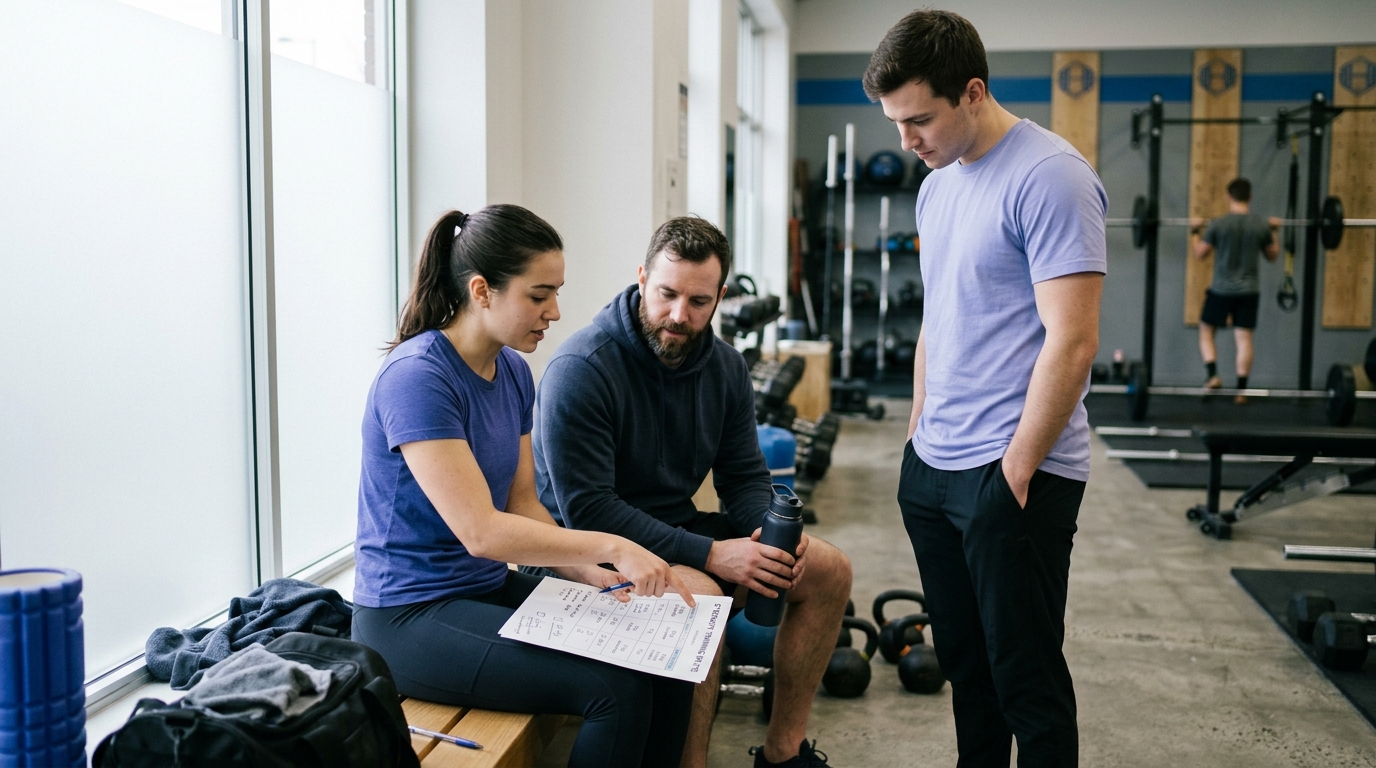

Recovery strength training relies on a structured four-phase system that balances daily readiness checks, priority movement selection, and practical autoregulation strategies.





When returning to physical training after an injury, surgery, medical treatment, or extended illness, many people search online for how to structure a strength workout without making their condition worse. The short answer is that an effective recovery session should follow a flexible, four-part sequence rather than a rigid, high-volume routine. A balanced session starts with a quick readiness check, moves through a low-demand warm-up, focuses immediately on one primary strength priority, and finishes with minimal complementary work before fatigue impairs movement quality.
However, recovery is not a one-size-fits-all process. A person rebuilding knee strength after a joint replacement has different needs than someone managing fatigue during cancer treatment or returning to activity after a severe viral infection. There is no single universal workout prescription that fits every recovering adult.
Training success depends on matching your session to your current physical capacity, respecting clinical precautions, and adjusting load based on daily symptoms. This guide provides a clear, research-supported framework to structure strength sessions safely, make limited training time count, and adapt your exercises as your capacity changes.
A common mistake in recovery training is attempting to follow a standard bodybuilding or fitness routine designed for healthy, fully rested athletes. Traditional programs often demand multiple exercises per body part, training close to muscular failure, and long lists of accessory movements. In contrast, recovery training requires an architecture built around movement quality, energy conservation, and symptom management.
Structuring a workout during recovery requires four distinct phases. Each phase serves a specific purpose in protecting healing tissues while stimulating strength adaptations.
Before touching any equipment, spend two minutes evaluating your baseline state. Ask yourself three simple questions:
This check helps you decide whether to proceed with your planned session, modify the exercises to be easier, or postpone the workout in favor of gentle rest.
A warm-up in a recovery workout should not be a strenuous workout of its own. Its primary role is to raise tissue temperature, lubricate joints, and rehearse the basic movement patterns you plan to use.
Spend three to five minutes on light, continuous movement such as easy walking, stationary cycling, or gentle bodyweight mobility. Follow this with one or two very light practice sets of your main exercise. This rehearsal lets you test how your joints and muscles respond before you add resistance.
Place the most important exercise of the day at the very start of the lifting portion. When recovering, your physical energy and neurological coordination decline quickly.
Performing your priority movement early ensures you execute it with optimal technique, full attention, and minimal fatigue. This single exercise often delivers the vast majority of the session's therapeutic benefit.
After completing your priority movement, assess how you feel. If your energy is stable and you have no concerning symptoms, you may add one or two complementary exercises to balance the session.
If you feel tired, stiff, or notice an increase in discomfort, end the session immediately. A recovery workout does not require an exhausting finish, high-intensity intervals, or extra exercises merely to check a box.
Exercise science offers clear insights into how the body adapts to resistance training. Understanding these principles helps you build a routine that maximizes physical strength while respecting biological limits.
For decades, fitness literature suggested that workouts must always begin with large, multi-joint exercises such as squats or deadlifts before moving to smaller, single-joint exercises like bicep curls or rotator cuff rotations. Modern research on exercise order shows a more practical reality.
Systematic reviews demonstrate that strength gains are greatest in the exercises performed earliest in a session. Neural drive and motor unit recruitment are highest when a person is fresh. If your main rehabilitation goal is rebuilding shoulder stability, placing a targeted rotator cuff or scapular exercise first produces better strength gains for that specific area than placing it at the end of a long workout.
For broader strength goals, evidence supports prioritizing compound movements that train several muscle groups at once. Research on time-efficient training suggests that pairing one lower-body movement with an upper-body push and an upper-body pull provides a comprehensive stimulus in minimal time. The key takeaway is simple: order your session around your individual priority rather than following an arbitrary rule.
Fixed workout plans assume that your physical strength is identical from one Tuesday to the next. In reality, recovery is rarely linear. Sleep quality, systemic inflammation, stress, and medical treatments can cause day-to-day fluctuations in energy and physical tolerance.
This is where autoregulation becomes essential. Autoregulation is the practice of adjusting your training volume, resistance, or rest periods based on how you perform and feel in real time.
A practical tool for autoregulation is the Repetitions in Reserve (RIR) framework:
Using RIR allows you to select weights that match your daily capacity. If a 20-pound dumbbell felt like 3 RIR last week but feels like 1 RIR today due to poor sleep, autoregulation guides you to reduce the weight immediately rather than forcing a predetermined number.
The World Health Organization (WHO) physical activity guidelines recommend that all adults perform muscle-strengthening activities involving major muscle groups on two or more days per week. This benchmark provides substantial long-term benefits for metabolic health, bone density, and functional independence.
However, public health targets describe long-term goals for the general population. They should not be viewed as an immediate requirement for someone recovering from major surgery, acute trauma, or severe illness.
Research on minimalist resistance training shows that previously inactive adults or those returning from a break can achieve measurable strength improvements with just one structured session per week using a single challenging set per exercise. Starting below general population targets is completely normal and clinically sound. You can learn more about managing your progression through recovery science principles that support tissue adaptation.
A successful recovery program must expand or contract based on biological feedback. Instead of viewing a missed exercise as a failure, learn to treat program adjustments as smart training decisions.
A simple traffic light framework helps you decide how to approach your workout each day:
Systemic fatigue is common after medical interventions, viral illnesses, or prolonged periods of bed rest. In these situations, the central nervous system and immune system are already working hard to repair the body.
Clinical practice guidelines for conditions such as cancer-related fatigue emphasize that exercise is safe and effective for reducing tiredness, but the dosage must match individual tolerance. For example, clinical oncology exercise guidelines suggest resistance training two to three days per week targeting major muscle groups with moderate volume, provided the patient has completed a medical assessment.
When fatigue is high, keep your rest intervals generous. Resting two to three minutes between sets allows heart rate and cellular energy stores to recover fully, preventing the lightheadedness or excessive strain that can occur with short rest periods.
One of the greatest challenges in recovery training is the delayed symptom response. Tissues such as tendons, cartilage, and healing surgical incisions often feel fine while warm during an exercise session. However, they may swell or ache several hours later or the following morning if overloaded.
Medical guidance for returning to activity after illness or musculoskeletal setbacks highlights the importance of checking your response 24 hours after a workout:
When energy and time are limited, choosing the right exercises makes all the difference. Building your session around functional movement patterns provides comprehensive strength with minimal joint wear.
Most daily physical tasks rely on five fundamental movement categories. A well-designed long-term program touches each pattern, though a single recovery session may only focus on one or two:
You can review specific movement modifications across our strength and return to sport strategies to see how these patterns adapt to different recovery stages.
A minimalist workout uses the fewest exercises necessary to maintain or rebuild physical capacity. This approach is valuable when returning to the gym after a break or when balancing rehabilitation with daily work demands.
An efficient recovery session can be built using a "Primary + Pair" structure:
This streamlined template reduces joint stress and leaves you with enough physical reserves to recover smoothly before your next session.
To see how these principles work in practice, consider the following non-prescriptive examples. These models illustrate how priorities, volume, and exercise choices change across different recovery contexts.
This model applies to an individual cleared for resistance training who needs to rebuild leg strength after a knee or hip issue.
This model illustrates how to structure a session when dealing with treatment-related fatigue, poor sleep, or minor post-viral sluggishness.
In this scenario, a person has a specific clinical priority, such as restoring shoulder rotator cuff strength following a rotator cuff repair or subacromial decompression, while keeping the rest of the body active. You can find related surgical frameworks in our surgical rehabilitation guidance section.
Returning to exercise after illnesses such as COVID-19 requires caution to prevent relapse or prolonged fatigue. Medical consensus emphasizes a gradual, symptom-monitored progression.
Avoiding common mistakes is just as important as choosing the right exercises. Many well-intentioned adults slow their recovery by applying standard fitness assumptions to a healing body.
One of the most persistent myths in physical training is that discomfort and exhaustion are required for progress. In orthopedic rehabilitation and medical recovery, working through sharp, stabbing, or escalating pain is counterproductive.
Sharp pain often indicates tissue impingement, tendon overload, or excessive stress on healing structural repairs. While mild muscular burning or manageable effort is normal during strength training, sharp joint pain should be a clear signal to stop the movement, adjust the range of motion, or reduce the resistance.
Many lifters struggle with the psychological need to complete every planned set and exercise. If an individual arrives at the gym feeling unusually fatigued, forcing themselves to complete a pre-written six-exercise routine often leads to technical breakdown and prolonged systemic fatigue.
Adopting a modular mindset helps you stay consistent. Performing just your priority exercise and leaving is far better for long-term recovery than skipping the session entirely or pushing through exhaustion to complete an arbitrary checklist. Additional guidance on movement quality can be found in our mobility and movement techniques library.
Strength adaptations do not occur during the workout itself. The workout provides the stimulus, but strength is built during the recovery period between sessions.
If you are experiencing high work stress, poor nutrition, disrupted sleep, or medical treatments, your body has fewer physiological resources available for muscular repair. In these periods, reducing your workout frequency from three days a week to two days, or cutting set volume in half, supports consistent progress without triggering chronic fatigue.
Exercise recommendations in articles and books provide educational frameworks, but they cannot replace individual evaluations from medical professionals. If you are recovering from surgery, managing a chronic condition, or rehabilitating a significant musculoskeletal injury, maintain open communication with your healthcare team.
Before advancing your strength training program, consider discussing the following practical questions with your physical therapist, orthopedic surgeon, oncologist, or primary care physician:
Sharing your planned workout structure with your clinician allows them to tailor recommendations to your specific medical history, ensuring your training remains safe and effective. Explore our full collection of strength and performance rebuilding resources for further reading on safe progression models.
Structuring a strength workout during recovery does not require complicated routines or expensive technology. It requires setting a clear priority, autoregulating your effort, and ending each session before fatigue compromises your safety.
Here is a simple checklist you can apply to organize your next workout:
By approaching strength training as an adaptable tool rather than a rigid test, you protect your healing body, build lasting functional strength, and establish a sustainable path back to active living.

Use ReboundBody resources to understand common recovery stages, rehab terms, movement limits and strength rebuilding. Each guide is designed to make a complex comeback easier to understand.


Read practical guidance on injury recovery, rehabilitation, mobility and rebuilding strength as you work your way back to activity.
Explore Resources