
Optimal recovery between strength training sessions requires balancing inter-set rest intervals, weekly training volume, and structured rest days for long-term progress.





How many days should you rest between strength workouts, and how long should you pause between sets? Many people search for a single number of hours that guarantees full recovery before their next gym session.
The direct answer is that recovery is an adjustable training variable rather than a fixed countdown on a clock. For most general strength programs, spacing workouts for the same muscle group by 48 to 72 hours provides a reliable baseline. Within a workout, resting one to two minutes between moderate sets and three to five minutes between heavy sets allows work quality to remain high.
However, recovery needs shift based on exercise intensity, total volume, sleep quality, age, and outside life stress. No single schedule works for every lifter or every phase of training. This guide provides a clear reference for how rest functions within a workout, how to plan between-session recovery, and how to read your body's patterns over time.
Planning a strength routine requires understanding that rest occurs on several distinct levels. Conflating these levels often leads to either undertraining or excessive fatigue. Each level serves a specific physiological purpose and requires its own management strategy.
Inter-set rest is the time taken between individual sets of an exercise. This pause allows muscles to partially restore cellular energy stores, clear metabolic byproducts, and recover neurological drive. The length of this pause directly dictates how much resistance or how many repetitions you can handle in the following set.
A pause that is too short can cause premature failure due to cardiovascular or metabolic exhaustion rather than targeted muscular fatigue. Conversely, an appropriate pause preserves exercise technique and allows the target muscles to receive the intended mechanical stress. Adjusting this interval is one of the simplest ways to alter the difficulty of a workout.
Between-session recovery represents the time elapsed before you train the same muscle groups or movement patterns again. If you perform challenging leg exercises on Monday, this window determines whether you train those same movements on Wednesday, Thursday, or Friday. During this window, muscle fibers repair, connective tissues adapt, and the nervous system resets.
This window is not a period of total inactivity for the body. You can train different muscle groups on consecutive days without interfering with the recovery of resting tissues. For example, an upper-body workout can comfortably follow a lower-body workout while the legs continue their rebuilding process.
A scheduled rest day involves taking a complete break from structured athletic training. These days remove systemic physical stress, allowing the central nervous system, joints, and hormonal systems to recuperate. A full rest day helps prevent the gradual accumulation of chronic fatigue across a training block.
A recovery day, by contrast, may include low-intensity physical activity. Walking, gentle mobility routines, and light cycling fit into this category. These activities support blood circulation and joint health without adding substantial training fatigue. For those interested in structured movement adjustments, exploring rehabilitation and mobility resources can provide helpful context for planning these lighter days.
Public health organizations and exercise science guidelines frequently cite 48 hours as the standard recovery window between strength workouts. Understanding where this guideline comes from helps in applying it appropriately without treating it as an unbreakable rule.
Major fitness and health organizations frequently advise targeting each major muscle group two to three times per week. Fact sheets from institutions such as Clemson University note that resting at least 48 hours between sessions for the same muscle group allows tissues adequate time to rebuild. Federal physical activity guidelines also recommend muscle-strengthening activities on at least two days each week.
These recommendations are designed to be safe, effective starting baselines for the general public. They ensure that individuals do not train the same muscles to failure on back-to-back days, which could increase the risk of tendon irritation or burnout. The 48-hour standard represents a dependable middle ground for standard workout programs.
While 48 hours works well as an initial framework, it is not a physiological timer. Muscles do not finish recovering precisely when the 48th hour strikes. Some light, low-volume workouts may only require 24 to 36 hours of recovery before the muscles can perform well again.
Conversely, a demanding session featuring heavy weights or new exercises may require 72 hours or longer. The nature of the stress determines the timeline. Treating 48 hours as a fixed rule can lead people to train before their tissues are ready, or conversely, to avoid training when they are fully prepared.
Research examining resistance training frequency shows that total weekly volume is often the primary driver of strength and muscle development. If you perform six total challenging sets for the chest in a week, you can do all six sets in one session, or split them into three sets across two sessions. Spreading volume across two sessions often leads to higher movement quality per set.
When higher volume is condensed into a single day, the later sets often suffer from reduced effort and degraded technique. Distributing work across the week with adequate recovery gaps generally produces better technical execution. You can learn more about managing your workload in our overview of strength and return to sport strategies.
How long you sit on the bench between sets plays a major role in what your workout achieves. Scientific literature provides clear guidance on how inter-set intervals influence power, maximum strength, and muscle growth.
When lifting heavy loads near your maximum capacity, the nervous system and muscular energy systems experience profound acute fatigue. Standard position stands from the American College of Sports Medicine recommend resting three to five minutes between sets when using heavy loads of one to six repetitions. The same three-to-five-minute recommendation applies to power-focused training involving explosive movements.
Heavy lifting relies heavily on the phosphagen energy system, which requires several minutes to resynthesize adenosine triphosphate and phosphocreatine. Cutting rest short during heavy strength work forces you to reduce the load on the bar or complete fewer repetitions. For pure strength outcomes, longer pauses preserve the intensity needed to drive neuromuscular adaptations.
For moderate loading schemes, typically six to twelve repetitions, traditional recommendations suggest resting one to two minutes between sets. However, modern systematic reviews and meta-analyses provide a more nuanced picture. Research shows that muscle hypertrophy can occur across a wide spectrum of rest durations, provided the sets are taken close to muscular failure.
Meta-analytic data indicates a small benefit for rests longer than 60 seconds compared to very short rests under a minute. However, the evidence does not show substantial additional muscle growth when extending rest beyond 90 seconds. A rest period of 90 to 120 seconds appears to offer an efficient balance for building muscle while managing session duration.
Acute laboratory studies show that five-minute rest periods allow lifters to produce higher torque and accumulate greater total volume in a single workout than two-minute rests. Longer rests also result in lower blood lactate levels immediately following the exercise bout. These acute findings demonstrate that long pauses preserve physical performance during that specific hour.
However, acute performance does not always translate directly to superior long-term results for every individual. Spending five minutes between every set can turn a four-exercise workout into a two-hour endeavor. For most active adults, balancing rest length with practical time constraints yields steady, sustainable progress.
Not all exercises place the same systemic demand on your body. Tailoring rest intervals to the complexity and size of the movement makes training more efficient:
Understanding what happens inside the body after lifting helps dispel common myths that cause people to misjudge their recovery status. Recovery is a complex biological process that encompasses multiple bodily systems.
Strength training creates microscopic mechanical strain on muscle fibers and the surrounding connective tissue matrix. This mechanical tension triggers a cascade of cellular signaling pathways that initiate protein synthesis. Over the subsequent 24 to 72 hours, the body repairs damaged protein structures and lays down new contractile proteins.
At the same time, tendons and ligaments experience metabolic turnover and gradual remodeling. Connective tissues have a lower blood supply than muscle tissue, meaning their adaptation timeline can be slower. Giving muscles enough rest between hard sessions also protects the tendons that anchor those muscles to the skeleton.
One of the most persistent misconceptions in exercise is that muscle soreness is a direct indicator of workout quality or recovery status. Delayed onset muscle soreness typically peaks between 24 and 48 hours following a workout, particularly when unfamiliar exercises or heavy eccentric movements are introduced. However, soreness is largely related to inflammatory signaling and connective tissue sensitivity, not actual muscular capacity.
Research demonstrates that muscle soreness and muscle function follow different time courses. A muscle can feel stiff and tender while its ability to produce force has largely returned. Conversely, a muscle may feel completely painless while its maximum power output remains measurably suppressed. Evaluating your readiness based solely on the absence of soreness can be misleading.
Scientists frequently measure biochemical markers such as blood creatine kinase or inflammatory cytokines to track exercise stress. In research settings, these markers vary widely between individuals and often remain elevated long after muscle function has returned. A single blood test or heart rate variability reading cannot tell the complete story of your physical readiness.
For day-to-day training, real-world functional markers are far more practical than lab tests. How easily you climb stairs, your joint comfort, and your movement control during warm-ups provide clearer data. Relying on simple, observable indicators keeps your training grounded in practical reality.
Moving past outdated fitness beliefs allows you to train with greater confidence and less anxiety about your schedule:
Two people performing the exact same workout will often require different amounts of time to recover. Several internal and external factors influence how quickly your body adapts to physical stress.
The specific exercises you choose heavily influence recovery duration. Movements that emphasize the eccentric phase, where the muscle lengthens under load, cause more microscopic disruption than purely concentric actions. Exercises like Romanian deadlifts or deep lunges place muscles under high tension at long muscle lengths, requiring longer recovery windows.
Machine-based movements or exercises with shorter ranges of motion generally cause less structural disruption. If you perform a high-demand eccentric workout, planning an extra day of rest before training those muscles again is often sensible. Modulating exercise selection allows you to manage tissue fatigue across the training week.
Your training background significantly shapes your recovery timeline. When you perform an unfamiliar exercise, your muscles experience heightened microtrauma and soreness. However, as you repeat that same movement over weeks and months, your body develops a protective adaptation known as the repeated bout effect.
This adaptation strengthens the muscle cell membranes and improves neural coordination, dramatically reducing post-exercise damage from future sessions. Experienced lifters can often handle higher frequency and recover faster from familiar movements than beginners. When introducing new exercises to your routine, expect your recovery to take longer during the first few weeks.
Training volume, measured as the number of challenging sets completed, directly dictates how much systemic and local fatigue you generate. Performing three challenging sets for the quadriceps requires a relatively short recovery window. Performing ten sets taken to absolute muscular failure will require substantially more time for cellular repair and central nervous system recovery.
Stopping one or two repetitions shy of muscular failure allows for robust strength stimulation while generating far less structural and neurological fatigue. Leaving a small reserve in your sets is a practical way to keep recovery times predictable. You can find detailed frameworks on structuring sustainable volume within our recovery and strength rebuilding guides.
Adequate nutritional intake provides the raw building blocks required for tissue reconstruction. Consuming sufficient dietary protein throughout the day supplies the amino acids necessary for muscle protein synthesis. Carbohydrates replenish depleted glycogen stores in the liver and muscles, restoring cellular energy for the next bout.
Hydration is equally essential for cellular function, nutrient transport, and joint lubrication. Chronic mild dehydration can impair muscular endurance and increase perceived exertion during exercise. While supplements are frequently marketed as quick solutions, foundational nutrition and hydration remain the core drivers of physiological recovery.
Recovery from strength training does not happen in a vacuum. Your lifestyle, sleep patterns, and daily psychological stress directly impact your body's ability to adapt to physical exercise.
Sleep is the primary period during which the body undergoes tissue repair, hormone regulation, and neurological restoration. Systematic reviews examining acute sleep loss show that missing sleep impairs next-day exercise performance, particularly for sustained efforts and complex tasks. Chronic partial sleep restriction gradually erodes maximum strength, power, and exercise tolerance.
However, a single night of poor sleep does not make working out dangerous or useless. Studies show that maximum strength is sometimes maintained after one bad night, though perceived effort will feel much higher. If you experience poor sleep, adjusting your expectations and training intensity is often more sensible than abandoning the session entirely.
Scientific reviews on sleep in athletic populations suggest that individuals who habitually sleep around seven hours may see performance improvements by extending their sleep by an hour or two. During deep, slow-wave sleep, the body releases growth hormone and increases protein synthesis, facilitating tissue repair. Adequate sleep also supports cognitive focus and coordination, reducing the risk of technical breakdown under heavy loads.
Establishing regular sleep and wake times reinforces circadian rhythms, which regulate nighttime recovery processes. Simple habits such as keeping the bedroom dark, cool, and free from bright screens help support sleep quality. Prioritizing rest at night directly improves your capacity to handle demanding workouts during the day.
Your central nervous system does not distinguish entirely between physical stress from lifting weights and emotional stress from work or family life. All stressors contribute to your total allostatic load, which is the cumulative burden placed on the body's physiological systems. High levels of psychological stress can elevate resting cortisol, alter immune function, and slow the rate of muscle tissue repair.
During periods of high life stress, your capacity to recover from intense workouts is reduced. Continuing to push high training volumes during these phases often leads to lingering fatigue and joint discomfort. Temporarily reducing your workout volume during stressful weeks is an effective way to keep your training sustainable.
When sleep has been poor or life stress is elevated, modify your workout to match your current capacity:
As we age, our bodies undergo physiological changes that can alter how we respond to resistance exercise. Understanding what the scientific literature says about recovery in older adults helps set realistic expectations without imposing unnecessary limitations.
A comprehensive 2023 systematic scoping review examined 27 studies on how adults aged 65 and older recover from resistance exercise. The researchers found that declines in muscle function typically peaked immediately after exercise up to 48 hours later. In many of the reviewed studies, full functional recovery took longer than 72 hours.
Muscle soreness in older adults generally peaked between 24 and 48 hours and resolved within three to five days. However, the review noted significant variation across different muscle groups and exercise protocols. These findings confirm that older tissues may require slightly more time to return to baseline function following intense physical stress.
While the scoping review provides valuable insights, its findings must be interpreted with caution. Many of the included studies used unusually damaging exercise protocols, such as maximal eccentric contractions, which do not reflect standard, sensible workout routines. Furthermore, older women were significantly underrepresented in the available literature, leaving gaps in the evidence.
These studies do not prove that every older adult requires a full week of rest between ordinary strength sessions. A well-designed routine that introduces volume gradually does not inflict the severe damage seen in laboratory testing. You can read more about age-related exercise adaptation in our active aging and injury prevention articles.
Age-related changes in muscle architecture include a gradual decline in muscle fiber diameter, particularly in fast-twitch fibers, and an increase in intramuscular connective tissue. Tendons also become slightly stiffer and exhibit slower collagen turnover with advancing age. Additionally, natural shifts in anabolic hormone levels can lead to a more gradual rate of protein synthesis following exercise.
These changes mean that joints and connective tissues may take longer to adapt to sudden spikes in training volume. However, older muscles retain a remarkable capacity to adapt, grow, and gain strength when provided with appropriate stimulus and recovery. Patience and consistency are far more important than aggressive progression.
Older adults can thrive on regular strength training by incorporating sensible programming strategies:
Rather than guessing whether you have recovered, you can track simple operational trends over time. Monitoring a few consistent indicators helps you make informed decisions about when to push and when to back off.
You can manage your training using a simple dose-response framework:
This framework is not a clinical test, but a practical way to keep your training aligned with your actual recovery capacity. For deeper insights into physiological adaptation, explore our recovery science articles.
Occasional fatigue is a normal part of training, but persistent warning signs indicate that your recovery is lagging behind your training stress:
To see how these concepts work in everyday routines, consider the following illustrative examples:
An individual performs full-body strength routines on Tuesday and Saturday. Because each workout challenges every major muscle group, the 72 to 96 hours of rest between sessions provides ample time for cellular repair and connective tissue remodeling. This schedule fits federal activity guidelines and allows for high effort during each workout.
A lifter trains four days per week, alternating between upper-body and lower-body workouts on Monday, Tuesday, Thursday, and Friday. While training occurs on consecutive days, each specific muscle group receives 72 to 96 hours of rest before being targeted again. This structure separates local muscular fatigue while keeping weekly training volume high.
A lifter arrives at the gym after getting only four hours of sleep due to travel. Instead of attempting a planned heavy squat session, they keep the weight moderate, reduce their total sets from four to two, and take three minutes of rest between sets. They preserve their movement habit without placing excessive strain on an under-rested nervous system.
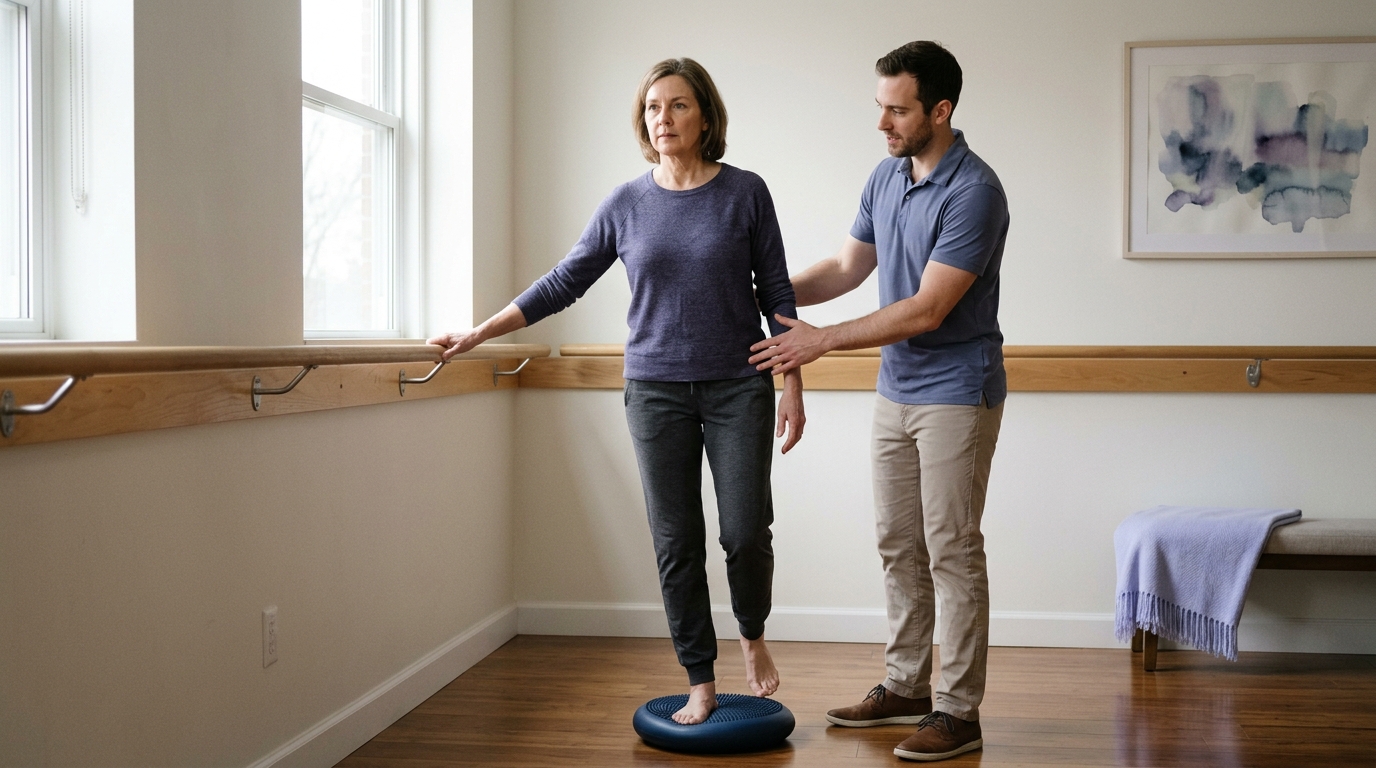
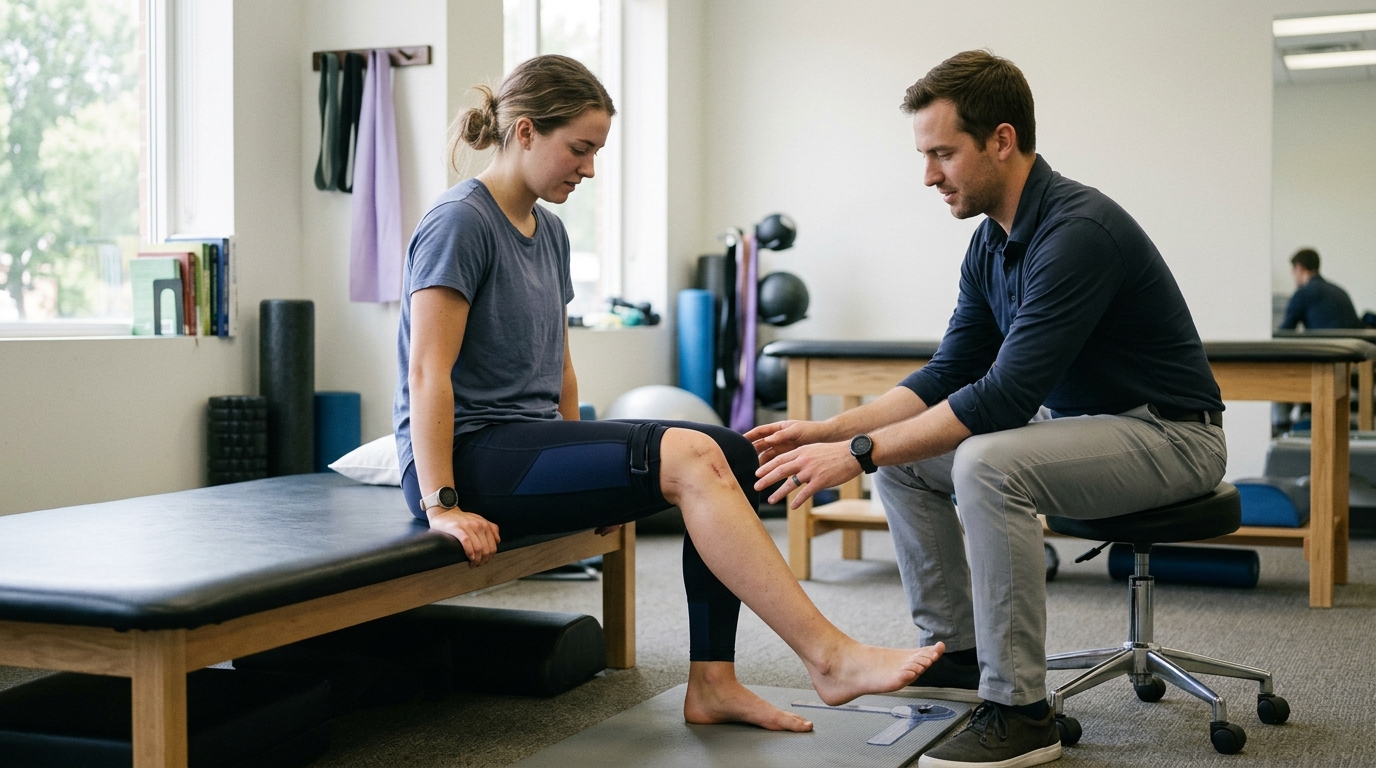
When you are returning from an injury, managing a chronic joint condition, or recovering from surgery, planning rest intervals requires personalized medical input. Bringing specific questions to your physical therapist or orthopedic physician helps align your training with your rehabilitation goals.
Clear communication with your healthcare team ensures that your strength program supports your recovery without placing compromised tissues under excessive risk.
Rest and recovery are active components of successful strength training, not simply periods of wasted time. Spacing workouts by 48 to 72 hours for the same muscle groups offers a dependable starting point, while resting one to three minutes between sets preserves movement quality. Recovery timelines naturally shift based on age, exercise selection, sleep quality, and daily life stress. Listening to performance trends over time allows you to make practical adjustments that keep your strength rebuilding safe and sustainable.

Use ReboundBody resources to understand common recovery stages, rehab terms, movement limits and strength rebuilding. Each guide is designed to make a complex comeback easier to understand.


Read practical guidance on injury recovery, rehabilitation, mobility and rebuilding strength as you work your way back to activity.
Explore Resources