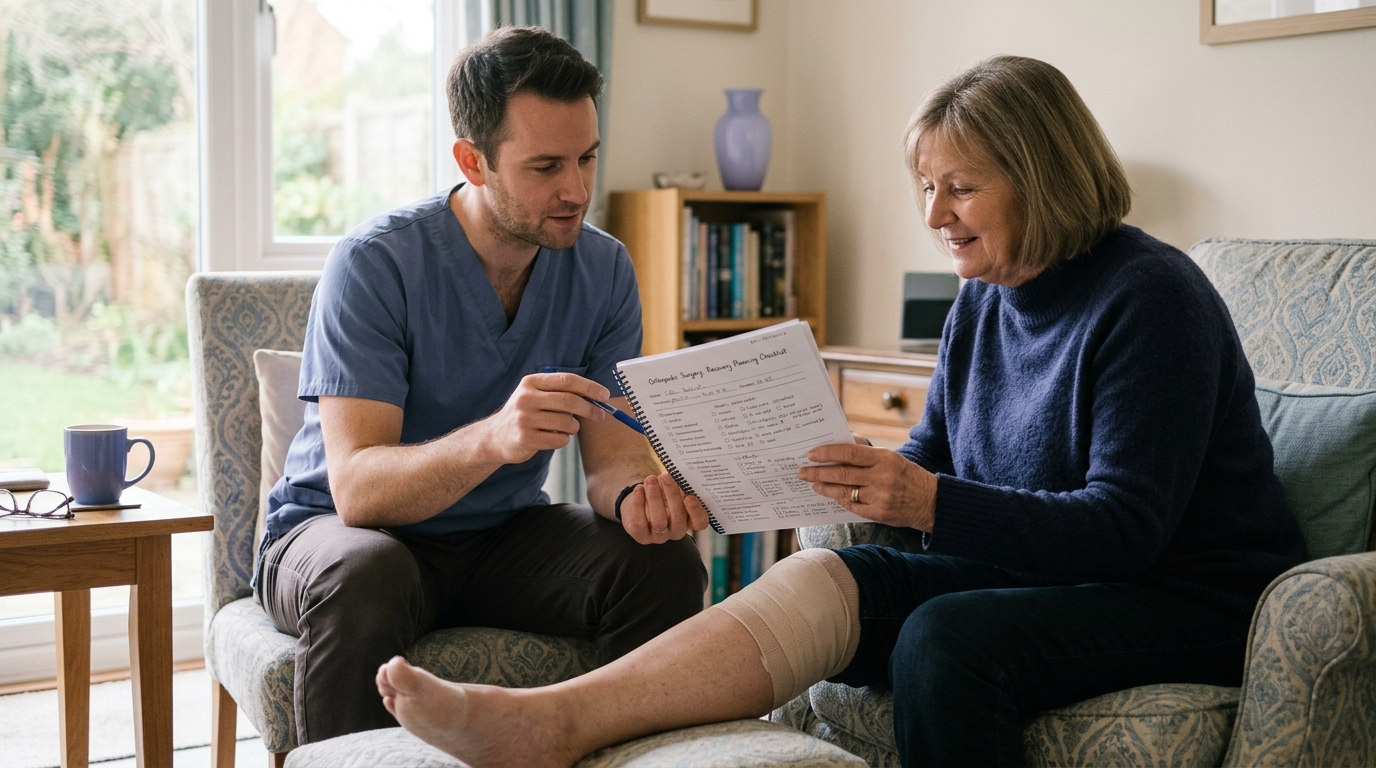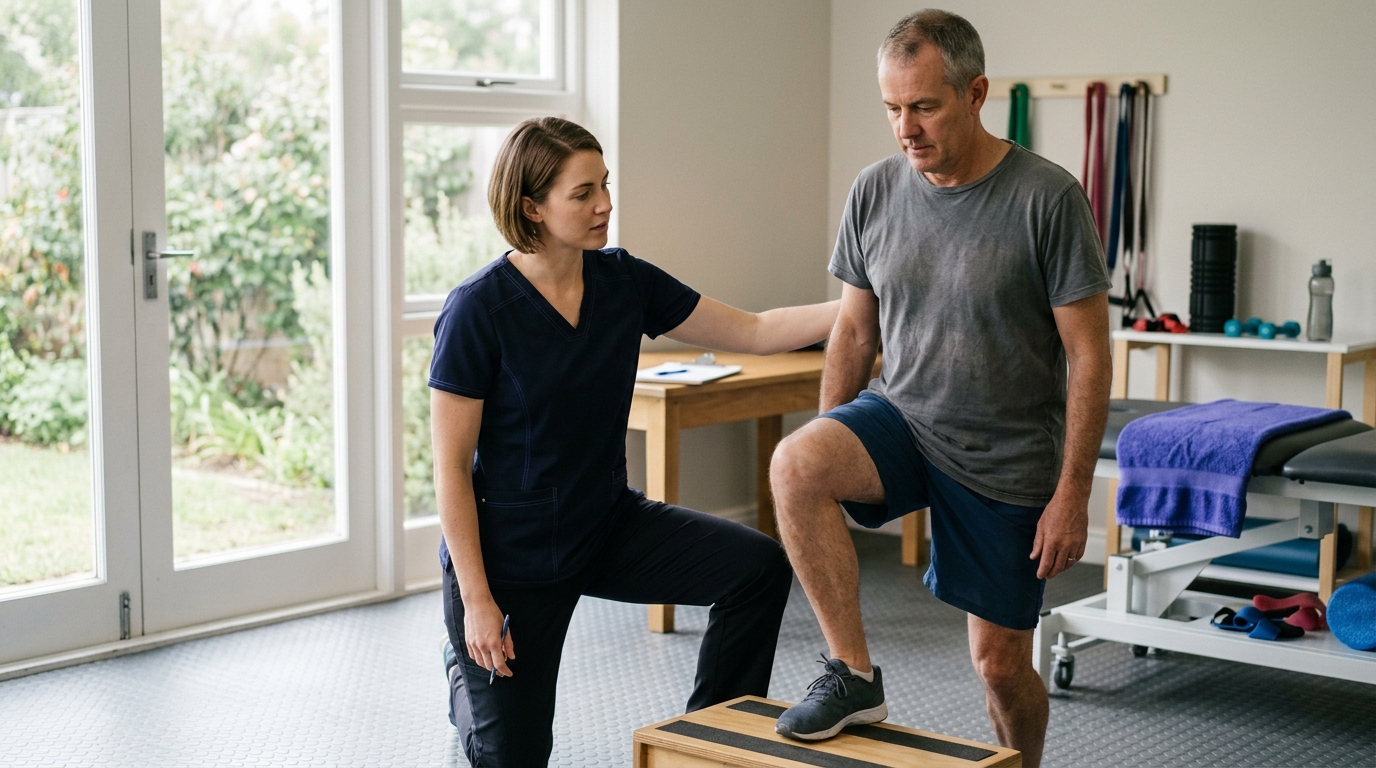

A safe return to work after an orthopedic injury requires evaluating functional capacity, setting practical workplace restrictions, and coordinating care with your employer and medical team.





You are sitting at home after orthopedic surgery or a significant musculoskeletal injury. The acute pain is beginning to settle, and your surgical site or injured joint is slowly stabilizing. Then the phone rings or an email arrives from your workplace. Your manager or human resources department asks a simple question: when will you be able to return to work?
Answering that question rarely involves picking a single calendar date where you suddenly switch from being off work to performing all your former duties at full speed. Returning to work after an orthopedic injury is a progressive transition. It bridges what your body can safely handle right now with the specific tasks your job requires each day.
Planning this return requires matching functional capacity with concrete job demands. It also involves ongoing communication between you, your employer, and your treating medical team. This guide outlines how return-to-work planning works, what research says about workplace modifications, how to structure job adjustments, and how to navigate the transition safely without setting unrealistic expectations.
Return to work is not an all-or-nothing event. Clinical guidelines emphasize that resuming employment is a planned progression between a person's current physical capacity and the real demands of their tasks. A doctor or physical therapist evaluates whether an individual can perform essential job duties, requires specific work limitations, or needs to remain off work temporarily while tissues heal.
To understand this process, it helps to understand five core concepts that shape medical and workplace planning:
Functional capacity describes the activities you can perform safely and reliably at a given stage of recovery. This is not about your maximum effort on a single good day. It reflects what you can repeat across a work shift without causing tissue overload, severe symptom flare-ups, or safety risks.
A clinician evaluates your functional capacity by looking at joint range of motion, muscle strength, weight-bearing tolerance, balance, and general stamina. For deeper background on rebuilding baseline physical capacity, you can read our guide to rehabilitation and mobility.
Job demands are the actual physical, mental, and environmental requirements of your daily work. They include how much weight you lift, how long you stand or sit, how frequently you bend or reach overhead, and how much you walk across different surfaces.
Job demands also include subtle factors such as work pace, shift duration, driving requirements, and the physical layout of your workspace. A job title alone rarely captures these details.
A work limitation or restriction is a formal medical instruction describing tasks or exposures you should avoid or modify. These restrictions are designed to protect healing bone, tendon, ligament, or muscle from harmful loads.
Under established occupational health guidelines, restrictions are most useful when they describe observable actions. For example, a restriction specifying no lifting above ten pounds or no continuous standing beyond thirty minutes provides clear boundaries for both the worker and the supervisor.
Essential job functions are the fundamental duties of a position that an employee must be able to perform, either independently or with reasonable accommodations. Identifying these functions helps separate core responsibilities from peripheral tasks that can be temporarily assigned to others while recovery continues.
Transitional work refers to temporary adjustments in duties, schedules, or equipment that allow an employee to work safely while recovering. Often referred to as light duty, modified work, or alternative duties, transitional work gives healing tissues time to adapt while keeping the worker connected to the workplace.
The primary goal of return-to-work planning is to eliminate the gap between functional capacity and job demands through structured, temporary modifications. Rather than waiting for complete symptom resolution before returning, planning allows you to resume suitable tasks as soon as it is medically safe.
A successful return to work depends on active collaboration among three distinct parties: the worker, the employer, and the care team. When any one of these three groups is left out of the loop, plans often break down. Misunderstandings about what is safe or what the job requires can lead to setbacks.
You are the only person who experiences your symptoms, fatigue levels, and physical limits firsthand. Your role in the planning process includes:
Employers provide the operational framework and work environment. Their role includes:
Your treating physician, orthopedic surgeon, physician assistant, and physical therapist evaluate your healing tissue and establish clinical safety limits. Their role includes:
This three-party framework operates as an ongoing conversation rather than a one-time sign-off. As your physical capabilities improve, the care team updates your medical restrictions, the employer adjusts workplace accommodations, and you gradually step back toward normal duties. For more context on navigating clinical milestones after an operation, explore our surgical recovery resources.
Over the past three decades, occupational health researchers have studied how different return-to-work strategies affect recovery time, sickness absence, and long-term employment. The research strongly supports structured, multicomponent planning, though it also reveals important limits.
Research demonstrates that interventions combining multiple supportive elements are substantially more effective than single, isolated strategies. A 2017 systematic review of 36 medium- and high-quality studies evaluated return-to-work outcomes for workers with musculoskeletal, pain-related, and mental health conditions.
The review found strong evidence that multicomponent programs spanning at least two of three core domains significantly reduced time away from work. These three domains are:
A 2012 systematic review examined 42 studies, including 34 randomized controlled trials, looking at workplace and community interventions for musculoskeletal sickness absence. Across these studies, the median relative risk for returning to work was 1.21 for intervention groups compared to standard care.
The median reduction in sickness absence was 1.11 days per month. These findings demonstrate that active, coordinated planning can measurably shorten the time an employee spends completely away from work.
Furthermore, systematic reviews focusing on disability management have found strong evidence that offering concrete work accommodations and establishing direct communication between healthcare providers and the workplace reduces disability duration. When clinicians understand actual job tasks and employers receive specific restriction forms, workers return to safe duties earlier.
While the evidence supporting coordinated return-to-work models is robust, research also highlights meaningful nuances and limitations:
The scientific literature shows that structured, collaborative return-to-work programs are effective tools for managing work transitions. However, they are not rigid formulas. Successful transitions require personalized adjustments based on the specific injury, the demands of the job, and individual healing rates. You can learn more about how physical adaptation occurs across different tissue types by reading our overview of recovery science.
Work modifications provide the bridge between your temporary physical limits and your employer's operational needs. National occupational health organizations, including the NHS OPAL program and the National Institute for Occupational Safety and Health, categorize modifications across several practical dimensions.
Task modifications involve changing the specific activities you perform during your shift:
Schedule modifications allow you to build physical stamina gradually without accumulating severe fatigue:
Physical healing often affects speed, endurance, and reaction times:
Ergonomic and physical adaptations can significantly lower stress on healing joints and muscles:
Getting into and moving around the workplace can present substantial hurdles after lower-limb trauma or spine surgery:
Social and operational support within the workplace is an essential component of recovery:
If standard modifications cannot make your regular job safe, a temporary transfer to an alternative role may be appropriate. Employers often have temporary administrative, inventory, or training assignments that fit medical limitations while keeping you fully employed.
Creating a clear, written return-to-work plan prevents confusion and protects your health. You and your employer can follow this five-step workflow to build an effective transition plan.
Before speaking with your clinician about return dates, document the true physical realities of your job. List every regular task you perform throughout a typical shift. Note how long you perform each task, how much weight you handle, and the physical positions required.
Describe environmental factors such as standing on concrete floors, climbing ladders, operating foot pedals, or driving in heavy traffic. Taking photos or short videos of your workstation or specialized tools can help your clinical team understand what your job requires.
At your clinical appointment, share your job breakdown with your doctor or physical therapist. Ask your clinician to write clear, functional restrictions that address those specific tasks.
Medical notes that state only "light duty" often cause confusion. Effective restrictions state measurable parameters, such as "no lifting over fifteen pounds," "allow alternating between sitting and standing every thirty minutes," or "no driving commercial vehicles."
The medical documentation should also indicate the expected duration of these restrictions and name the date for your next follow-up evaluation. For additional information on managing the clinical phases of healing, visit our injury recovery and healing resources.
Take your written medical restrictions to your supervisor, human resources representative, or occupational health manager. Review your normal job tasks side by side with the clinical restrictions.
For every task that conflicts with a restriction, identify a specific accommodation. Determine whether the task can be modified, reassigned to a colleague, assisted with ergonomic equipment, or replaced with alternative duties. If your standard role cannot be safely adapted, discuss whether a temporary transfer to a different department or role is possible.
Document all agreed-upon arrangements in a formal, written transition plan. The plan should clearly specify:
Both you and your supervisor should keep a copy of this agreement to ensure everyone shares the same expectations.
A return-to-work plan must be flexible. Treat the initial plan as a working trial rather than a permanent contract. As you perform your modified duties, take note of your physical response.
Are your symptoms remaining within manageable limits? Are you experiencing extreme fatigue at the end of your shift? Did unexpected tasks arise that violated your restrictions?
Share these observations during your follow-up medical appointments and workplace meetings. If you are tolerating work well and tissue healing has progressed, your clinician may increase your allowable activities. If you experience persistent symptom flare-ups, the team can adjust hours, tasks, or equipment to protect your recovery.
No two workers follow the exact same timeline when returning to employment. Several interacting factors influence how quickly you can resume your normal duties safely.
Different musculoskeletal tissues heal at different biological rates. Bone fractures stabilized with plates and screws often allow early protected weight-bearing, while soft tissue repairs, such as rotator cuff or anterior cruciate ligament reconstructions, require strict protection while tendons anchor to bone.
Spinal surgeries, joint replacements, and high-energy traumatic fractures each have unique recovery arcs. Understanding your specific surgical precautions is essential before planning your return.
A worker in a desk-based administrative role faces entirely different physical demands than an electrician, a warehouse associate, a nurse, or a truck driver. A desk worker recovering from a knee replacement may return to modified computer work within a few weeks if swelling allows comfortable sitting and short walks.
A heavy industrial mechanic recovering from the same surgery may require several months of progressive rehabilitation before they can safely crawl, kneel, and lift heavy components on an active shop floor. To learn more about rebuilding the strength required for heavy physical tasks, check out our strength and return to sport resources.
The size, culture, and operational structure of your employer affect the modifications they can provide. Large organizations often have established light-duty programs, multiple departments, and extensive ergonomic equipment.
Small businesses may have fewer alternative positions, making creative schedule adjustments, task sharing, or part-time arrangements necessary. Open communication helps identify practical solutions within your specific workplace environment.
The physical demands of getting to and from work are frequently overlooked in recovery planning. An orthopedic injury to your right leg, foot, or dominant arm may prevent safe driving for weeks.
Public transportation requires walking, climbing bus stairs, and maintaining balance while standing on moving vehicles. If your commute creates significant pain or safety hazards, exploring temporary work-from-home options, carpooling, or adjusted shift times to avoid rush-hour crowds can help.
Early orthopedic recovery often requires physical therapy visits two to three times per week, alongside surgeon follow-ups and diagnostic imaging. Balancing these essential clinical appointments with a rigid full-time work schedule can create severe physical and emotional stress.
A realistic return-to-work plan accounts for these clinical appointments as part of your overall schedule.
Tissue healing demands substantial metabolic energy. Many workers find that while their injured limb feels manageable, returning to work causes unexpected systemic fatigue.
Poor sleep due to nighttime discomfort, preexisting health conditions such as diabetes or cardiovascular disease, and general deconditioning during periods of bed rest all affect daily stamina. Pacing yourself and prioritizing proper sleep are vital during the transition. For related guidance on daily habits that support healing, read our articles on active aging and prevention.
Navigating a return to the workplace involves balancing health needs, employer expectations, and legal frameworks. Avoiding these common misconceptions can prevent setbacks and frustration.
Writing or accepting a doctor's note that simply says "cleared for light duty" is one of the most common mistakes in occupational recovery. To a worker, light duty might mean answering phones for four hours. To a supervisor, it might mean doing their regular job without running.
Always ask your clinical team for clear, objective descriptions of weight limits, posture tolerances, and movement boundaries. Specific parameters prevent misunderstandings on the job site.
Assuming that an "office job" or "desk role" carries no physical challenges is a frequent error. Prolonged sitting can cause significant low back stiffness, hip flexor tightness, and lower leg swelling after orthopedic procedures.
Similarly, walking between office buildings, carrying heavy laptop bags, or sitting in non-adjustable conference chairs can place stress on healing tissues. Every job must be evaluated based on its specific daily physical tasks rather than its title.
Returning to work does not mean your recovery is finished. It is common to experience mild symptom flare-ups, muscular soreness, and generalized fatigue during your first several weeks back.
Expecting to match your pre-injury speed, efficiency, and output on your first day can lead to discouragement or reinjury. Give your body time to adapt to increasing physical workloads.
Generic recovery timelines found online can be helpful reference points, but they should never serve as strict deadlines. Healing rates vary widely based on surgical technique, age, bone quality, and tissue health.
If your coworker returned to work four weeks after their knee surgery, that does not mean your body will be ready on the exact same schedule. Base your milestones on objective physical criteria rather than calendar dates.
When requesting accommodations, you are generally required to share information regarding your functional limitations, physical restrictions, and scheduling needs. However, you are not required to share your entire personal medical history or detailed surgical notes with every coworker or direct supervisor.
Work through your human resources department or designated occupational health coordinator to ensure your private medical records remain confidential.
Workers sometimes feel they must design the complete accommodation plan before speaking with their employer. In the United States, federal frameworks under the Americans with Disabilities Act describe an interactive process.
This means you explain your medical restrictions and physical barriers, and you work collaboratively with your employer to identify workable solutions. You do not need to solve every operational challenge alone.
Open communication is the foundation of a safe workplace transition. Use these practical questions to guide your discussions with your medical providers and your employer.
Returning to work after an orthopedic injury or surgery is an active, structured transition rather than an abrupt leap back to normal. Research shows that combining task-specific medical restrictions, workplace modifications, and consistent communication among the worker, employer, and care team provides the most reliable path back to productive employment.
By mapping your true job demands, establishing objective boundaries, and reviewing your progress regularly, you can protect healing tissues while successfully regaining your professional routine.
Revisit this planning guide:
A well-planned return to work protects your physical health today while supporting your long-term occupational strength for years to come.

Use ReboundBody resources to understand common recovery stages, rehab terms, movement limits and strength rebuilding. Each guide is designed to make a complex comeback easier to understand.


Read practical guidance on injury recovery, rehabilitation, mobility and rebuilding strength as you work your way back to activity.
Explore Resources