
Safe outdoor chore habits protect your heart and spine through proper warm-up routines, ergonomic lifting techniques, and smart winter equipment strategies.





Seasonal outdoor chores are demanding physical labor, not light household tasks. Clearing a driveway after a blizzard or raking heavy debris across a large yard places unique stresses on the human body. These tasks combine sudden isometric strain, heavy spinal loads, balance challenges on uneven ground, and exposure to environmental extremes.
Understanding these physical demands helps you protect your joints, spine, and cardiovascular system. This guide breaks down the clinical research behind chore-related injuries, explains how cold and heat alter physical capacity, and outlines practical strategies for load management. It also provides clear criteria for when delegating or delaying outdoor work is the safest health decision.
Seasonal yard maintenance creates a distinct form of physical stress that many adults encounter only a few times each year. Unlike structured gym exercise, outdoor work involves unpredictable resistance, awkward postures, and varying terrain. When clearing heavy snow or moving fallen branches, the body performs repetitive lifting, carrying, and twisting under external resistance. These movements place significant mechanical strain on the lumbar spine and the shoulder complex.
Environmental factors compound these physical demands. Cold weather causes peripheral blood vessels to constrict, which increases systemic blood pressure and raises cardiac workload. Breathing cold air can trigger bronchoconstriction and reduce coronary blood flow in susceptible individuals. In hot weather, maintaining thermal balance demands high cardiac output and rapid fluid turnover.
Seasonal chores often require sustained isometric contractions of the upper limbs. Holding a snow shovel handle, gripping a heavy leaf rake, or stabilizing a vibrating snow thrower recruits small muscle groups continuously. Unlike dynamic leg exercise, sustained upper-body effort produces a rapid rise in blood pressure with relatively low total oxygen consumption.
These chores are frequently performed by adults who are otherwise sedentary or recovering from prior musculoskeletal issues. Jumping from sedentary desk work to ninety minutes of intense manual labor challenges tissue tolerance. Tendons, ligaments, and spinal discs require gradual loading to adapt safely. When heavy loading happens abruptly in freezing temperatures, the risk of acute strain or cardiovascular distress rises sharply.
Emergency department data shows that seasonal chores carry substantial risks for both musculoskeletal trauma and acute medical events. The physical forces involved in lifting wet snow or managing powered machinery exceed the capacity of unprepared tissues.
Research examining national injury databases reveals clear patterns in how people get hurt while shoveling. A study analyzing United States emergency room data estimated that approximately 195,100 individuals received treatment for snow-shoveling incidents over a 17-year period. This equates to an average of roughly 11,500 emergency visits each year across the country.
Diagnostic data compiled by researchers at Nationwide Children's Hospital highlights the specific tissues most vulnerable to manual clearing:
These figures capture only cases severe enough to warrant hospital emergency care. They do not include the thousands of milder muscle strains managed at home or in outpatient clinics.
Manual snow shoveling produces an intense cardiovascular response that surprises many adults. A classic study published in the Journal of the American Medical Association evaluated healthy young men clearing heavy, wet snow. Researchers found that average heart rates climbed to 154 beats per minute after just two minutes of shoveling. After ten minutes, average heart rates reached 173 beats per minute, which corresponded to 97% of the participants' maximal heart rates.
The same investigation revealed that oxygen uptake during shoveling resembled upper-body arm ergometry rather than standard treadmill exercise. Lifting heavy loads with the arms while holding the breath produces dramatic spikes in blood pressure. When combined with cold-induced vasoconstriction, this exertion places immense mechanical strain on the heart wall.
Epidemiological research confirms the real-world impact of these physiological stresses. An American Heart Association summary of a Canadian study indicated that heavy snowfall of roughly seven to eight inches was associated with a 16% increase in the odds of hospital admission for myocardial infarction among men the following day. The same snowfall was linked to a 34% increase in the odds of fatal heart attacks. These statistics describe population-level odds rather than an individual's personal likelihood of injury, but they highlight the systemic stress of winter clearing.
Switching from a manual shovel to a powered snow thrower reduces spinal flexion, but it introduces major mechanical hazards. An epidemiological investigation of snowblower-related emergency room visits estimated 91,451 total cases across the United States.
The mechanisms and outcomes of these injuries reveal distinct patterns:
Data from the Consumer Product Safety Commission confirms that many operators underestimate the danger of mechanical clogs. Even after the engine is turned off, trapped snow can keep rotational energy stored in the impeller blades. When a person reaches in to clear the blockage by hand, the blade snaps forward, causing severe lacerations or amputations.
Deciding whether to clear a driveway or yard yourself should be based on health status rather than habit. Routine seasonal chores should never be approached with an attitude of pushing through warning signals. For many individuals, delegating the work to a commercial service or family member is the most medically sound choice.
The American Heart Association advises that individuals with known or suspected cardiovascular disease should not shovel snow. This recommendation applies to anyone with established coronary artery disease, a history of heart attack, prior bypass surgery, or previous coronary angioplasty.
Cardiovascular risk factors that warrant delegating manual snow clearing include:
Postponing outdoor work is also necessary when environmental conditions create unmanageable risks. The National Institute for Occupational Safety and Health recommends rescheduling heavy outdoor labor during periods of extreme cold or dangerous wind chill. Working in sub-freezing temperatures accelerates heat loss, impairs finger dexterity, and strains the respiratory tract.
In summer months, outdoor yard cleanup should be postponed when the heat index reaches hazardous levels. The Centers for Disease Control and Prevention advises shifting heavy outdoor labor away from peak daytime heat. If a task cannot be completed safely during early morning hours, postponing the chore prevents heat exhaustion and heat stroke.
Musculoskeletal limitations also justify delaying outdoor chores. Individuals recovering from recent lumbar disc herniations, joint replacements, or acute rotator cuff tears should avoid heavy lifting. Exploring structured injury prevention resources can help you determine safe general activity progressions before returning to heavy household labor.
Proper preparation reduces mechanical stress and prepares the cardiovascular system for sudden workloads. Rushing out into freezing temperatures without preparing your body significantly increases the likelihood of soft-tissue strains and joint irritation.
A thorough warm-up raises core body temperature, increases tendon elasticity, and lubricates joint capsules. Cold tendons are more brittle and susceptible to micro-tearing under rapid loads. The Occupational Safety and Health Administration and the Canadian Centre for Occupational Health and Safety recommend gentle dynamic movements before starting heavy outdoor chores.
Spend five to ten minutes indoors completing this simple sequence:
For comprehensive routines that support functional movement, reviewing dedicated mobility and movement guides can help maintain joint health year-round.
Clothing choices directly influence muscle function and cardiovascular strain during cold-weather chores. Wearing single, heavy garments restricts spinal mobility and traps moisture against the skin. When clothing becomes damp with sweat, body heat drops rapidly during rest breaks.
The National Institute for Occupational Safety and Health recommends wearing multiple loose, breathable layers. A synthetic base layer wicks sweat away from the skin. An insulating middle layer, such as fleece or wool, retains warmth without adding excessive bulk. A windproof and water-resistant outer shell protects against precipitation and cold drafts.
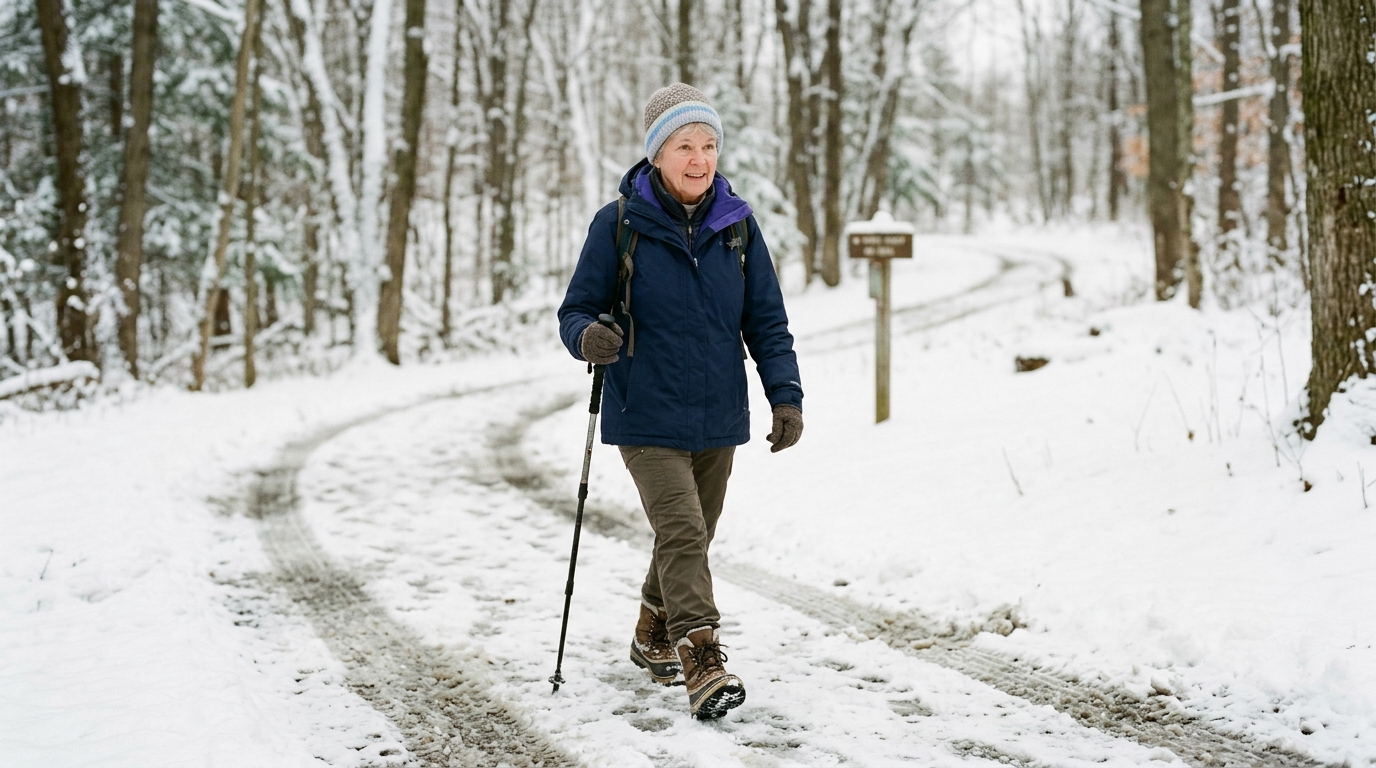
Footwear must prioritize traction over pure insulation. Slips and falls account for one-fifth of all snow-shoveling injuries. Choose boots with deep rubber treads or use slip-on traction cleats when working on packed ice. Protect your extremities with insulated, water-resistant gloves and a warm hat, since cold hands dramatically reduce grip strength and control.
Before lifting a shovel or starting an engine, evaluate the physical layout of the work zone. Planning your clearing path prevents unnecessary lifting, twisting, and repetitive carrying:
Manual snow clearing places immense torque on the lumbar spine. A standard shovel loaded with wet, heavy snow can easily weigh fifteen to twenty pounds. Lifting that weight at the end of a long shovel shaft multiplies the compressive forces experienced by the lumbar intervertebral discs.
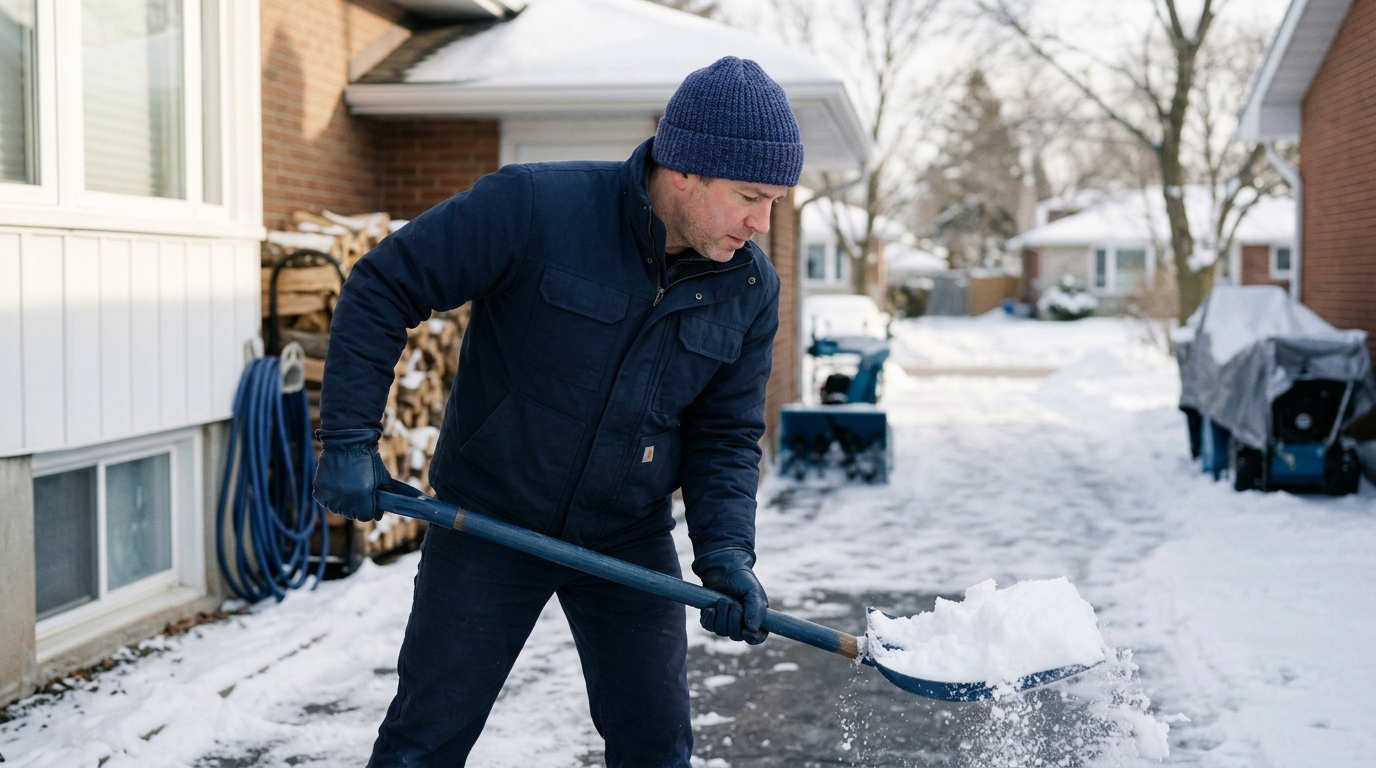
The most effective way to protect the spine is to push snow rather than lift and throw it. The Occupational Safety and Health Administration and Canadian workplace safety authorities strongly advocate pushing snow to the edges of the driveway whenever possible.
Pushing utilizes the large, powerful muscles of the lower body, including the gluteals and quadriceps, while keeping the spine in a stable, neutral alignment. Modern snow pushers feature wide, curved blades designed to slide smoothly across pavement. Use your body weight to drive the blade forward rather than pushing solely with your arms.
When lifting snow is unavoidable, mechanical efficiency is essential for spinal safety. Follow these biomechanical principles to reduce joint strain:
Twisting the torso while holding a heavy load is one of the most common causes of acute lumbar disc herniations and facet joint sprains. The Canadian Centre for Occupational Health and Safety explicitly advises against throwing snow over the shoulder or twisting at the waist.
To change directions with a loaded shovel, step and turn your entire body. Pivot on the balls of your feet so your hips, torso, and shoulders rotate together as a single unit. Point your toes directly toward the target drop area before releasing the snow. Never toss heavy snow behind you or across your body.
Using the right tool reduces physical strain during seasonal maintenance. Traditional straight-handled shovels require excessive forward spinal flexion to reach the ground. Ergonomically curved shovels elevate the hand grip position, allowing you to maintain an upright, neutral lumbar posture while scooping.
Choose shovels made from lightweight materials, such as durable aluminum or reinforced plastic, rather than heavy steel models. The blade size should match the material being moved. Use wide pusher blades for light, dry powder and narrower scoop blades for dense, wet snow or heavy autumn leaves.
Snow throwers and powered yard tools remove the physical strain of manual lifting, but they introduce serious mechanical dangers. Managing these tools safely requires strict adherence to operating protocols and an understanding of stored mechanical energy.
Wet, heavy snow frequently sticks to the interior walls of a snow thrower's discharge chute, creating a dense blockage. When the impeller blades strike this compacted snow, the engine may stall or the drive belt may slip. However, the machine's internal drivetrain often remains under high rotational tension.
The American Academy of Orthopaedic Surgeons warns that stored mechanical energy remains trapped in the auger assembly even after the motor is shut off. When an operator reaches into the chute to pull out the snow blockage, the trapped resistance releases instantly. The impeller blade can spring forward several inches, causing traumatic fractures, deep lacerations, or complete amputations.
Never use your hands or feet to clear a clog from any powered outdoor machine. Always follow this standard safety procedure recommended by the Consumer Product Safety Commission:
Keep your hands and clothing completely away from the discharge opening, impeller housing, and collection augers at all times during operation.
Operating heavy snow throwers and leaf vacuums presents additional physical hazards that require vigilance:
Seasonal maintenance tasks are endurance events that require structured pacing, regular rest intervals, and active monitoring of physical sensations. Attempting to clear an entire driveway or large yard in a single, uninterrupted effort dramatically increases fatigue and injury risk.
Pacing is a formal safety control endorsed by the American Heart Association, the National Safety Council, and occupational health agencies. Starting slowly allows the cardiovascular system and active muscle groups to adapt to the workload.
Divide your chore into distinct, manageable segments:
Dehydration occurs frequently during cold-weather chores. Cold air blunts the body's natural thirst mechanism, while breathing dry air and sweating through warm clothing causes significant respiratory and dermal fluid loss. When dehydrated, blood volume drops, placing additional stress on the heart.
Drink a glass of water before heading outside, and continue sipping water or electrolyte fluids during rest breaks. Avoid caffeinated energy drinks or alcohol before and during heavy yard chores. Caffeine elevates heart rate and blood pressure, while alcohol impairs thermoregulation and creates a false sensation of warmth by dilating surface blood vessels.
During winter chores, take your rest breaks inside a heated area. The National Institute for Occupational Safety and Health recommends warm break locations to counteract cold stress. If your inner clothing layers become damp from perspiration, change into dry clothing immediately to prevent rapid evaporative cooling.
It is vital to distinguish between normal physical exertion and warning signs of a serious cardiovascular or neurological emergency. Normal physical exertion causes mild muscle burning, deeper breathing, and general fatigue that subsides quickly when you sit down and rest.
The American Heart Association highlights specific warning signs that require stopping all activity immediately:
If you or someone you are working with experiences any of these warning signs, stop all activity immediately. If the symptoms do not resolve within a few minutes of total rest, call 911 or emergency medical services right away. Do not attempt to drive yourself to the hospital.
While winter snow clearing is heavily defined by cold-induced cardiovascular strain and acute spinal loads, warm-weather property maintenance presents distinct physiological challenges. Heavy spring and autumn yard cleanup involves repetitive bending, sustained carrying of damp vegetative matter, and prolonged exposure to elevated temperatures.
Working outside during late spring or summer introduces the risk of heat-related illnesses. The Centers for Disease Control and Prevention notes that high ambient temperatures, elevated humidity, direct sun exposure, and strenuous physical labor combine to raise internal core body temperature. When the body cannot dissipate heat efficiently through sweating, core temperature climbs, leading to heat cramps, heat exhaustion, or life-threatening heat stroke.
Key environmental controls for warm-weather outdoor maintenance include:
Warm-weather chores often involve long durations of lower-intensity, highly repetitive movements. Raking leaves, clearing brush, and pushing lawnmowers place prolonged static demands on the shoulders, forearms, and thoracic spine.
To manage physical stress during warm-weather cleanup:
Adults who maintain consistent conditioning between seasons handle these varying physical demands much more effectively. Incorporating targeted active aging strategies helps preserve functional strength, balance, and joint resilience across every season.
Examining realistic scenarios illustrates how applying risk assessment, pacing, and equipment safety alters the physical outcome of seasonal chores. These scenarios serve as illustrative models of evidence-based safety practices.
An adult in their late fifties with treated hypertension and a sedentary desk routine faces an eight-inch snowfall across a wide driveway. The individual initially considers clearing the snow quickly before leaving for an appointment.
Applying safety guidelines, the individual evaluates personal health status and recognizes that heavy lifting in sub-freezing temperatures carries significant cardiovascular risk. The person decides to delegate the driveway clearing to a local plowing service. For the front walkway, they use a lightweight ergonomic shovel to push light, small sections of snow, taking a three-minute indoor rest break every five minutes.
By prioritizing risk assessment and delegating the heaviest portion of the work, the individual avoids dangerous cardiac spikes and severe spinal fatigue.
During a mid-winter storm, an operator notes that dense, wet snow has plugged the discharge chute of a two-stage snow thrower. The motor strains and the impeller stops throwing snow. Frustrated by the delay, the operator's first impulse is to reach into the chute to pull out the snow blockage.
Remembering machinery safety guidelines, the operator stops. They shut down the engine completely, disengage the drive clutch, and pull the safety ignition key. After waiting fifteen seconds for all moving parts to settle, they retrieve the plastic clearing tool mounted to the machine frame.
Using the tool, they dislodge the compacted snow. As the plug releases, the internal impeller blade visibly snaps forward under stored spring tension. Because the operator used a tool instead of a hand, an acute mechanical injury is entirely avoided.
An adult with a history of recurrent lumbar facet sprains plans a full weekend of clearing fallen leaves, trimming low branches, and preparing garden beds. In previous years, spending six uninterrupted hours raking and hauling heavy yard bags triggered acute back spasms.
This season, the individual implements a structured pacing and load management strategy:
By controlling session volume and managing mechanical loads, the person completes the entire property cleanup without triggering a back flare-up. Exploring progressive strength rebuilding and return to activity can further support long-term spinal capacity for seasonal tasks.
Consulting a physician or physical therapist is essential if you have underlying medical conditions, previous surgeries, or joint pain. A medical provider can offer individualized guidance regarding safe exertion thresholds.
Consider asking your clinician the following specific questions:
For individuals recovering from joint replacements, spine surgery, or tendon repairs, reviewing our comprehensive physical rehabilitation library provides valuable context for discussing activity milestones with your physical therapist.
Shoveling multiple times during an active storm is generally much safer for your spine and joints. Clearing two or three shallow layers of two to three inches requires far less lifting force than moving a single, compacted eight-inch accumulation. However, if conditions involve dangerous wind chills, heavy ice, or zero visibility, stay indoors until the storm subsides to avoid extreme cold exposure.
A back support belt is not a substitute for proper lifting biomechanics, load reduction, and pacing. While a belt can provide mild tactile feedback and remind you to brace your abdominal muscles, research does not show that back braces prevent acute lifting injuries when excessive loads or twisting forces are applied. Rely on small scoop sizes, leg drive, and pivoting your feet rather than depending on a brace.
The water content of snow dramatically alters its density and weight. Fresh, dry powder can weigh as little as three to five pounds per cubic foot, whereas wet, slushy snow can exceed twenty pounds per cubic foot. Moving wet snow multiplies the mechanical load on the lumbar spine and rapidly elevates heart rate, turning a moderate chore into maximal physical exertion.
Return-to-activity timelines vary widely depending on the specific tissue repaired, surgical approach, and overall baseline physical conditioning. Heavy outdoor chores involve unpredictable forces and high balance demands that far exceed basic daily activities. Always obtain explicit clearance from your orthopedic surgeon or physical therapist before resuming manual shoveling, operating heavy machinery, or hauling yard waste.
Seasonal outdoor chores are demanding physical tasks that challenge the cardiovascular, muscular, and skeletal systems. Protecting your health requires treating these activities with the same preparation and respect as strenuous physical labor.
Manage risk effectively by following core safety principles:
By prioritizing biomechanics, environmental management, and honest self-assessment, you can maintain your property safely while protecting your long-term mobility and health.

Use ReboundBody resources to understand common recovery stages, rehab terms, movement limits and strength rebuilding. Each guide is designed to make a complex comeback easier to understand.


Read practical guidance on injury recovery, rehabilitation, mobility and rebuilding strength as you work your way back to activity.
Explore Resources