
Strength training progress depends less on pushing to absolute exhaustion than on systematically balancing load, volume, rest, and weekly session frequency.





Many lifters believe that rebuilding physical strength requires complicated spreadsheets and extreme physical exhaustion. They assume that every workout must push the body to its absolute limit to stimulate meaningful change. Research shows a far more forgiving reality. Sustainable strength adaptations come from managing basic training variables with consistency rather than surviving punishing routines.
Understanding how resistance, repetitions, sets, rest intervals, and weekly frequency interact allows you to build a routine that fits your life. These training variables function as interconnected dials rather than rigid rules. When you adjust one dial, you change how the others behave. Mastering these relationships helps you rebuild physical capability without overwhelming your joints or nervous system.
At its core, strength training consists of two main elements: the dose and the distribution. The dose represents the total mechanical work you perform, defined by load, repetitions, and sets. The distribution describes how you spread that work across days and weeks. While science gives us clear boundaries for these variables, individual recovery capacity varies based on age, sleep, nutrition, and prior injuries.
To build a reliable routine, you must understand what the evidence says about each variable. You can then systematically adjust your training to match your current capacity.
Load describes the amount of resistance you lift during an exercise. It is often measured as a percentage of your one-repetition maximum, which is the heaviest weight you can lift once with proper form. Load can also be described by repetition maximum targets, such as an eight-repetition maximum load. That represents a weight you can lift for eight clean repetitions before fatiguing.
Repetitions represent the number of times you perform an exercise movement within a single continuous effort. Load and repetitions share an inverse relationship. When the load is heavy, you can only perform a small number of repetitions. When the load is light, you can perform many more repetitions before fatigue sets in.
A 2023 systematic review and network meta-analysis evaluated resistance training prescriptions for healthy adults across multiple loading ranges. The researchers found that heavier loads around or above 80 percent of one-repetition maximum maximized absolute strength gains. However, the same analysis showed that a broad spectrum of loading ranges promoted muscle hypertrophy. Lighter loads lifted for higher repetitions can still build significant muscle and practical strength.
The American College of Sports Medicine published an extensive update in 2026 summarizing 137 systematic reviews involving more than 30,000 participants. The authors noted that heavier loads around 80 percent of one-repetition maximum optimize maximal force production. For novice trainees or those rebuilding after a long break, the earlier 2009 ACSM guidelines recommended starting with moderate loads in the 8 to 12 repetition range. This moderate zone allows you to practice motor patterns safely while preparing connective tissues for heavier stress later.
Choosing your repetition range depends on your specific goal:
Heavier loads are not the only way to build strength. While heavy weights produce the greatest peak strength adaptations, lighter loads still produce meaningful improvements. For someone managing joint sensitivity or recovering movement confidence, lighter loads offer a safe starting point.
A set is a group of consecutive repetitions completed without stopping. Tracking set volume helps you measure the total work delivered to a muscle group over time. In modern exercise science, weekly volume is commonly defined as the number of challenging work sets completed per muscle group each week.
The relationship between training volume and physical adaptations follows a dose-response curve. A 2017 meta-analysis examined weekly set volume across multiple strength studies. The researchers found greater strength gains for higher weekly set volumes compared to lower set volumes. The analysis reported a mean effect-size difference of 0.18 favoring higher volumes across multi-joint and single-joint movements.
A 2016 meta-regression evaluated the relationship between weekly set volume and muscle growth. The authors found that each additional weekly set was associated with an effect-size increase of 0.023. This corresponded to an estimated 0.37 percent increase in muscle gain per added set in that study model. However, these figures summarize group-level findings and do not promise identical results for every individual.
The 2026 ACSM guidelines suggest approximately 10 weekly sets per muscle group as a solid target for muscle hypertrophy. For pure strength development, the guidelines highlight 2 to 3 sets per exercise as an effective stimulus for healthy adults. These targets serve as reference points rather than rigid rules. Trainees recovering from injuries often make excellent initial progress on far fewer sets.
Adding excessive volume too quickly can exceed your tissue tolerance. When weekly volume outpaces your recovery capacity, fatigue accumulates, technique breaks down, and overuse symptoms can appear. Tracking work sets per muscle group ensures that you apply enough stimulus to progress without unnecessary wear and tear.
Between-set rest is the period of passive recovery between consecutive sets of an exercise. Many lifters cut their rest short to make workouts feel harder or to save time. Research shows that resting too little can compromise both strength gains and movement quality.
A 2024 systematic review with Bayesian meta-analysis evaluated the effect of rest intervals on muscle hypertrophy. The authors found a small benefit for resting longer than 60 seconds compared to shorter periods. However, they observed no meaningful additional hypertrophy differences when resting beyond 90 seconds. Resting between 60 and 90 seconds appears sufficient to support muscle growth in most exercise settings.
For maximal strength development, rest requirements depend heavily on training status and load. A systematic review on rest intervals found that untrained individuals can achieve solid strength gains with 60 to 120 seconds of rest. Conversely, trained lifters lifting heavy loads often require more than two minutes of rest to maximize strength adaptations. Longer rest allows the nervous system and cellular energy stores to recover fully between heavy efforts.
Short rest intervals create distinct physiological trade-offs:
The practical rule for rest is simple. Rest long enough to perform the next set with the intended load and crisp technique. If your target is maximal strength with heavy compound movements, take two to three minutes between sets. If your focus is general fitness or isolation exercises, 60 to 90 seconds is often completely adequate.
Training frequency refers to how often you train throughout the week. It can describe the number of total workout sessions you complete or how many times you train a specific muscle group. Frequency is best viewed as an organizational tool to distribute your total weekly training volume.
A comprehensive 2021 meta-analysis investigated the effects of resistance training frequency on strength gains. When total weekly volume was held equal, the researchers found no significant difference in strength improvements between higher and lower frequencies. Training a muscle once, twice, or three times per week produced similar strength gains when the total number of hard sets remained matched. Earlier systematic reviews reached similar conclusions regarding volume-equated training.
The 2026 ACSM position stand summary recommends that healthy adults train all major muscle groups at least twice weekly. Spreading your weekly volume across two or three sessions keeps individual workouts shorter and more manageable. It also helps prevent the severe muscle soreness that often follows high-volume single-session routines.
Consider two different ways to organize 12 weekly sets for the lower body:
Frequency allows you to manage session density. If you only have 30 minutes to exercise, training four days per week with lower daily volume may fit your life better than two long sessions. Choose a frequency that you can sustain consistently over months rather than weeks.
Proximity to failure describes how close you take a set to the point where you can no longer complete another repetition. Training to momentary failure means continuing until your muscles physically cannot move the weight through a full range of motion. Repetitions in reserve, or RIR, measures how many additional clean repetitions you could have completed when you ended the set.
Many exercisers believe that every set must end in complete failure to produce physical adaptations. Scientific reviews show this assumption is incorrect. A 2021 meta-analysis comparing failure to non-failure training found no significant difference in strength development between the two strategies. The effect size difference was negative 0.09, showing that training shy of failure supports robust strength gains.
A 2022 systematic review evaluated proximity to failure and muscle hypertrophy. The authors identified a statistically significant but trivial benefit for taking sets to failure, with an effect size of 0.19. A 2024 dose-response analysis clarified these findings further. Strength gains remained consistent across a wide range of estimated repetitions in reserve, while muscle hypertrophy tended to increase slightly as sets approached closer proximity to failure.
The 2026 ACSM summary stated that training to momentary muscular failure did not consistently alter functional outcomes for the average healthy adult. Stopping sets 1 to 3 repetitions shy of failure provides several practical advantages:
Leaving two repetitions in reserve on most working sets offers an ideal balance. It delivers a potent training stimulus while protecting your recovery capacity and maintaining technical precision.
While clinical trials provide valuable averages, your personal response to strength training depends on biological and environmental factors. What works for an uninjured 22-year-old athlete may not suit a 55-year-old adult rebuilding after a knee injury. Adjusting training variables requires an honest assessment of your current physical context.
Age influences how connective tissues and muscles adapt to mechanical loading. As we age, tendon stiffness, collagen synthesis rates, and microvascular blood supply gradually decline. Older adults often require slightly longer recovery periods between high-intensity sessions. However, the capacity to build strength and muscle tissue remains robust across the entire human lifespan.
Prior injuries and joint health alter how your body tolerates mechanical strain. An arthritic knee or a surgically repaired shoulder may tolerate moderate loads and controlled tempos far better than explosive, heavy lifting. When working around joint limitations, using higher repetitions with moderate loads can match the muscle stimulus of heavy lifting while reducing joint forces.
Training background also dictates your starting point. Beginners experience rapid neural adaptations and make noticeable strength progress on minimal training volume. Experienced lifters require greater overall volume and specific heavy loading to stimulate further adaptations. If you are returning from an extended break, your nervous system will re-learn movement patterns quickly, but your tendons need time to adapt to mechanical load.
Lifestyle factors establish your biological recovery ceiling. Sleep duration, chronic daily stress, and daily protein intake directly influence how well your body repairs tissue damage between workouts. When life stress is unusually high or sleep is disrupted, reducing total weekly sets helps prevent overtraining and systemic exhaustion.
Training location and available equipment shape your program design. The 2026 ACSM summary highlighted that bodyweight exercises, elastic resistance bands, and home-based equipment produce marked improvements in strength and physical function. You do not need access to specialized gym machines to build a highly effective strength program.
Translating scientific principles into daily training requires practical problem-solving. Below are six common training scenarios with actionable adjustments based on variable manipulation.
A busy schedule allows for only two 40-minute training sessions each week. The goal is to build full-body strength without rushing through exercises.
You complete 10 repetitions on your first set of overhead presses, but you can only manage 6 repetitions on your second set with the same weight.
Lifting heavy weights in the 4 to 6 repetition range causes joint aching in your knees or elbows.
You have been adding sets every week, but your weights are decreasing and you feel constantly exhausted.
You regularly take every set to complete muscular failure, leading to form breakdown and persistent muscle soreness.
You are training in a home setting using elastic resistance bands and bodyweight movements.
When adjusting a strength training program, many lifters change their exercises, loads, sets, and rest periods all at once. This chaotic approach makes it impossible to know which change helped your progress or caused your joint irritation. A structured progression model relies on adjusting one variable at a time.
To use this framework, treat each training variable as a single control knob. When you decide to adjust your training, keep all other variables stable for several weeks. This clean method allows you to evaluate your body's response with clarity.
Follow this systematic progression hierarchy:
A classic progression guideline from the 2009 ACSM position stand is the two-for-two rule. If you can perform two repetitions beyond your assigned target on your final set for two consecutive workouts, increase the load by 2 to 10 percent. Smaller upper-body movements warrant a 2 to 5 percent increase, while larger lower-body compound movements tolerate a 5 to 10 percent increase.
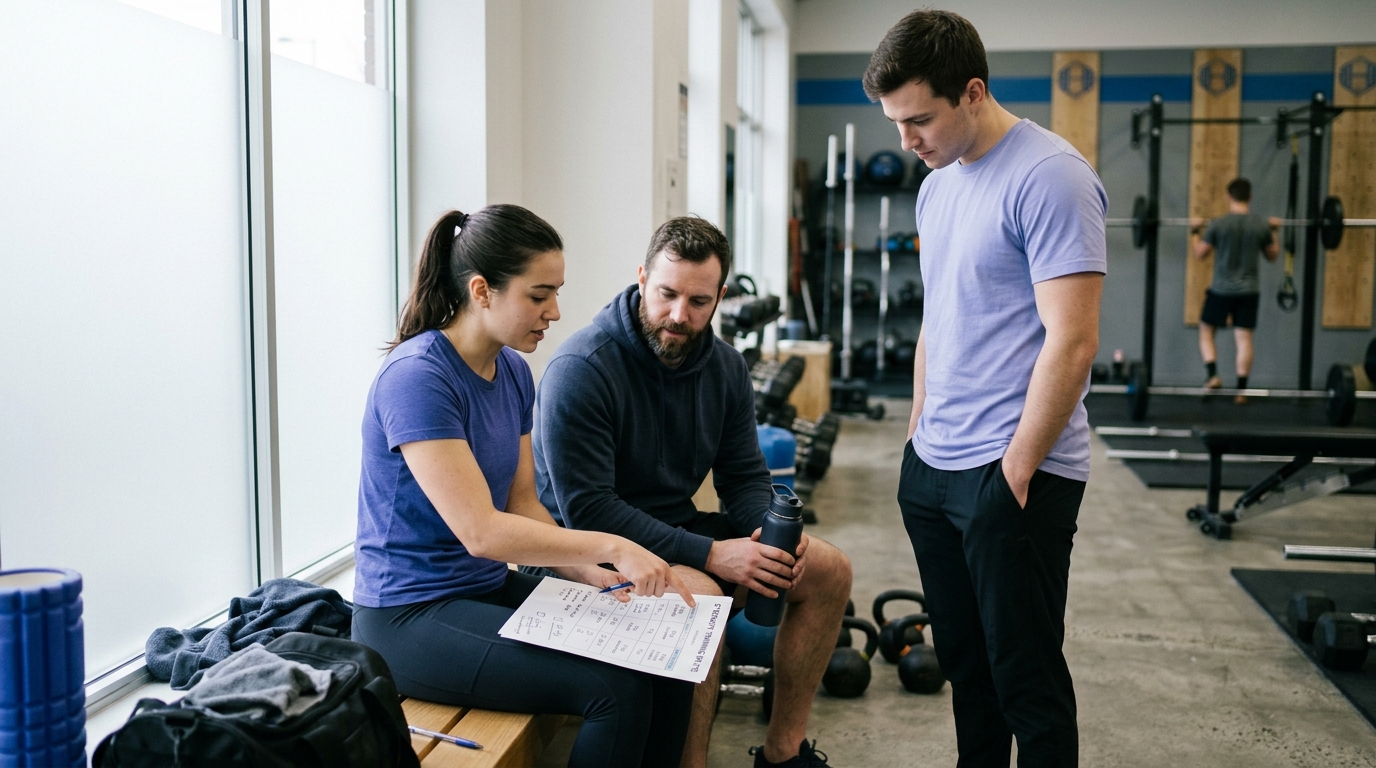
Keep a simple training log to track your variables. Record the exercise, load, completed repetitions, set count, rest duration, and your estimated repetitions in reserve. Reviewing this data over 4 to 6 week blocks provides clear insight into your strength trajectory.
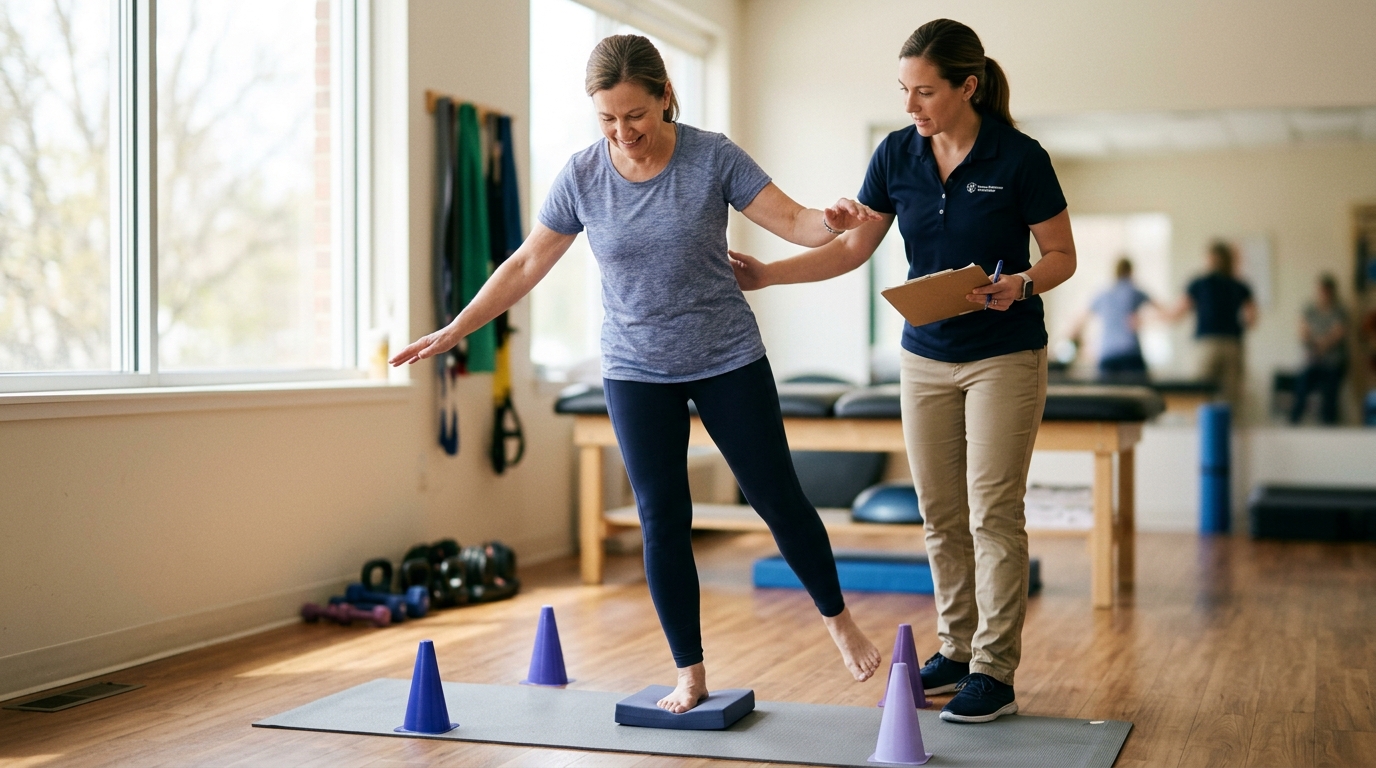
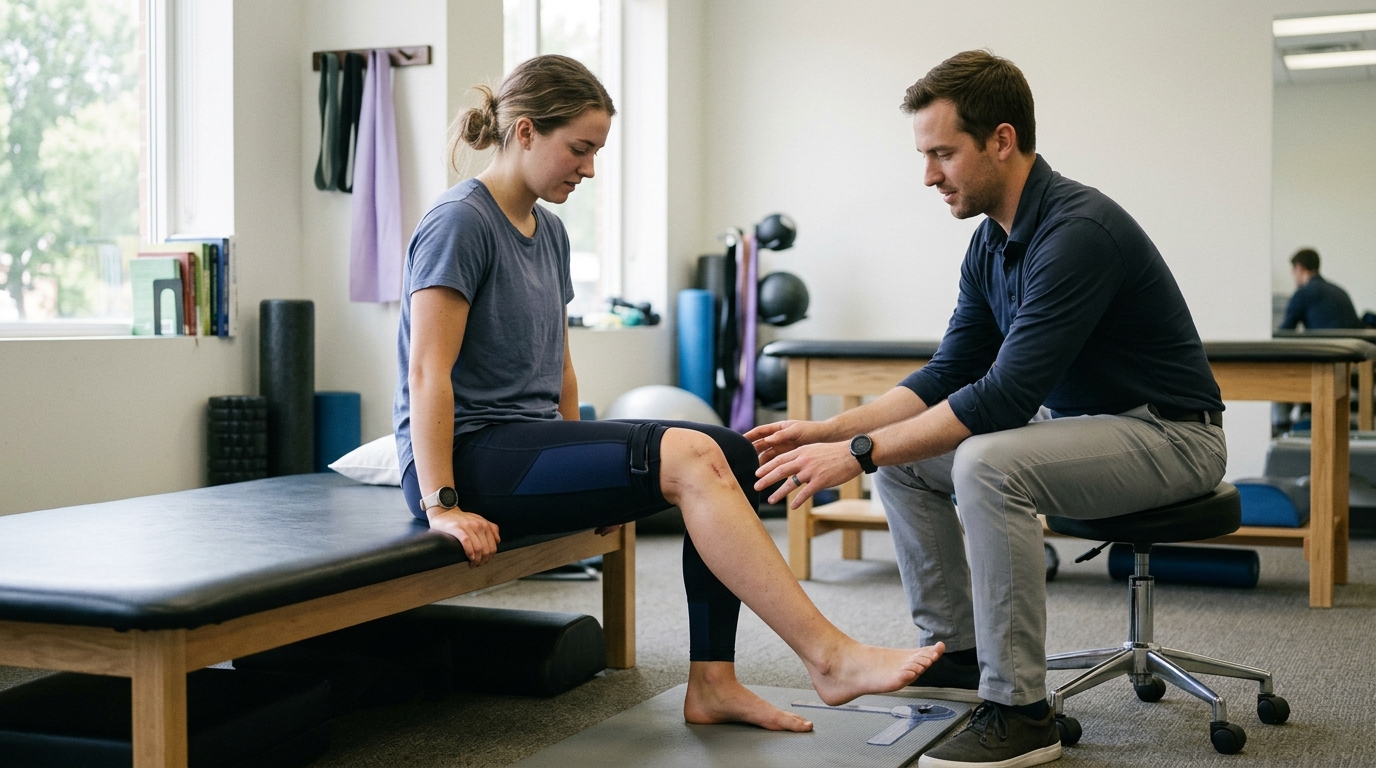
When rebuilding strength after an injury or medical procedure, consult your physical therapist, orthopedic surgeon, or physician. These professionals can provide personalized clinical boundaries based on tissue healing timelines.
Use these practical questions to guide your conversation:
Clear communication with your clinical team ensures that your strength program supports your rehabilitation rather than interfering with tissue recovery.
Rebuilding physical strength does not require complex routines or extreme physical exhaustion. By treating load, repetitions, sets, rest, and frequency as connected controls, you can design a program that builds capacity safely. Sustainable progress comes from establishing consistent habits, executing clean movement patterns, and adjusting one variable at a time.
By applying these research-backed principles with patience and consistency, you can steadily rebuild your physical strength and maintain an active lifestyle for years to come.

Use ReboundBody resources to understand common recovery stages, rehab terms, movement limits and strength rebuilding. Each guide is designed to make a complex comeback easier to understand.


Read practical guidance on injury recovery, rehabilitation, mobility and rebuilding strength as you work your way back to activity.
Explore Resources