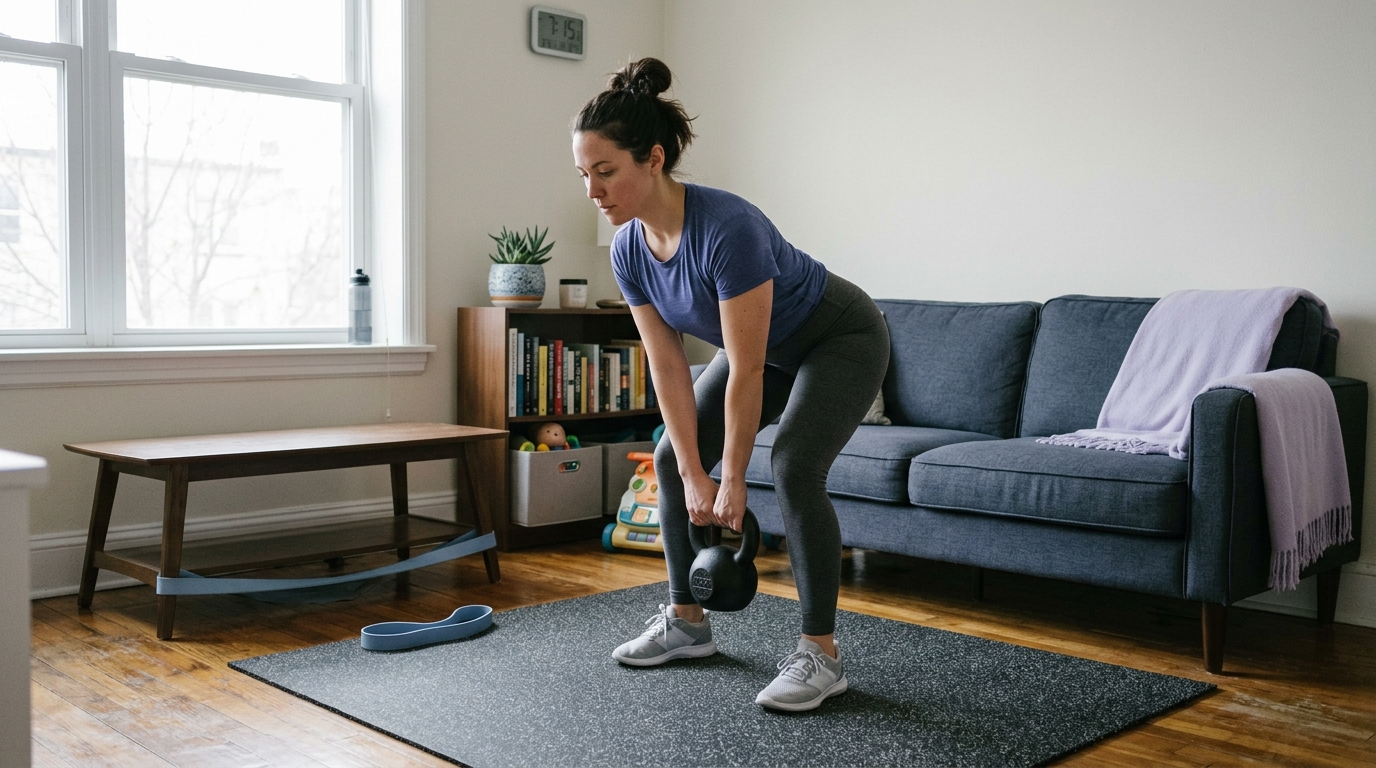

Juggling a demanding schedule leaves little room for long workouts, but focusing on core movement patterns builds lasting strength with minimal weekly sets.





Most fitness advice assumes you have hours of free time, high energy, and unlimited access to a fully equipped gym. When work, family care, recovering joints, or sheer exhaustion collide with that ideal, people often conclude that training is not worth doing at all. That all-or-nothing mindset causes many adults to abandon exercise completely.
Scientific research paints a very different picture. Your neuromuscular system does not require complicated, sixty-minute workouts to maintain its health or build physical capacity. A remarkably small dose of regular resistance training can preserve muscle, protect bone density, and improve daily physical function. Understanding how to build a minimal routine gives you a reliable baseline you can sustain through demanding life seasons.
In pharmacology, the minimum effective dose is the smallest amount of a medication that produces a noticeable, beneficial outcome. In strength training, the concept works the same way. It is the smallest repeatable dose of exercise that creates a worthwhile improvement in strength, muscle retention, or daily functional capacity.
This baseline is a practical floor, not a single universal number. The dose you need depends directly on what you want to achieve. A routine designed to slowly build capacity requires slightly more input than a routine designed to keep what you already have. Both require far less total time and volume than an advanced program built to maximize athletic performance.
To plan an effective minimal routine, sports scientists often use the FITT-VP framework. This framework organizes training into six core components:
You do not need to optimize all six of these variables at once. For adults returning to exercise or training around busy schedules, regular participation and progressive effort matter far more than complex programming.
Public health guidelines from the World Health Organization recommend that adults perform muscle-strengthening activities involving all major muscle groups on at least two days per week. This provides an excellent target for general health. However, if your current schedule only allows for one focused session or several ten-minute blocks, starting below that guideline still delivers real, measurable benefits compared to doing nothing.
The belief that you must complete dozens of weekly sets to see results is directly challenged by modern exercise science. When researchers examine low-volume resistance training, they consistently find that small inputs trigger meaningful adaptations.
A comprehensive review by Iversen and colleagues examined time-efficient training strategies for strength and hypertrophy. The authors reported that performing as little as a single set of 6 to 12 repetitions, two to three times per week, produced significant strength increases in resistance-trained individuals. While the authors noted that this very low volume yielded suboptimal gains compared to higher volumes, it proved that the human body responds positively to minimal stimuli.
The relationship between training volume and physical adaptations follows a curve of diminishing returns. Research analyzing set volume shows that performing fewer than five weekly sets per muscle group can still produce meaningful improvements in muscle size and strength. Moving from zero sets to four sets provides the largest relative return on your investment of time and energy. Adding sets beyond that point still helps, but each additional set delivers a progressively smaller benefit.
Many people wonder if they must train three, four, or five days a week. Systematic reviews and meta-analyses investigating training frequency have clarified this issue. When total weekly volume is kept equal, training a muscle group once per week produces similar strength gains to training it two or three times per week.
Frequency is primarily a scheduling tool. It is a vehicle for distributing your weekly sets across days that suit your lifestyle. If you need to complete six sets for your lower body each week, you can do them all in one focused thirty-minute session, or split them across two fifteen-minute sessions. Choose the schedule you can repeat consistently without feeling overwhelmed.
Another common misconception is that every set must be taken to absolute muscular failure, the point where you cannot physically complete another repetition. Research examining proximity to muscular failure shows that ending a set with one to three repetitions in reserve produces similar muscle growth and strength adaptations compared to training to total exhaustion.
Stopping short of failure offers two critical advantages for time-limited adults:
When you train with moderate to heavy resistance, working hard enough that the last few repetitions feel challenging is sufficient. You do not need to push yourself to absolute physical collapse to stimulate muscle adaptations.
Bodybuilding routines often divide the body into isolated muscle groups, requiring separate exercises for biceps, triceps, shoulders, chest, and calves. This approach takes considerable time and requires an extensive array of equipment. A minimalist routine achieves greater efficiency by training fundamental movement patterns instead of individual muscles.
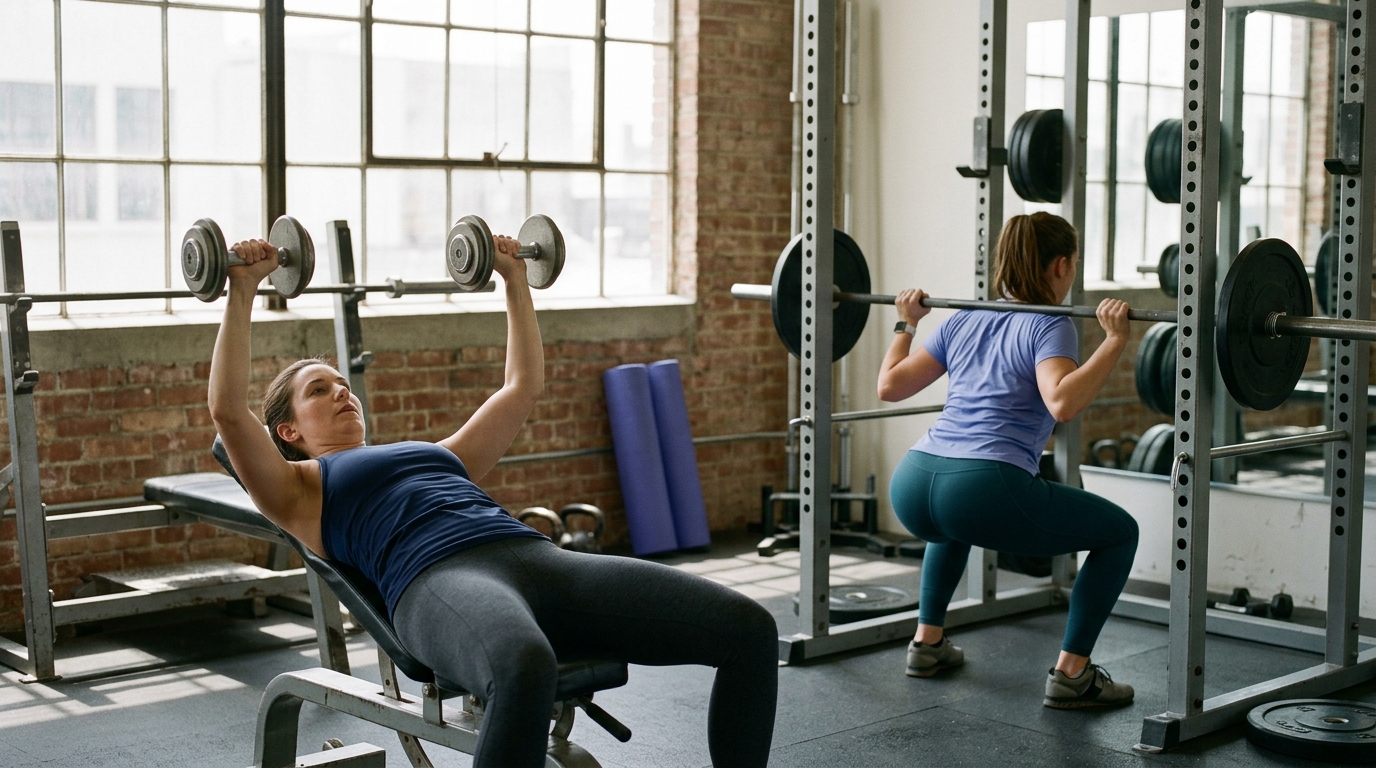
Human movement relies on integrated kinetic chains where multiple joints and muscle groups work together. By selecting multi-joint exercises that cover four basic patterns, you stimulate nearly every major muscle group in the body with just a few movements.
This pattern trains the quadriceps, glutes, and calves while challenging core stability. It mirrors daily activities like standing up from a low chair, climbing stairs, or lifting heavy objects from the floor.
Practical exercise choices include:
Upper-body pushing exercises target the chest, anterior shoulders, and triceps. These muscles are essential for pushing open heavy doors, getting up from the ground, and maintaining upper-body posture.
Practical exercise choices include:
Pulling movements strengthen the upper back, latissimus dorsi, rear shoulders, and biceps. Strengthening these muscle groups supports spinal health and counteracts the forward-slumped posture caused by prolonged desk work and driving.
Practical exercise choices include:
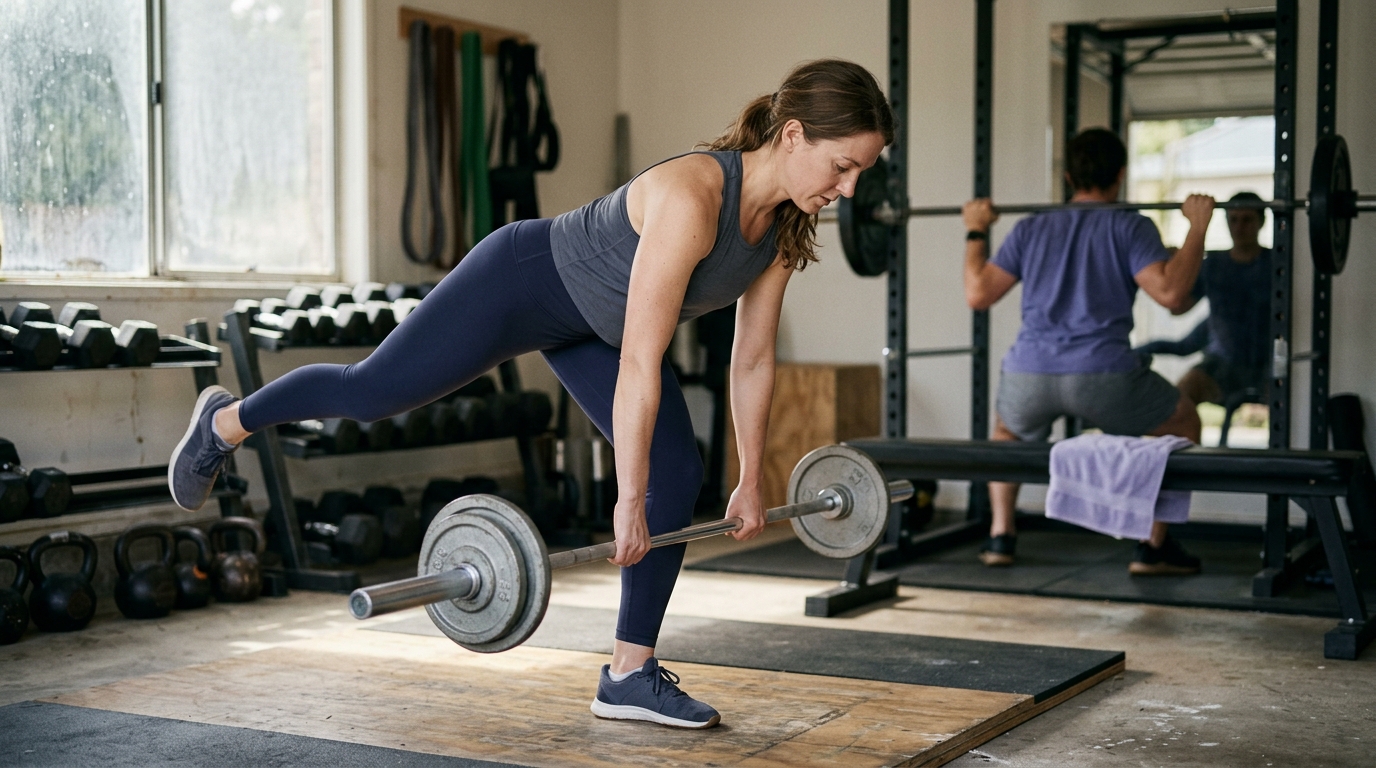
The hip hinge trains the hamstrings, gluteal complex, and spinal erectors. This pattern builds the posterior capacity required for safe bending, lifting, and walking up steep inclines.
Practical exercise choices include:
Focusing on these foundational patterns ensures complete bodily coverage. For a deeper understanding of movement quality, you can review our guide to joint mobility and movement mechanics.
Your training requirements change depending on whether your current goal is building new capacity or simply preserving what you have. Understanding this distinction prevents the frustration that occurs when life disrupts your regular routine.
When your goal is building muscle, rebuilding strength after a break, or improving physical resilience, you need a routine that applies a progressive challenge over time. Research suggests that accumulating at least four to six challenging sets per major movement pattern each week provides an effective stimulus for ongoing improvements.
To fit this into a tight schedule, you can spread these sets across two twenty-minute sessions per week. Each session includes two or three movements performed for two hard sets each. As long as you gradually increase the resistance or repetitions over several months, your body will adapt by building stronger muscle tissue and more efficient neural pathways.
There will be weeks or months when work deadlines, family caregiving, travel, or health issues make regular training difficult. During these periods, shifting your goal from building to maintaining capacity is a sensible, research-supported decision.
In a landmark study summarized by Iversen and colleagues, researchers examined what happened when trained individuals dramatically reduced their exercise volume. Participants who had trained their legs three times per week for sixteen weeks dropped down to just one weekly session of one to three sets for thirty-two weeks. The participants maintained their maximum strength on this fractional dose.
However, the study also revealed an important nuance regarding age. Younger adults maintained both their strength and their muscle size on one brief weekly session. Older adults maintained their strength, but they lost some muscle mass over the thirty-two weeks on the lowest-volume protocol.
This finding highlights that older adults may need slightly more weekly volume to preserve muscle mass over extended periods. Even so, completing one short session per week is vastly superior to stopping altogether. A brief maintenance routine acts as a structural bridge, preserving your hard-won physical capacity until your schedule opens up again. To learn more about sustaining physical resilience over time, read our resources on active aging and injury prevention strategies.
A common barrier to strength training is the belief that you cannot achieve real results without an expensive gym membership or an elaborate home setup. Scientific evidence clearly shows that your muscles respond to mechanical tension, regardless of whether that tension comes from a high-tech machine, a barbell, an elastic band, or your own body weight.
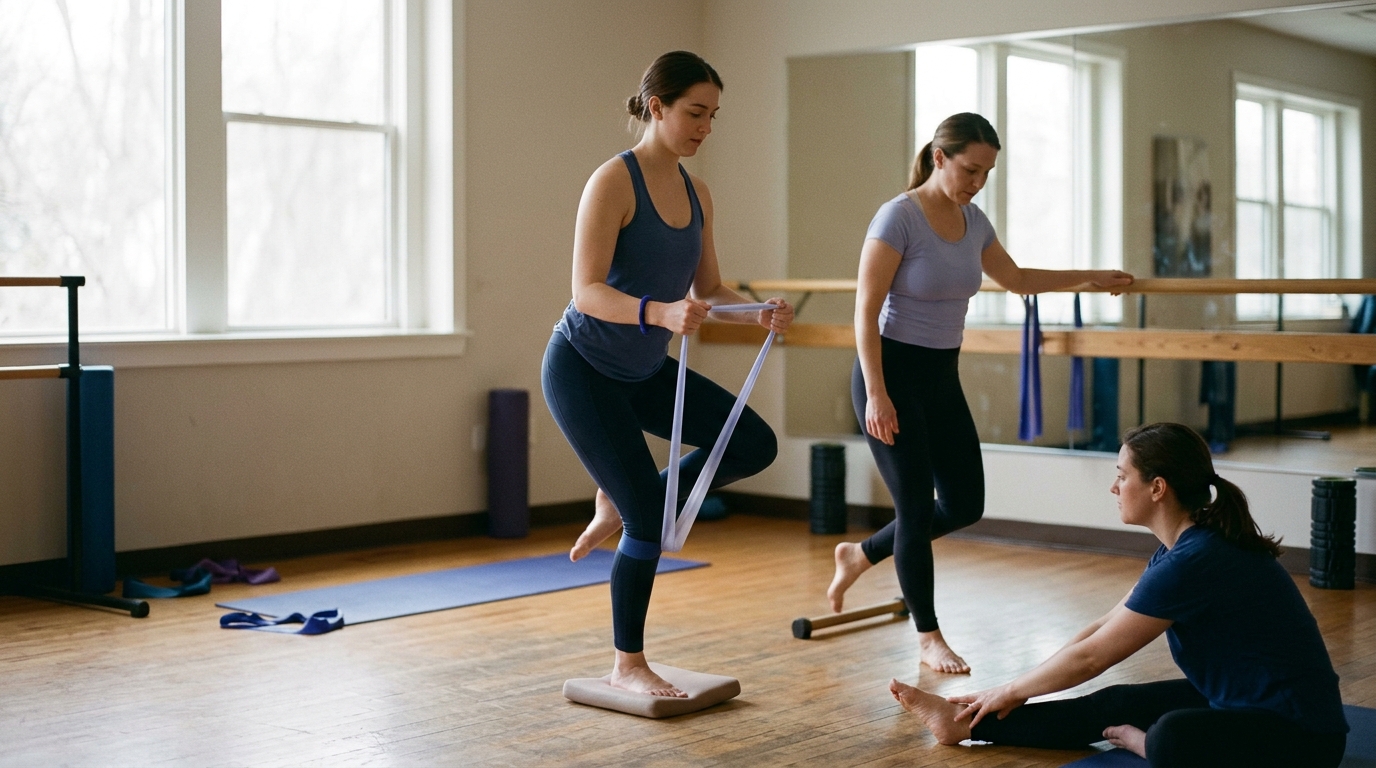
Elastic bands are light, inexpensive, highly portable, and require minimal storage space. They provide an adaptable way to train strength anywhere, from small living rooms to hotel rooms.
A systematic review and meta-analysis conducted by Lopes and colleagues compared the effects of elastic resistance training against conventional resistance training using machines and free weights. The authors found no significant differences in strength gains between elastic and conventional resistance across both upper and lower body muscle groups. Elastic bands provide variable resistance that increases as the band stretches, creating high muscle activation throughout the range of motion.
Bands do have a practical limit when loading very heavy lower-body exercises like squats and deadlifts for advanced trainees. However, for building general functional strength, joint stability, and muscle endurance, high-quality looped resistance bands are an exceptionally capable tool.
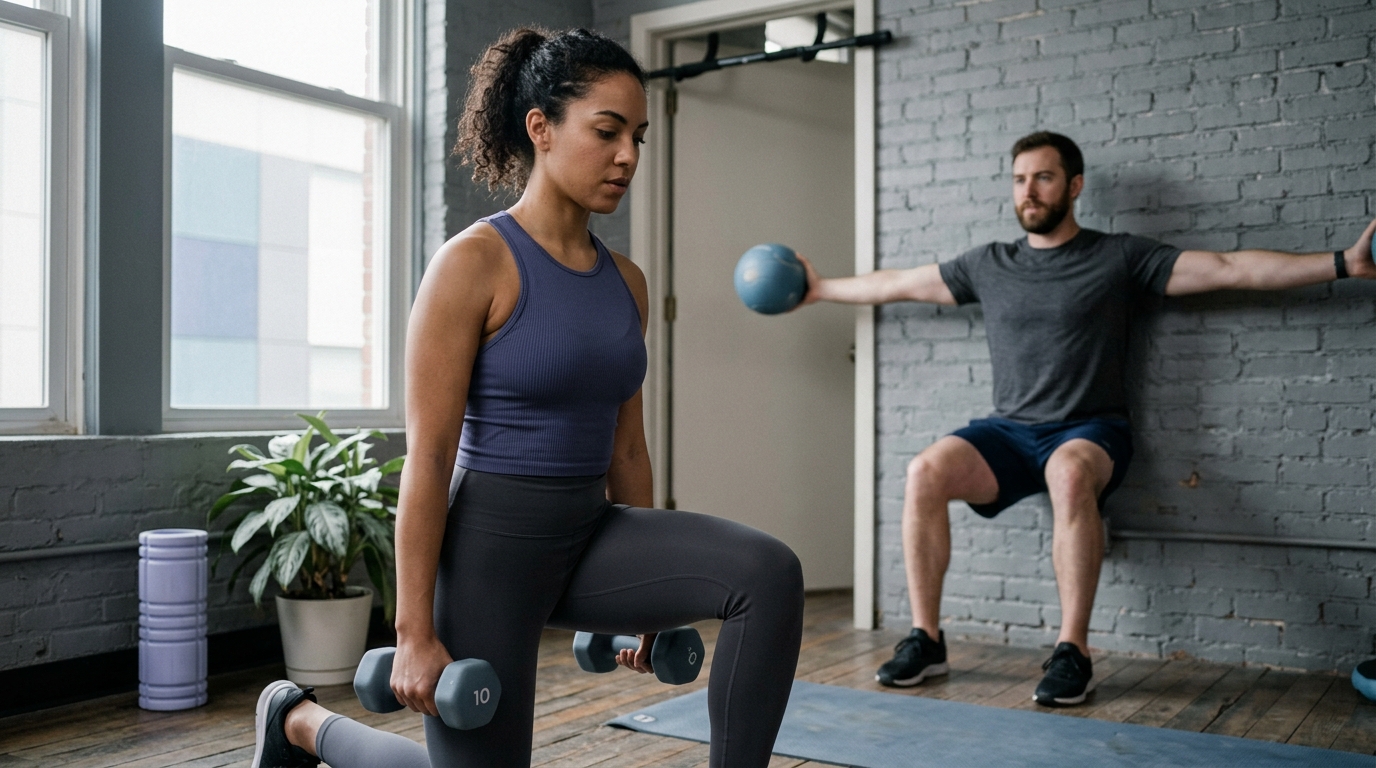
Using your own body weight allows you to train whenever a brief window of time appears. Exercises like push-ups, squats, step-ups, and lunges require zero setup time.
The primary challenge with bodyweight exercise is managing the resistance. With free weights, you simply select a lighter or heavier dumbbell. With bodyweight training, you alter the difficulty by adjusting your body angles, the lever length, or the base of support:
If you have the space and budget for a single piece of equipment, an adjustable set of dumbbells or two moderate-weight kettlebells offer broad versatility. They allow you to easily load hip hinges, carries, and upper-body rows while providing clear, measurable increments for tracking your strength progress over time. If you want to review structured frameworks for rebuilding physical strength safely, explore our strength and performance rebuilding resources.
Progressive overload is the governing principle of all physical training. It states that for a muscle to adapt, it must be exposed to an unfamiliar or increasing workload over time. However, many people incorrectly assume that progressive overload only means adding heavy iron plates to a barbell.
When you have limited equipment or time, you can progress exercises using several practical methods that do not require buying heavier weights.
The double-progression method is one of the most reliable frameworks for time-limited training. Instead of changing the weight every workout, you work within a target repetition range, such as 8 to 12 repetitions.
Increasing the controlled range of motion in an exercise places greater mechanical demand on your muscles without requiring extra load. Lowering yourself an inch deeper in a squat, or bringing your chest closer to the floor during a push-up, increases muscle activation and improves joint mobility.
Similarly, controlling the tempo of your repetitions provides an effective stimulus. Taking three full seconds to lower yourself to a chair during a sit-to-stand forces your quadriceps and glutes to work significantly harder than dropping down quickly and bouncing back up.
When you only have fifteen to thirty minutes to train, how you organize your workout matters. Using specific session structures allows you to get through your planned volume without cutting corners on movement quality or safety.
A traditional workout involves performing a set of an exercise, resting for two to three minutes, and repeating that process until all sets are finished. While long rests are ideal for maximizing top-end powerlifting strength, they are inefficient when time is short.
An antagonistic superset pairs two exercises that train opposing muscle groups back-to-back with short transition breaks. For example, you can perform a set of an upper-body push (such as an incline push-up), rest for sixty seconds, and immediately perform a set of an upper-body pull (such as a band row).
While your pushing muscles are working, your pulling muscles are resting, and vice versa. Research reviewed by Iversen and colleagues demonstrated that pairing opposing movements can cut total workout time nearly in half while producing comparable strength and muscle improvements.
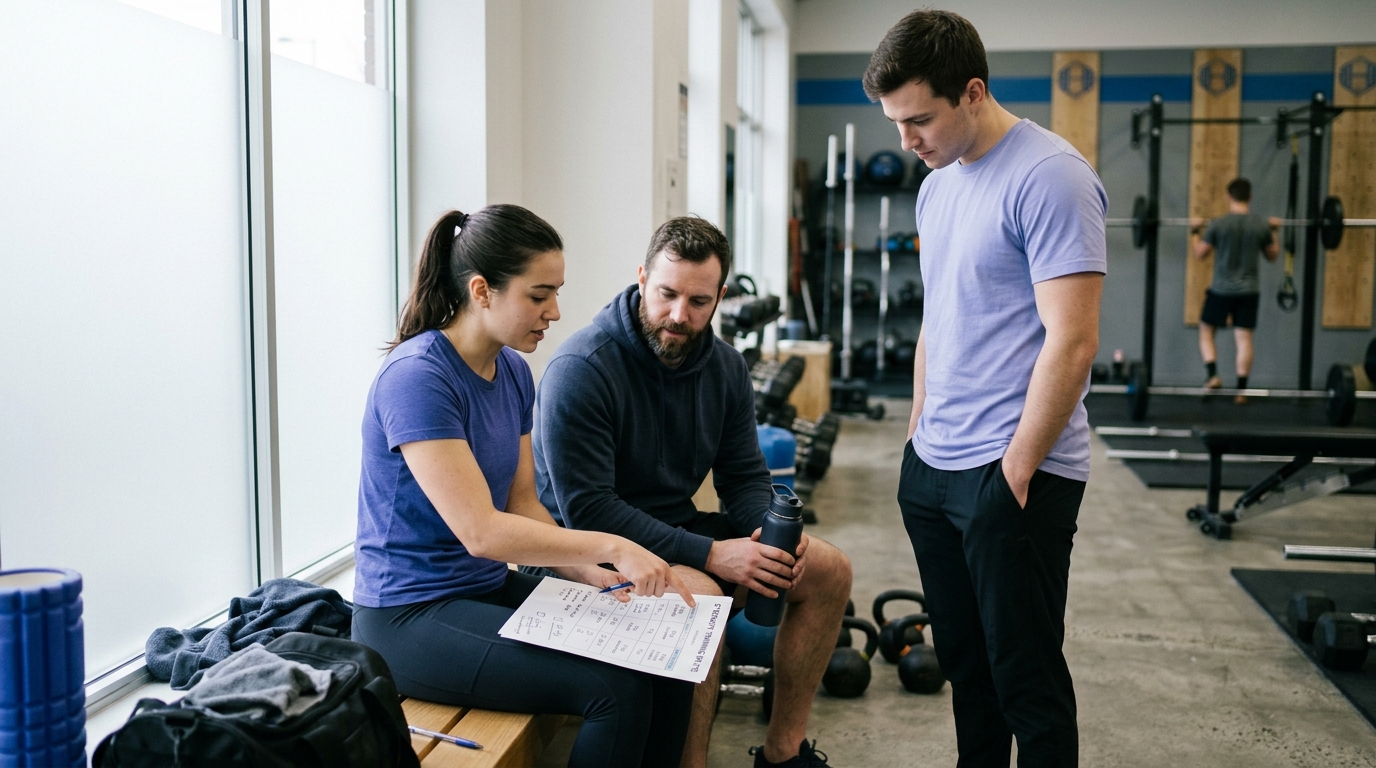
These sample templates illustrate how to organize minimal routines across different life constraints. They are practical organizing models rather than personalized prescriptions.
While supersets save time, cutting rest periods too drastically can cause excessive cardiovascular fatigue, causing you to terminate your set because you are out of breath rather than because your muscles were challenged.
Give yourself enough rest between sets to catch your breath and maintain crisp, controlled movement mechanics. Sixty to ninety seconds between alternating exercises is typically the sweet spot for time-efficient strength training. To explore how rest and adaptation interact at the cellular level, see our articles on recovery science principles.
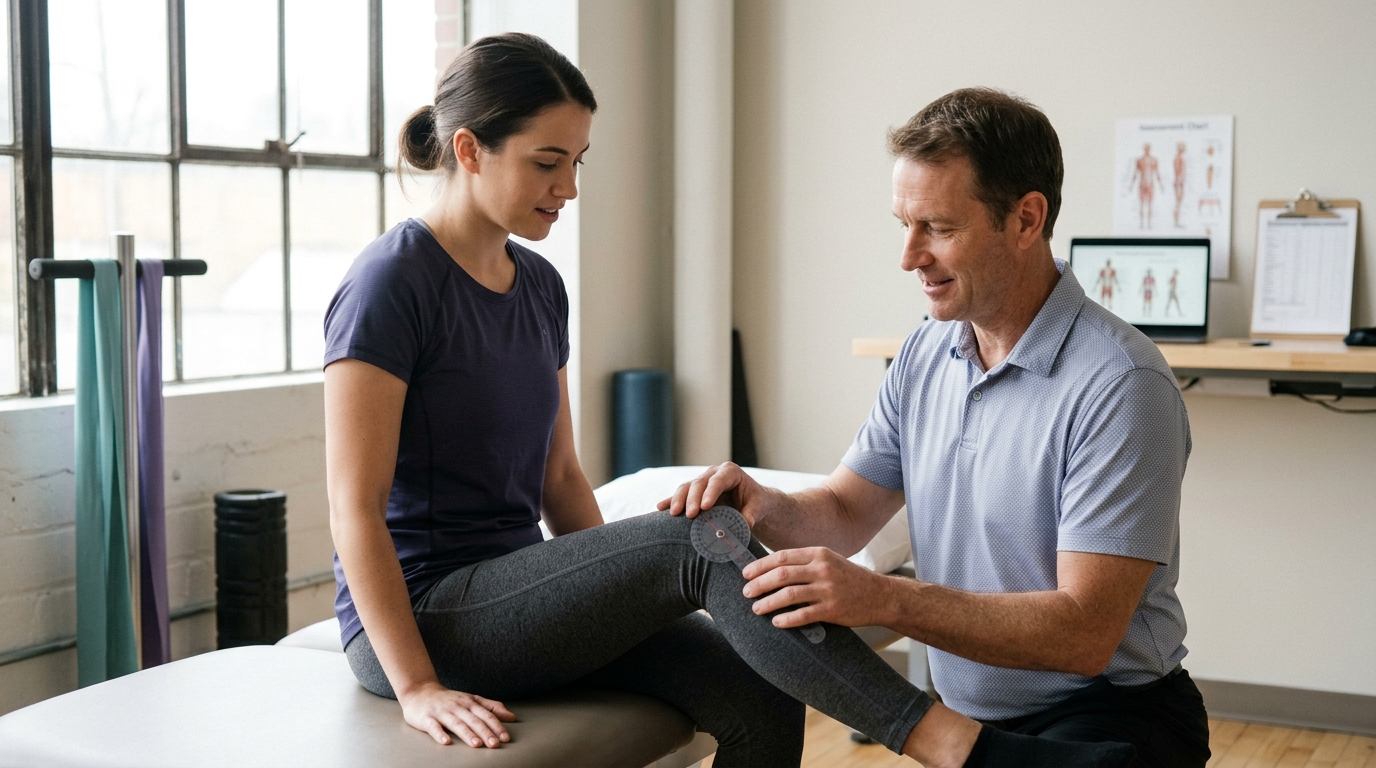
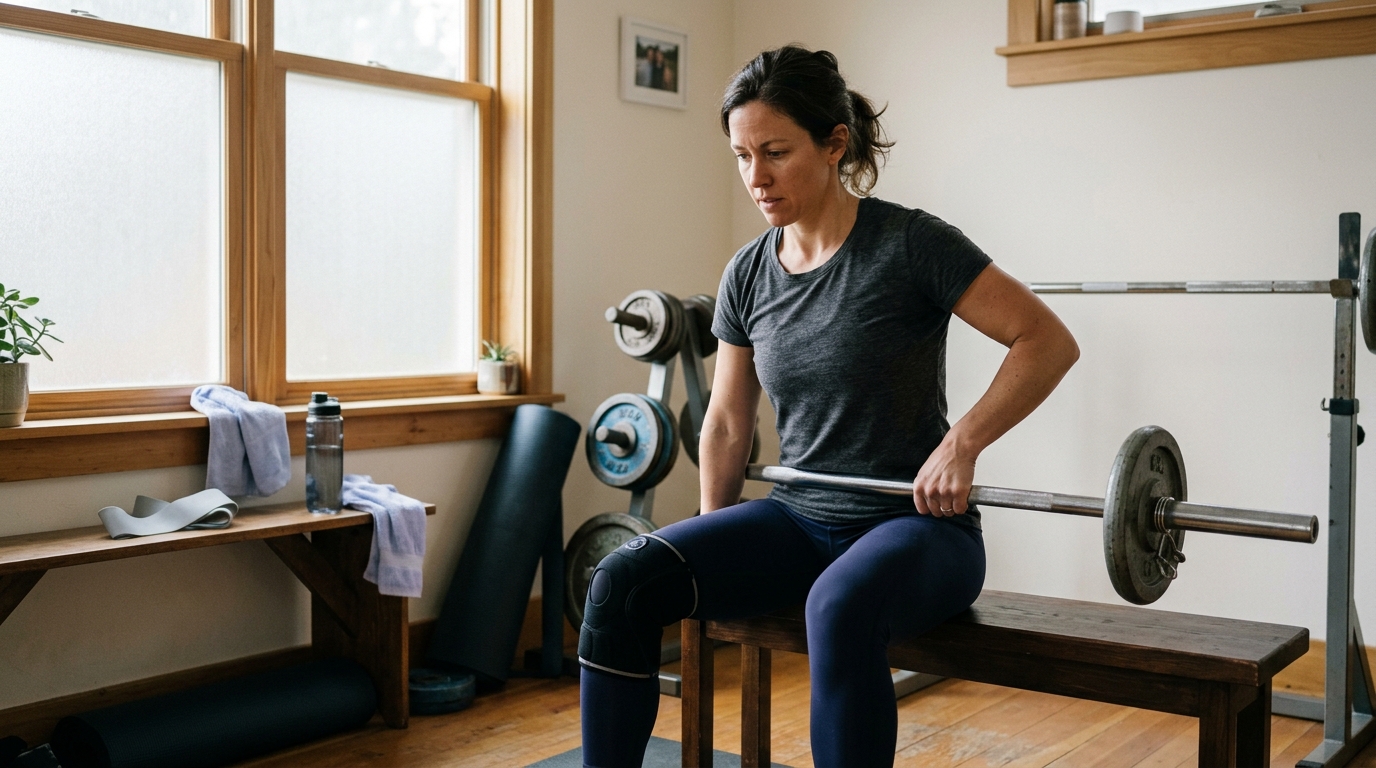
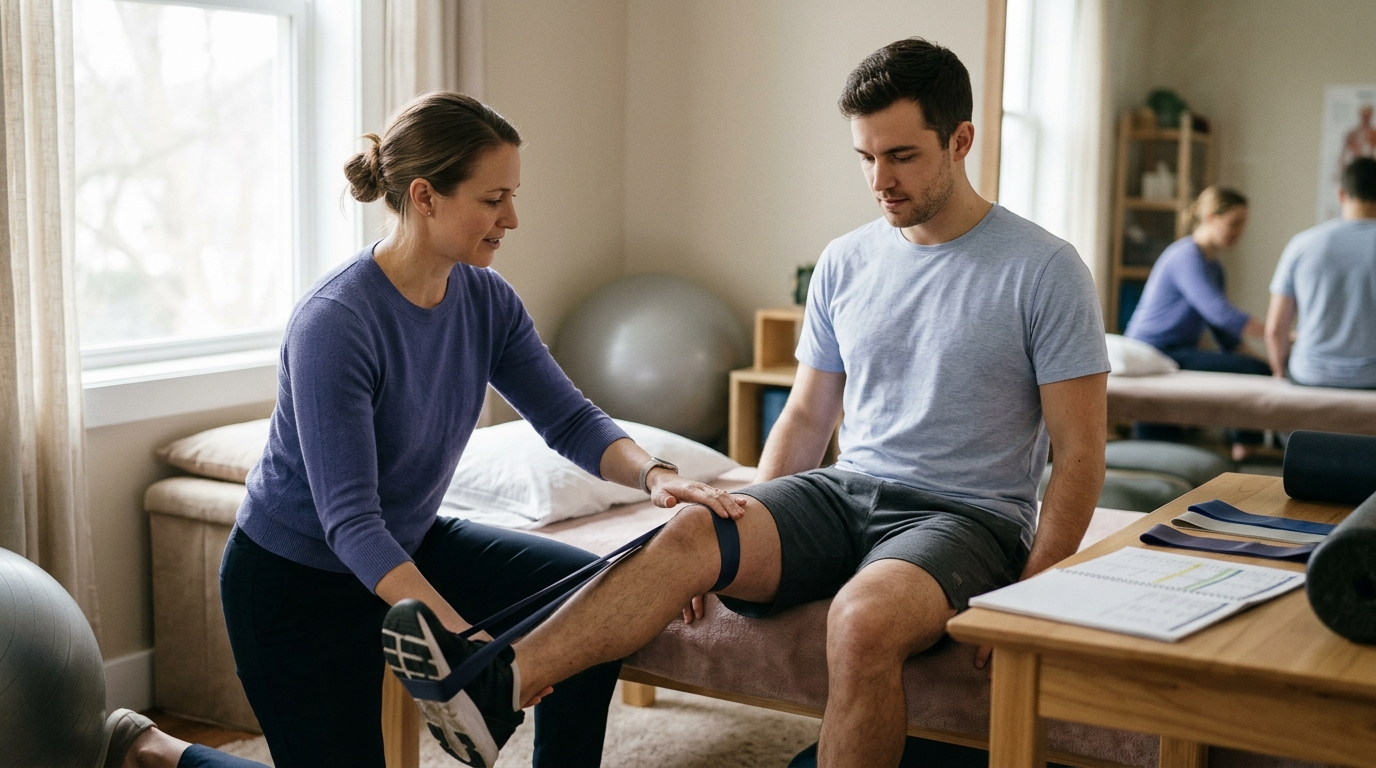
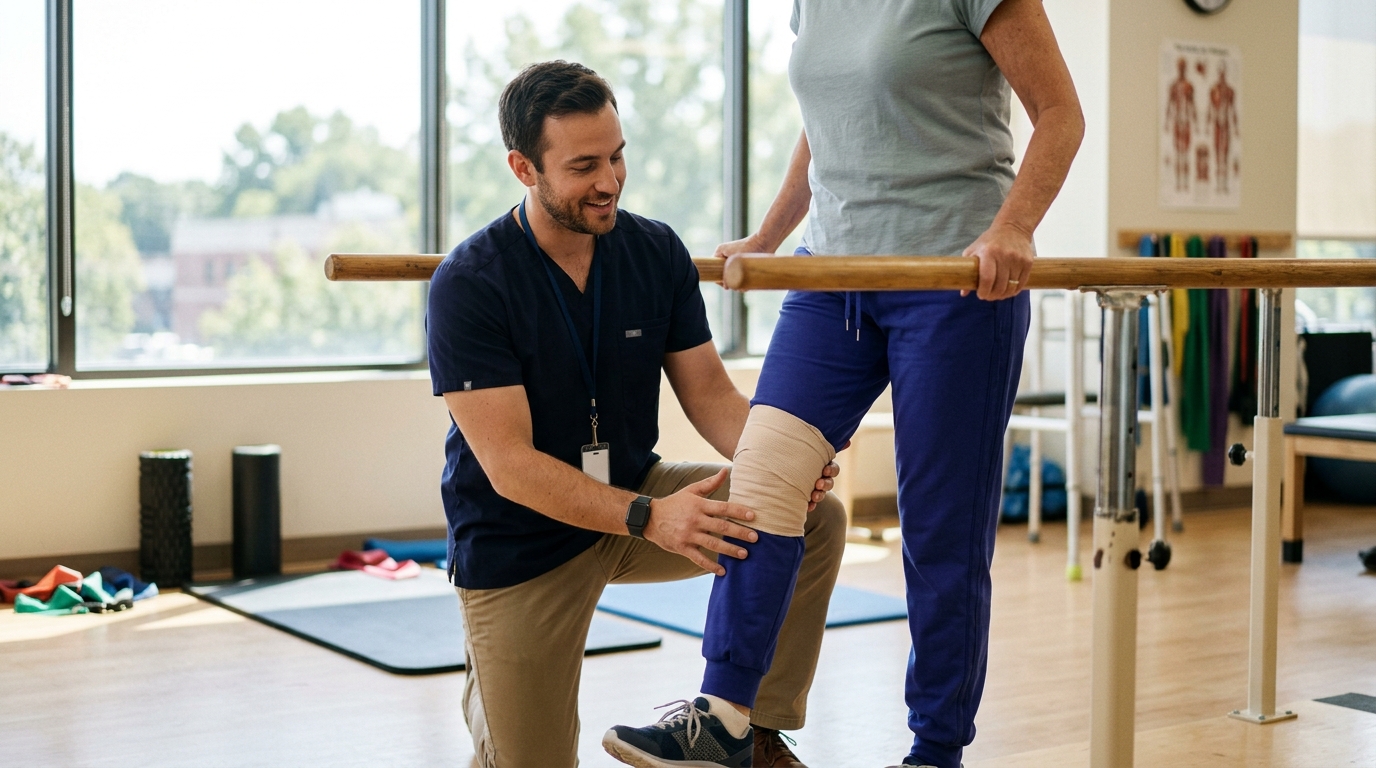
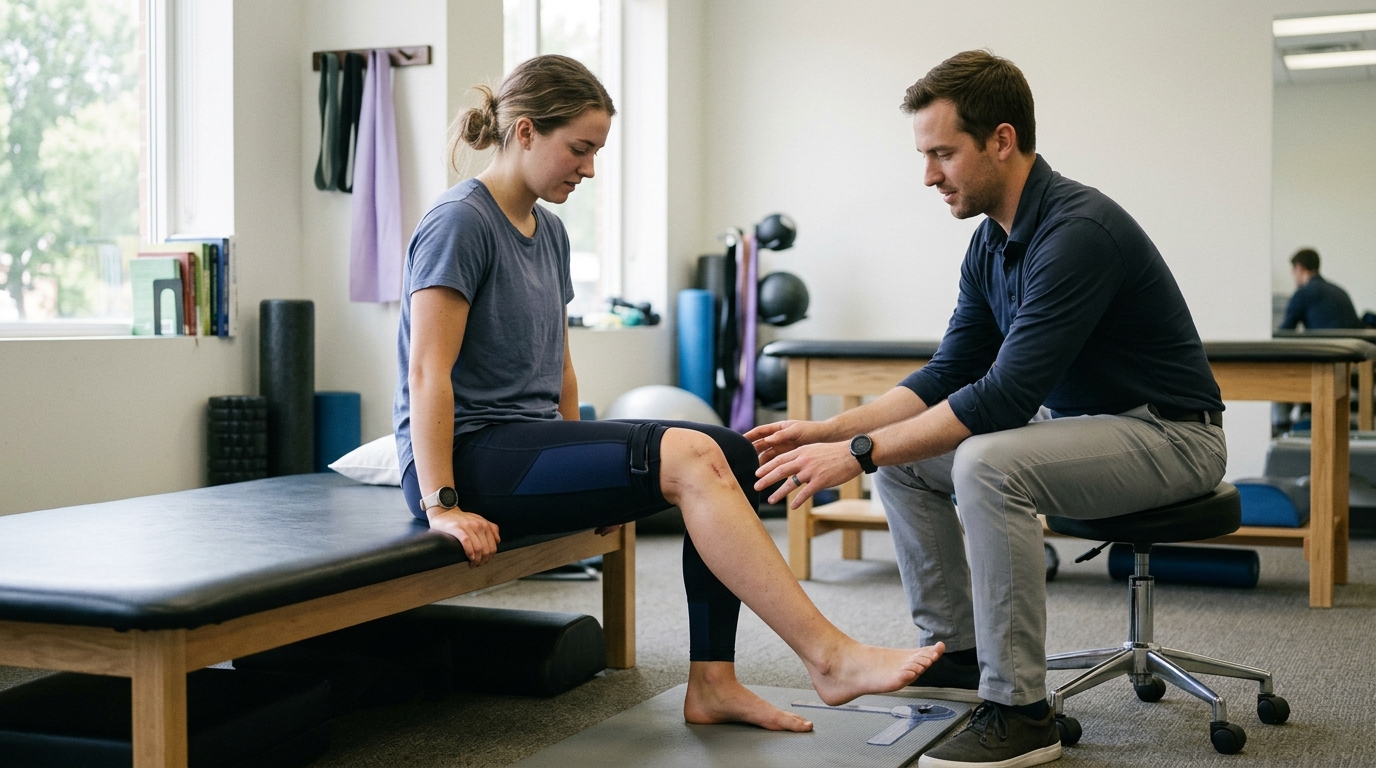
A minimalist strength routine is designed to build physical resilience, but you must tailor it to your individual health history. If you are recovering from surgery, managing joint osteoarthritis, or returning from a prolonged period of inactivity, consulting a physical therapist or physician ensures your starting point is safe.
Here are practical, specific questions you can bring to your next clinical appointment:
Bringing these focused questions to your healthcare team allows you to build a safe, sustainable exercise habit that directly supports your long-term recovery goals.
Starting with a small, manageable strength routine protects your health, preserves your time, and builds a sustainable foundation for lifelong movement.

Use ReboundBody resources to understand common recovery stages, rehab terms, movement limits and strength rebuilding. Each guide is designed to make a complex comeback easier to understand.


Read practical guidance on injury recovery, rehabilitation, mobility and rebuilding strength as you work your way back to activity.
Explore Resources