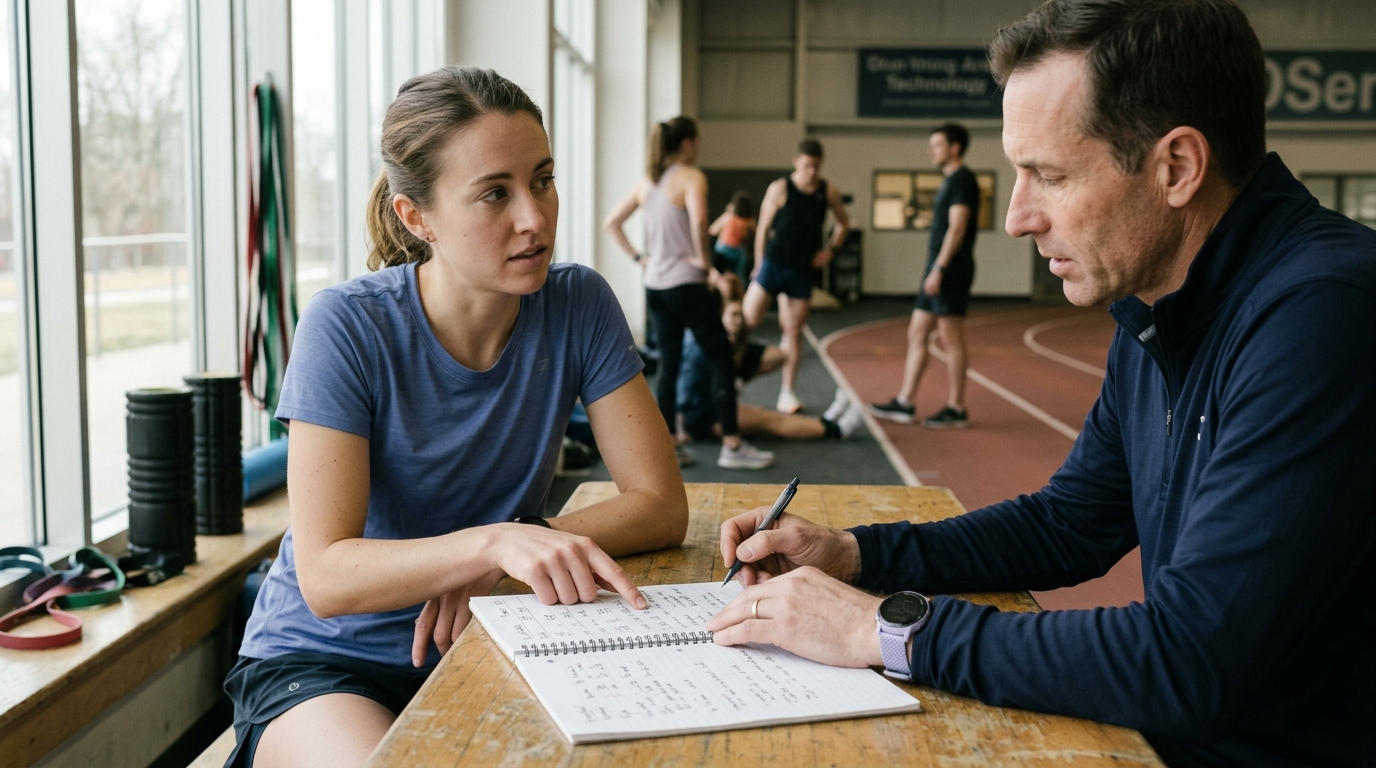

Training load management helps active adults balance physical volume and internal fatigue to prevent painful overuse injuries and bone stress fractures.





Training load management is not a system for avoiding hard work, nor is it a mathematical formula that eliminates every physical risk. It is an ongoing practice of balancing the physical and mental demands placed on your body with your current capacity to recover. When loading consistently outpaces recovery, tissues cannot adapt properly, leading to persistent fatigue, declining performance, and chronic overuse problems.
Spotting an overuse issue before it turns into a long-term injury requires understanding how your body communicates strain. A single demanding workout rarely causes an overuse condition on its own. Instead, problems usually emerge when repeated stress accumulates without enough time or resources for tissue repair. Learning to track your training dose alongside your physical and mental response allows you to adjust your routine early, long before a mild ache becomes a debilitating setback.
This guide provides a comprehensive overview of how training load operates. It examines what clinical research says about workload spikes, outlines the subtle differences between normal training fatigue and maladaptation, and explains when to alter your routine versus when to consult a medical professional.
Overuse problems develop when the total stress placed on your body exceeds its biological ability to repair and rebuild tissues over time. The most effective way to prevent these issues is to monitor both the work you perform and your body's specific response to that work.
Tracking external work alone, such as miles run, weights lifted, or hours practiced, gives an incomplete picture. You must also evaluate internal markers, including muscle soreness, sleep quality, resting energy, and emotional stress. When early warning signs appear, making prompt, small adjustments to your training volume or intensity allows tissues to recover before structural breakdown occurs.
Major scientific reviews, including consensus statements from the International Olympic Committee, emphasize that there is no universal workload number that guarantees safety for every person. Biological capacity changes from week to week based on sleep, nutrition, life stress, and prior injuries. For readers seeking deeper background on tissue capacity, our rehabilitation and movement resources provide practical context on how joints and muscles adapt to physical stress.
Training should not be feared, because progressive physical loading strengthens bones, tendons, and muscles. The objective is simply to keep the rate of progression aligned with your body's real-time ability to adapt.
To understand how overuse develops, you must distinguish between external load and internal load. External load refers to the objective, measurable physical work you complete during an activity. It includes metrics like running distance, cycling power output, total weight lifted, training duration, and pitch or repetition counts.
Internal load represents the biological, physiological, and psychological cost that the external work imposes on your body. It is reflected in your heart rate, oxygen consumption, rating of perceived exertion, and post-exercise exhaustion. A five-mile run on a flat paved path on a cool morning creates a specific external load. However, that exact same run completed after a poor night of sleep, during high humidity, and under heavy work stress produces a much higher internal load.
Because internal load fluctuates based on daily lifestyle factors, identical workouts do not produce identical strain. If you only track external numbers, you might assume your routine is perfectly stable when your body is actually experiencing rising strain. Successful load management requires paying attention to both sides of this equation.
When external demands consistently exceed internal capacity, the body enters a state of negative recovery balance. Over time, this imbalance weakens connective tissues, drains hormonal reserves, and lowers physical resilience.
Extensive sports medicine research demonstrates a clear link between sudden, rapid spikes in training volume or intensity and an increased rate of musculoskeletal injury. The International Olympic Committee reviewed decades of athletic data and confirmed that rapid workload surges frequently precede soft tissue injuries and bone stress reactions.
Historically, researchers attempted to quantify this relationship using mathematical models, such as the acute to chronic workload ratio. This model compared the training completed in the most recent week to the rolling average of the preceding four weeks. Early studies suggested that keeping this ratio within a specific narrow range minimized injury risk, while ratios above a certain threshold sharply increased problems.
More recent scientific reviews have urged caution regarding rigid mathematical formulas. Systematic analyses have pointed out significant statistical limitations and inconsistencies across different sports and age groups. While the general concept remains valuable, training ratios cannot serve as a foolproof clearance test or a standalone diagnostic tool.
Instead of relying on a single mathematical score, modern sports science views injury risk as a dynamic, multifactorial process. A training spike is an important risk factor, but its actual effect depends on your baseline fitness, recovery habits, tissue health, and overall life stress. To learn more about modern recovery science, visit our recovery science articles to see how lifestyle factors influence tissue healing.
The evidence clearly establishes that gradual, progressive increases in training allow tissues to remodel and grow stronger. Rapid, unmanaged increases, however, frequently overwhelm tissue capacity before adaptation can occur.
Physical exercise inherently causes temporary micro-damage and acute fatigue, which are necessary stimuli for gaining strength and endurance. The key to staying healthy is learning to distinguish expected post-workout sensations from problematic patterns that signal maladaptation.
Fatigue exists along a continuous spectrum rather than as an all-or-nothing condition. Recognizing where you fall on this spectrum helps you make informed decisions about your daily routine.
Delayed onset muscle soreness is normal after unfamiliar exercises or challenging workouts. It typically presents as a broad, diffuse aching sensation across muscle bellies, peaks between 24 and 72 hours, and improves with gentle movement and light activity.
In contrast, overuse symptoms affecting bones, joints, and tendons follow a distinctly different and more concerning pattern. Tendon and bone stress issues usually present with localized, pinpoint discomfort that intensifies as training accumulates.
A joint or bone issue often feels stiff or tender at the start of an activity, may temporarily numb during exercise, and then aches intensely once the body cools down. If discomfort begins to alter your natural gait or movement patterns, it is no longer normal workout soreness.
Bone tissue is dynamic and constantly undergoes remodeling in response to weight-bearing forces. When mechanical strain is applied gradually, osteoblasts lay down new bone matrix to reinforce structural density. However, when repeated mechanical loads outpace the rate of bone formation, micro-damage accumulates, leading toward a stress fracture.
The progression of a bone stress injury typically follows three recognizable stages:
Recognizing localized bone tenderness early is critical. Ignoring these symptoms and attempting to train through the discomfort can transform a manageable bone stress reaction into a full structural fracture that requires months of non-weight-bearing immobilization.
No two individuals respond to the exact same training program in identical ways. A wide range of internal and external factors influence your biological capacity and determine how much physical stress your tissues can tolerate on any given day.
Mental and emotional stressors draw on the same central physiological resources as physical exercise. High occupational stress, family pressures, and emotional anxiety keep the sympathetic nervous system elevated and impair tissue repair mechanisms. When life stress rises, your capacity to absorb intense workouts drops significantly.
Sleep is the primary window for physiological recovery, muscle protein synthesis, and hormone regulation. Chronic sleep restriction reduces blood flow to working muscles, impairs glucose metabolism, and increases systemic inflammation. Athletes and active adults who sleep fewer than seven hours per night face significantly higher rates of overuse injuries.
Your body requires sufficient caloric energy to fuel daily biological functions, maintain bone density, and repair exercise-induced damage. When total caloric intake consistently falls short of exercise expenditure, the body enters a state known as low energy availability.
The International Olympic Committee identifies low energy availability as the root cause of Relative Energy Deficiency in Sport, also known as REDs. This condition impairs metabolic rate, menstrual function in women, bone health, immunity, and cardiovascular function. Without adequate nutritional energy, tissues cannot rebuild, dramatically increasing the risk of stress fractures and soft tissue breakdowns. For guidance on supporting tissue repair through diet, check out our recovery and nutrition articles.
As adults age, tendons, ligaments, and cartilage naturally experience reduced cellularity and slower collagen turnover. While older adults can build remarkable strength and endurance, their connective tissues require longer recovery intervals between high-intensity bouts. Adjusting frequency and prioritizing rest days allows mature tissues to remodel safely. Our active aging and prevention articles provide further strategies for maintaining joint health across decades of movement.
Active adults often fall into predictable behavioral patterns that inadvertently increase overuse risk. Recognizing these illustrative scenarios can help you spot similar tendencies in your own training routine.
Consider an illustrative example of an adult preparing for a half-marathon. After maintaining a steady baseline of 15 miles per week for three months, they suddenly increase their volume to 30 miles over two weeks to meet a race schedule.
Initially, their cardiovascular system handles the extra distance without dramatic fatigue. However, their lower-leg bones and tendons have not had enough time to remodel under the doubled impact load. Within three weeks, sharp pain develops along the inner shin bone, making running impossible. A gradual progression of no more than modest weekly increases would have allowed connective tissues to adapt alongside their cardiovascular fitness.
Another frequent scenario involves individuals who remain largely sedentary during the workweek due to busy professional schedules, then attempt two intense, high-volume workouts on Saturday and Sunday.
This boom-and-bust cycle repeatedly shocks unprepared tissues with massive acute loads, followed by five days of complete inactivity. Tendons thrive on regular, moderate stimuli rather than dramatic alternating spikes. Spreading physical activity into shorter, more frequent sessions throughout the week provides a much safer mechanical stimulus.
Consider an active individual experiencing an intense work deadline combined with family illness. Rather than adjusting their marathon training program downward, they maintain high training volume while sleeping only five hours a night.
Because their nervous and endocrine systems are already overwhelmed by life demands, the added training load leads to severe nonfunctional overreaching. Performance plummets, mood sours, and a chronic hamstring strain develops. Recognizing that non-sport stress counts toward total bodily strain is essential for long-term health.
Knowing what action to take when symptoms appear is critical. Some physical responses simply require minor training adjustments, while others demand formal clinical evaluation or urgent medical intervention.
When minor symptoms first appear, an effective early modification strategy is relative rest. This means temporarily replacing high-impact or provoking movements with low-impact alternatives, such as swimming, cycling, or targeted strength work. For practical tips on maintaining physical fitness while modifying your routine, explore our injury prevention resources.
Completely stopping all physical activity is rarely necessary for mild soft-tissue issues, because gentle, non-painful movement promotes circulation and tissue remodeling. However, if bone stress or structural ligament damage is suspected, immediate professional evaluation is mandatory before continuing any loading.
When consulting a healthcare professional regarding persistent fatigue, declining performance, or localized pain, asking precise questions helps ensure a collaborative, evidence-based recovery plan.
Consider bringing the following questions to your appointment:
Having an open dialogue with your healthcare provider ensures that your rehabilitation focuses on rebuilding long-term capacity rather than relying solely on temporary rest.
Physical training is an inherently beneficial process that builds stronger bones, resilient muscles, and robust cardiovascular health. Overuse conditions do not occur because exercise is inherently damaging. They happen when physical and psychological stress repeatedly outpaces your body's biological ability to repair and rebuild.
Preventing overuse requires a balanced approach to monitoring both external work and internal recovery. Tracking objective workout metrics while remaining attentive to subjective signals like persistent fatigue, localized bone tenderness, and disrupted sleep allows you to spot trouble before it escalates.
There are no rigid mathematical shortcuts or universal training formulas that fit every individual. By progressing your training gradually, respecting the impact of non-sport life stress, prioritizing sleep and nutrition, and modifying your routine at the earliest sign of localized discomfort, you can build lasting physical capacity while staying active and injury-free.
A gradual, progressive approach is generally safest, but there is no universal percentage rule that applies to every sport or fitness level. Historical guidelines often suggested limiting weekly increases to roughly 10 percent, but modern research emphasizes that your individual recovery, sleep quality, and baseline fitness matter just as much as the raw numbers. Listening to how your tissues feel during and after each session is far more reliable than blindly following a rigid mathematical formula.
Yes, cross-training can still lead to overuse if total volume, intensity, or frequency is ramped up too quickly. While low-impact activities like cycling, rowing, or swimming eliminate ground impact forces, they still place repetitive mechanical strain on specific tendons, joints, and muscle groups. If your connective tissues are unaccustomed to the specific movement patterns of a new cross-training modality, rapid increases can trigger tendon irritation or systemic fatigue.
A persistent, unexplained drop in athletic performance warrants a comprehensive medical checkup. While acute muscular tiredness is normal after hard workouts, a prolonged decline in performance accompanied by normal rest can point to underlying issues like iron deficiency, hormonal imbalances, Relative Energy Deficiency in Sport, or early nonfunctional overreaching. A physician can order routine blood panels to rule out metabolic, nutritional, or systemic causes before you resume heavy training.
Complete inactivity is rarely the best approach for most chronic tendon and muscle overuse conditions, as prolonged rest causes tissues to decondition and lose mechanical strength. Sports medicine generally favors relative rest, which involves modifying or removing the specific painful activity while continuing safe, pain-free movements that preserve cardiovascular fitness and muscular capacity. However, if a clinician diagnoses a serious bone stress fracture or high-grade tear, a period of strict non-weight-bearing immobilization may be medically necessary.

Use ReboundBody resources to understand common recovery stages, rehab terms, movement limits and strength rebuilding. Each guide is designed to make a complex comeback easier to understand.


Read practical guidance on injury recovery, rehabilitation, mobility and rebuilding strength as you work your way back to activity.
Explore Resources