
Over 70 percent of outdoor falls stem from environmental hazards, making practical assessment of ground conditions and transitional surfaces essential for everyday walking safety.





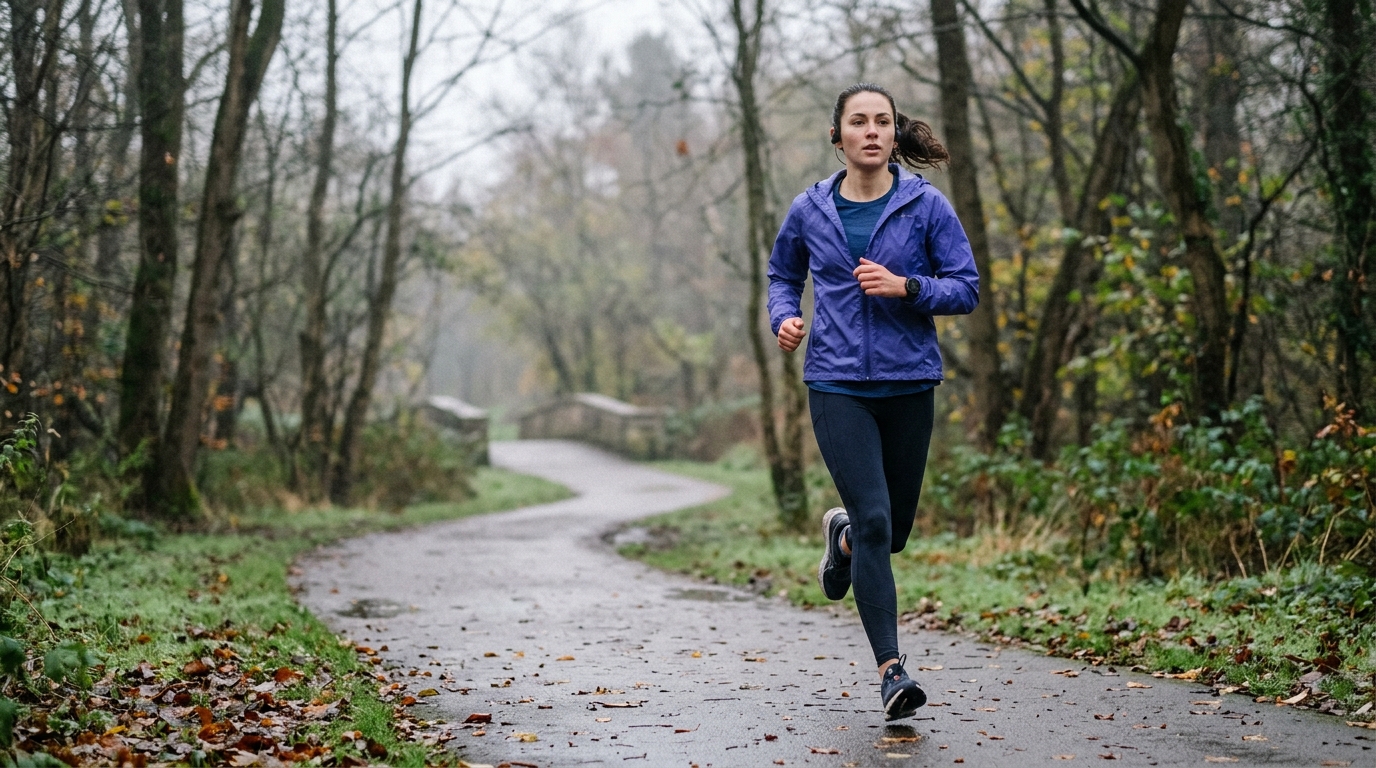
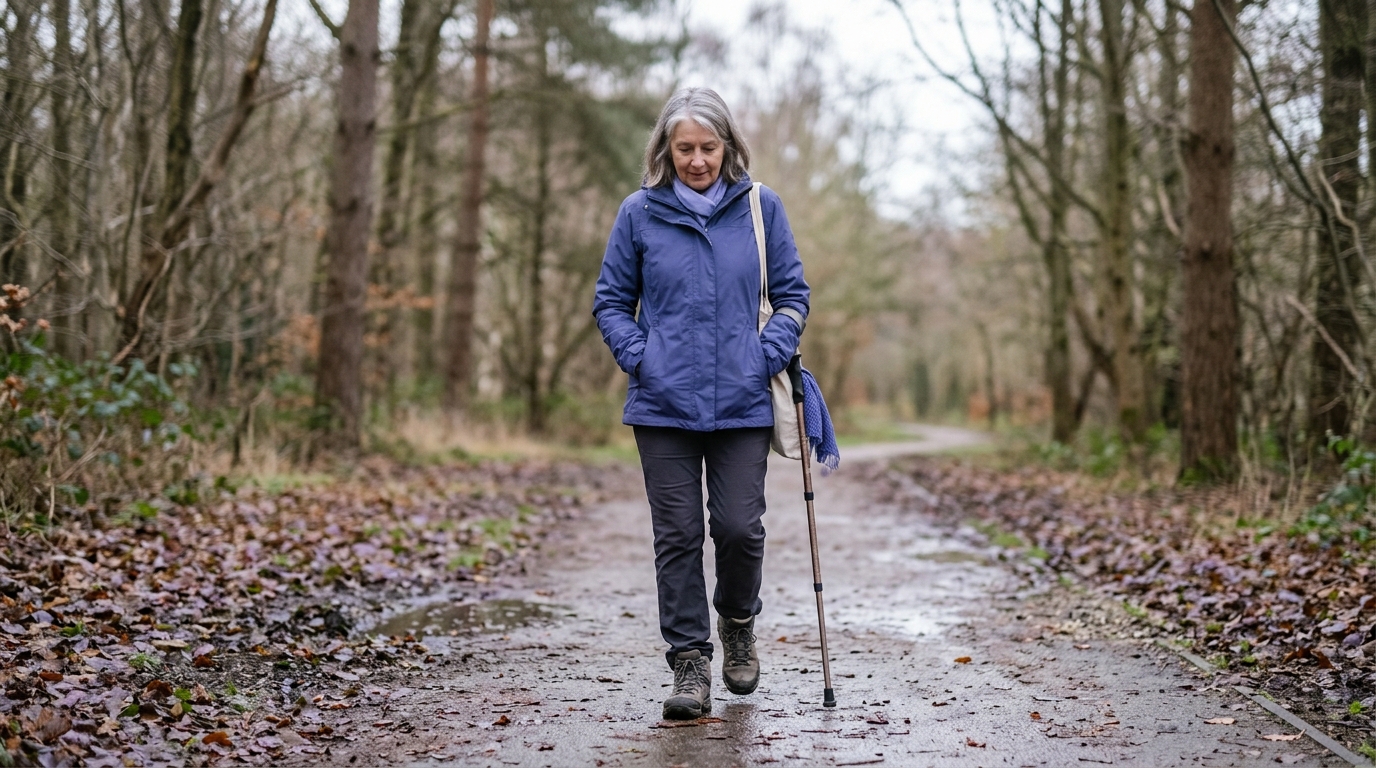
You step out the front door on a crisp morning expecting an ordinary walk. Two blocks from home, yesterday's rain has left a patch of wet leaves over a broken section of concrete. The transition from dry asphalt to slick pavement happens in a single stride, forcing a quick catch of your balance.
Outdoor walking exposes your body to a constantly shifting environment. Ground textures change, lighting shifts, and physical fatigue accumulates over distance. Managing outdoor fall risk is not about eliminating every hazard from the public sidewalk. Instead, it involves understanding how your body interacts with changing surfaces, selecting appropriate footwear, adjusting your route, and maintaining functional strength.
Outdoor falls are rarely caused by a single isolated issue. They occur at the intersection of personal physical capacity, the specific walking task, and the environment. While some public-space hazards cannot be removed by the walker, understanding these factors helps you make informed choices before and during your walk.
A fall happens when the demands of a walking environment exceed a person's immediate physical ability to stay upright. In research, this is described as an interaction between the person, the task, and the environment. A cracked sidewalk is an environmental hazard. Whether that hazard leads to a fall depends on your visual awareness, walking speed, footwear grip, and physical balance.
A hazard is not the same thing as individual risk. A small curb variation might present little difficulty on a bright morning when you are rested and focused. That same curb becomes far more challenging at dusk if you are carrying groceries, walking quickly, or feeling tired.
To help make sense of these moving parts, you can use a practical decision framework:
Pay close attention to changes in the walking surface, shifting light, weather conditions, obstacles, and your own physical state.
Evaluate whether your current balance, vision, energy level, footwear, and mobility aids match the route ahead.
Modify your walking pace, select an alternative path, use a supportive aid, or choose to walk indoors when outdoor conditions become too demanding.
If a slip, trip, or fall occurs, seek appropriate medical guidance and evaluate what happened rather than assuming the event was simply bad luck.
This framework is an educational model to help guide your daily decisions. It encourages realistic self-awareness without requiring rigid rules. You can find related frameworks across our injury prevention resources to help support safe movement habits.
Outdoor fall research shows clear patterns across community-dwelling populations, particularly in middle-aged and older adults. The data demonstrates that outdoor walking carries specific environmental exposures that differ substantially from indoor environments.
According to data from the Centers for Disease Control and Prevention (CDC), more than one in four older adults in the United States falls each year. Fewer than half of those who fall report the event to their healthcare provider. Furthermore, CDC data indicates that roughly one in ten falls causes an injury that limits daily activity for at least a day or requires medical care.
In a study evaluating outdoor falls among middle-aged and older adults, researchers found that 73 percent of outdoor falls were precipitated by environmental factors. These factors included uneven ground, slipping on slick surfaces, or tripping over objects. The same study found that walking was the most common activity at the time of the event, accounting for 47.3 percent of all recorded outdoor falls. Over 70 percent of individuals who fell outdoors landed on hard surfaces such as concrete, asphalt, or stone.
A separate longitudinal study tracking 4,802 participants who had no prior fall history found that 9.7 percent reported a fall within one year of follow-up. After adjusting for health and demographic factors, researchers observed that people who lived in neighborhoods with sidewalk barriers, broken steps, or uneven paths were more likely to report recent falls.
A 2025 systematic review of outdoor environmental risk factors confirmed that sidewalk quality and micro-walkability features are consistently associated with fall frequency and fear of falling. The physical condition of walking paths plays a measurable role in how people move through their communities.
The research literature distinguishes between well-documented risk factors and areas where evidence remains mixed or limited:
Understanding this balance of evidence helps prevent oversimplification. Improving sidewalk maintenance or wearing slip-resistant shoes helps, but no single change removes outdoor risk entirely.
Public walkways present a wide variety of ground textures. A path that is easy to navigate on a dry summer afternoon can become treacherous following seasonal shifts or physical wear.
Micro-walkability refers to the immediate physical condition of the walking surface directly underfoot. Structural faults often develop gradually due to ground settling, tree root growth, and temperature cycles.
Common structural hazards include:
These variations demand continuous adjustments in foot clearance and step length. If your foot catches an unexpected lip as little as half an inch high, your forward momentum can cause a trip before your trailing leg can react.
Weather changes alter the friction between your shoe outsole and the walking surface. Rain, ice, snow, and organic debris reduce surface traction, often in ways that are difficult to detect visually.
Wet leaves represent a common seasonal hazard. A damp layer of leaves can conceal cracked pavement while reducing friction to levels similar to wet ice. Painted crosswalk lines and smooth metal access covers also become exceptionally slick when wet.
Winter conditions introduce complex surface changes. A report from the Public Health Agency of Canada highlights how age-related changes in balance and strength interact with unstable winter surfaces. The report also notes that 46 percent of self-reported injurious falls occurred on surfaces other than snow or ice. This shows that cold-weather risks extend to dry, uneven surfaces where stiff joints and bulky clothing may alter walking mechanics.
Falls frequently occur at the boundary between two different surface types. Stepping from dry concrete onto wet grass, loose gravel, or smooth polished stone requires an immediate change in muscle activation and stride length.
When your foot transitions to a surface with lower friction, the heel can slide forward upon initial contact. If the transition is unexpected, your body may fail to engage the stabilizing muscles of the hip and ankle quickly enough to prevent a fall.
Clear vision allows you to scan the path ahead, identify level changes, and plan your foot placement. When visibility declines, your brain receives less information to guide motor planning.
Seeing an obstacle requires both visual clarity and contrast sensitivity. Contrast sensitivity is the ability to distinguish an object from its background. A grey curb looks very similar to a grey sidewalk, especially under flat lighting or during twilight hours.
In a study examining individuals with visual impairment, researchers found that each tenfold increase in environmental lighting was associated with a 35 percent lower rate of annual falls. While this specific finding applies to a visually impaired population and cannot be generalized to every pedestrian, it highlights how light availability directly influences movement confidence.
Bright sunlight can also introduce visual hazards. High-contrast shadows cast by trees, buildings, or fences can camouflage depressions in the sidewalk or create the illusion of a step where none exists. Glare from wet pavement can temporarily obscure surface details.
The type of eyewear you use outdoors influences depth perception. Multifocal or bifocal lenses are designed to correct vision at multiple focal lengths. The lower portion of the lens provides near vision correction for reading.
When you look down at the ground while walking, you may view the sidewalk through the reading segment of the lens. This can blur the ground surface and impair depth perception, making it harder to judge curb heights or spot small cracks. Many physical therapists recommend discussing outdoor-specific single-vision lenses with an optometrist if you frequently walk on irregular terrain.
Walking outdoors is rarely a simple physical task. It requires continuous cognitive processing to navigate around other pedestrians, monitor vehicle traffic, read signs, and avoid obstacles.
A 2026 international consensus paper on falls prevention in outdoor public spaces identified crowding, missing continuous walkways, and temporary obstacles as major concerns for older adults. When you are forced to navigate crowded sidewalks or noisy intersections, your attention divides between environmental awareness and basic step control.
This cognitive demand, known as dual-tasking, can slow your reaction time. If you are distracted by a smartphone, conversation, or complex traffic pattern, you may miss visual cues about surface changes until your foot has already made contact. You can read more about how cognitive demands interact with movement in our guide to active aging and injury prevention.
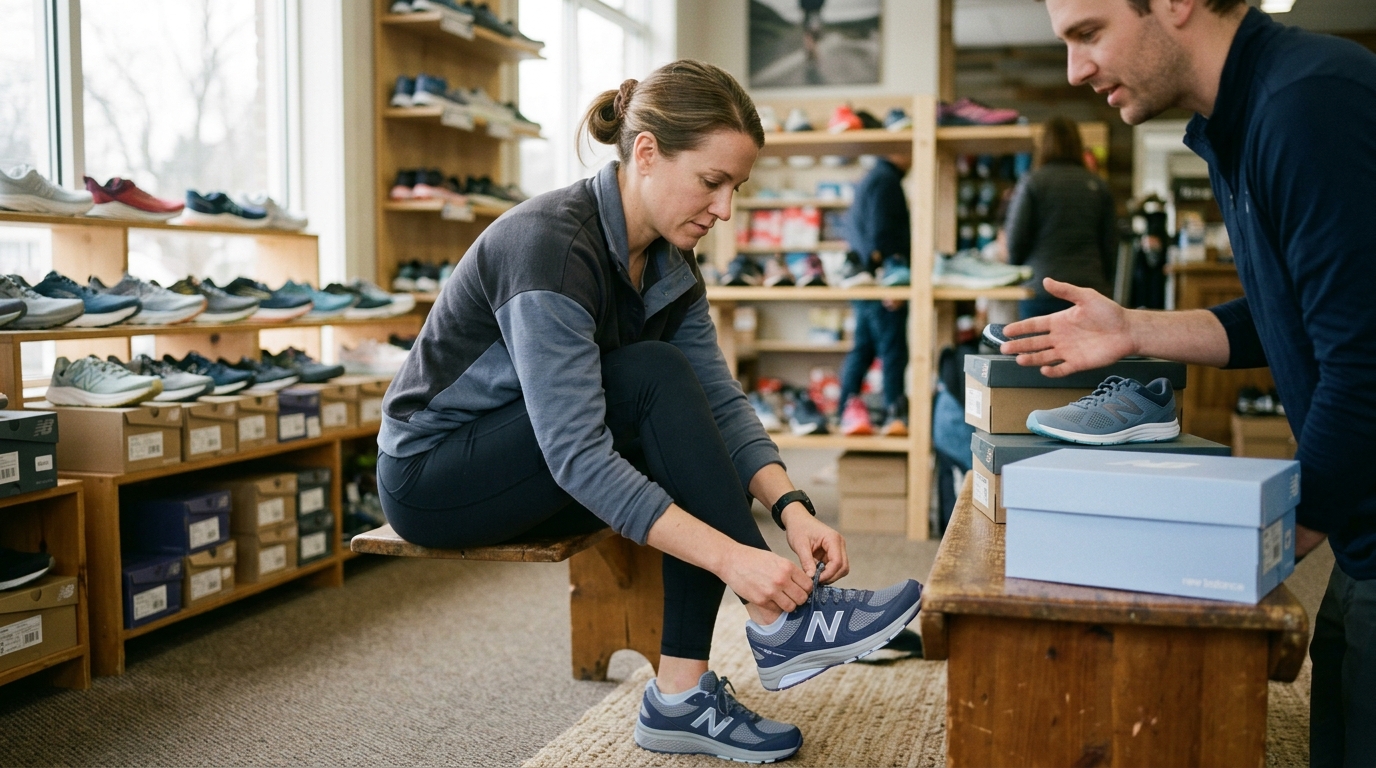
Footwear serves as the direct mechanical link between your body and the ground. The right shoe supports foot stability, improves sensory feedback, and generates sufficient friction to prevent slipping.
A systematic review on footwear for fall prevention identified several structural features that influence walking stability:
A smooth, worn outsole cannot channel away water, mud, or loose grit. Reliable walking shoes feature patterned rubber treads that allow liquid to disperse, maintaining direct rubber-to-surface contact. However, deep lugged soles designed for rugged trails may occasionally catch on uneven pavement lips during neighborhood walks.
High or narrow heels reduce the contact area between the shoe and the ground. They also elevate your center of mass and increase the risk of lateral ankle rolls. A low, broad heel provides a stable base of support during heel strike.
Very thick, soft foam soles may feel comfortable, but they can reduce proprioceptive feedback from the foot sole. Proprioception is your body's ability to sense its position in space. A firm, moderately cushioned midsole allows your nervous system to detect ground angles more accurately.
Slip-on shoes, open-backed sandals, and loose slippers allow the foot to slide inside the shoe. This internal movement disrupts stability and forces your toes to grip the footbed. Secure fastenings, such as laces or adjustable straps, hold your heel firmly against the back of the shoe.
Many people wear footwear that increases their risk of an outdoor slip. In a 2020 observational study of footwear characteristics, 72 percent of participants wore shoes that did not fit properly on both feet, and 90 percent wore shoes with smooth or partially worn outsoles. While this observational study was not designed to prove that worn tread directly caused falls in that group, it demonstrated how common poor footwear choices are in daily life.
Another study examining footwear styles found that walking barefoot or in stocking feet indoors was associated with a higher fall risk compared to wearing athletic shoes. While athletic sneakers generally offer good traction, they are not universally optimal for all outdoor surfaces, such as sheet ice or deep mud. Understanding how foot mechanics interact with movement is an essential part of movement rehabilitation.
Environmental hazards do not exist in isolation. Your internal physical capacity determines how effectively you can absorb a sudden stumble or correct your stride when a surface changes unexpectedly.
Adequate lower body strength allows you to maintain an upright posture and clear the ground with each step. Weakness in the hip abductors can cause the pelvis to drop during single-leg support, leading to lateral instability. Weakness in the anterior tibialis muscle at the front of the shin can cause foot drop, increasing the chance of catching your toes on a sidewalk lip.
Ankle flexibility is equally critical. If your ankle joint is stiff, your foot cannot easily adapt to sloping sidewalks or uneven grass. This stiffness transfers stress upward to the knee and hip, making rapid balance corrections more difficult.
Your brain relies on three primary systems to maintain balance:
Age-related changes, previous injuries, or neurological conditions can diminish signals from these systems. When sensory feedback slows down, your nervous system requires more time to recognize that a slip has started.
Certain prescription and over-the-counter medications alter balance, alertness, and blood pressure regulation. Medications such as sedatives, antidepressants, blood pressure drugs, and muscle relaxants can cause dizziness, lightheadedness, or slowed reflexes.
The CDC STEADI (Stopping Elderly Accidents, Deaths, and Injuries) initiative recommends comprehensive clinical reviews for individuals experiencing balance issues. When multiple medications interact, their cumulative effect on balance can be substantial, even if individual doses are low.
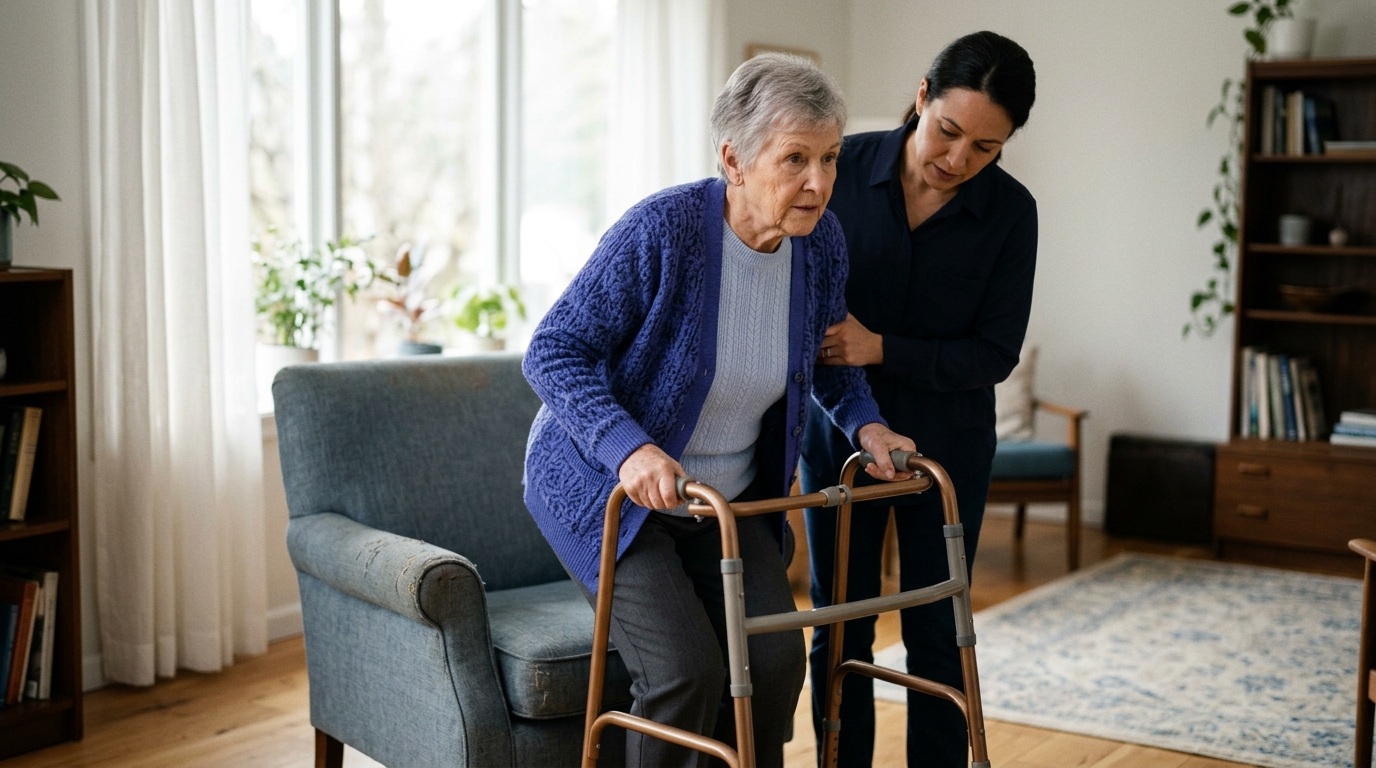
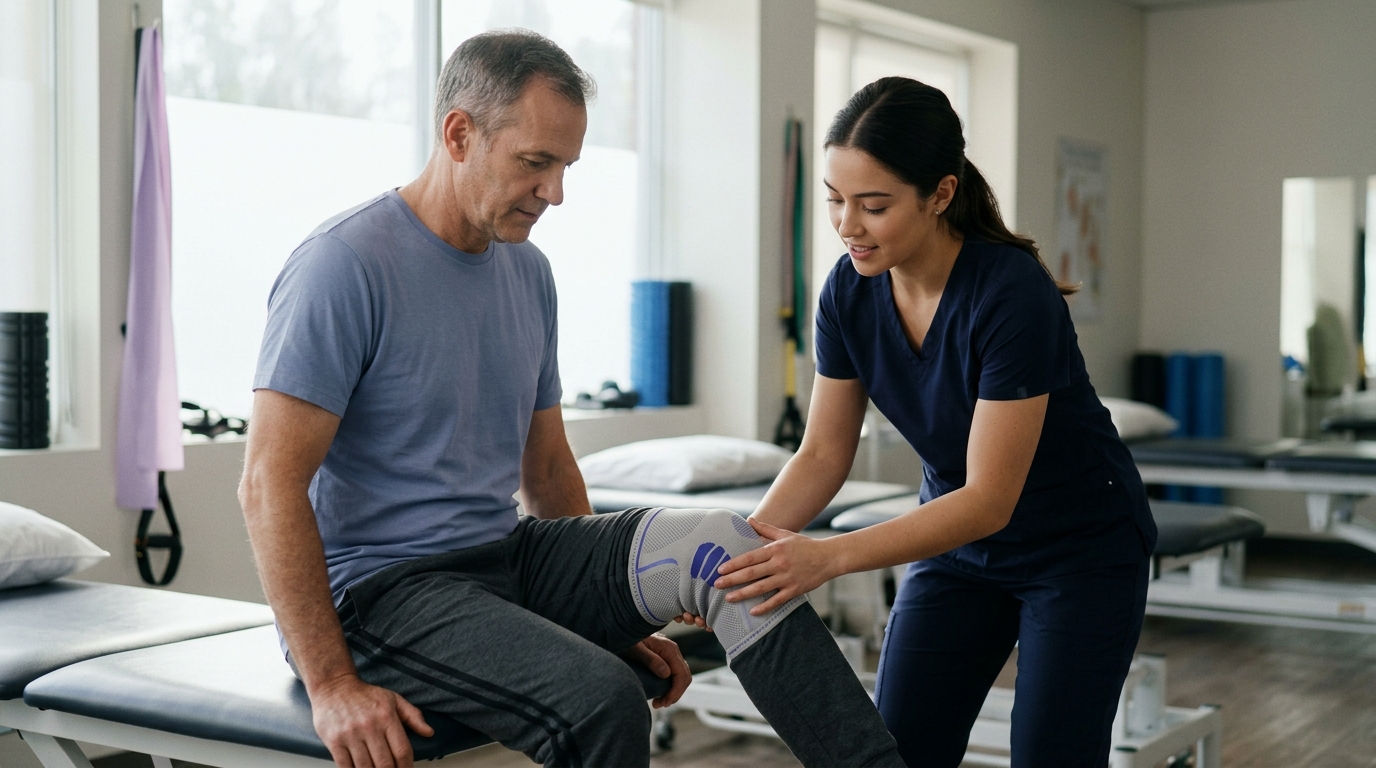
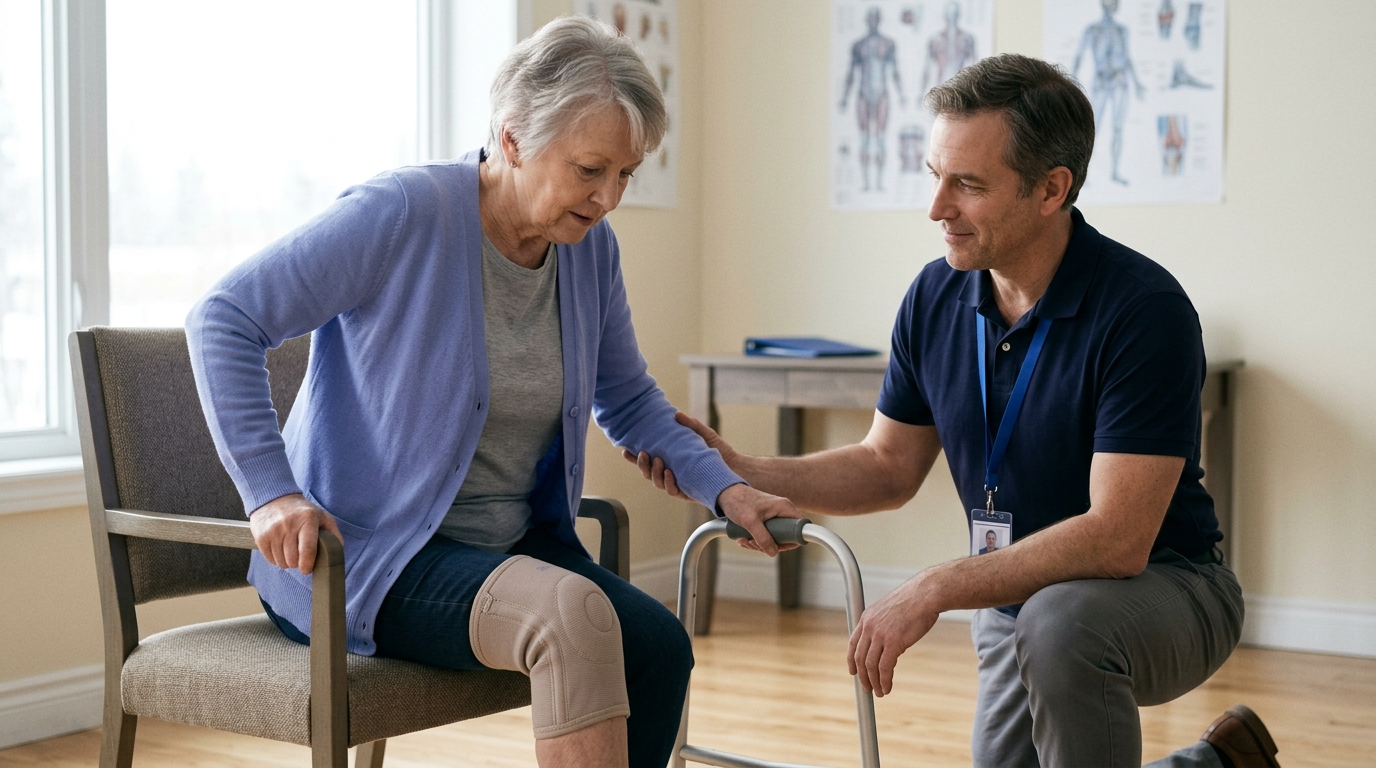
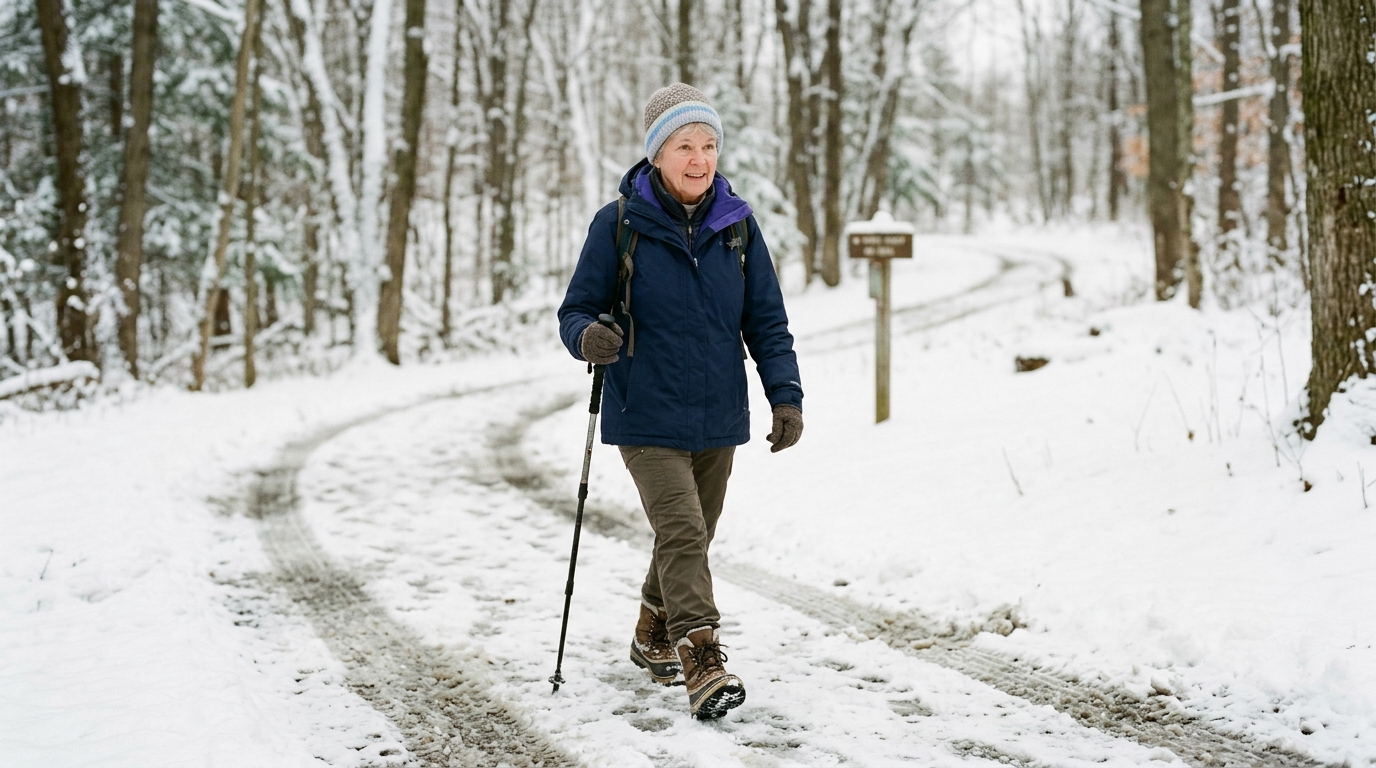
Canes, walking poles, and walkers can provide external stability, reduce joint loading, and widen your base of support. However, using an improperly fitted aid can introduce new risks.
An assistive device that is too tall forces your shoulder into an elevated, tense position. A device that is too short causes forward trunk flexion, shifting your center of gravity too far forward. The 2026 public-space consensus paper noted that the inadequate or improper use of assistive devices is a recognized concern in outdoor environments. An evaluation by a physical therapist ensures that your aid is adjusted to the correct height and matched to your physical needs.
Managing outdoor fall risk requires practical, daily decision-making. By applying the "Notice, Assess, Adapt, and Recover" framework, you can evaluate conditions systematically and adjust your routine as needed.
Before starting an outdoor walk, take two minutes to complete a quick readiness check:
Has it rained, snowed, or frozen recently? Are leaves or loose debris covering the path?
Is there enough natural daylight? Will you return before dusk? Do you need to bring single-vision distance glasses?
Are there active construction zones, broken sidewalks, or steep hills along your planned path? Is there a smoother, well-lit alternative?
How do you feel physically today? Are you rested, steady, and alert, or are you experiencing joint stiffness, fatigue, or medication-related dizziness?
Are your shoes securely fastened? Is the tread clean and unworn? Are they suited to today's weather?
If conditions appear hazardous or you feel unusually unsteady, consider adjusting your plans. You might choose a paved park path instead of a rough neighborhood loop, walk with a partner, or substitute an indoor walking routine.
While walking, use active scanning techniques to anticipate changes in your path:
Maintain a visual scanning pattern that alternates between looking 10 to 15 feet ahead for upcoming obstacles and checking the immediate path 3 to 5 feet in front of your feet.
When stepping onto slick or uncertain surfaces, shorten your stride slightly and slow your walking speed. Keeping your feet closer to your center of mass helps maintain vertical ground reaction forces, reducing the risk of a forward heel slip.
Pedestrian countdown signals can tempt walkers to hurry across uneven streets. Rushing increases stride length and limits visual scanning, making trips more likely. Wait for the next walk cycle if you need more time.
Carrying heavy bags or keeping hands in pockets restricts your natural arm swing. Arm swing contributes to balance recovery during a stumble. Use a small backpack or cross-body bag to keep your hands free.
Urban construction frequently reroutes pedestrians onto temporary ramps, plywood boards, or uneven road shoulders. The 2026 public-space consensus report highlighted temporary worksite detours as significant community hazards.
When encountering a poorly maintained construction detour:
Several common assumptions about outdoor fall prevention can lead walkers to make counterproductive choices.
When people experience a stumble or hear about a peer falling, their natural reaction is often to limit outdoor walking. While avoiding dangerous weather is sensible, withdrawing from regular walking altogether leads to muscle weakness, joint stiffness, and reduced cardiovascular endurance.
Both the World Health Organization (WHO) and the UK National Institute for Health and Care Excellence (NICE) recommend structured, progressive exercise to prevent falls. Physical activity preserves the strength and motor skills needed to navigate outdoor environments safely. The goal is to manage exposure to severe hazards while maintaining regular movement.
Many walkers assume that wearing heavy hiking boots or aggressive trail shoes makes them immune to slips. While tread depth matters, rubber compound hardness and surface contact area are equally important.
Hard rubber outsoles designed for mud can become stiff and slick on cold, wet concrete or polished granite. Furthermore, aggressive tread can catch on raised sidewalk lips if you have low foot clearance. Selecting shoes with flexible, slip-resistant rubber compounds provides better everyday performance on paved surfaces.
Walking a daily route creates a sense of routine comfort. Walkers often assume they know every crack, curb, and driveway along their path.
However, environmental conditions change continuously. A neighbor may run a garden hose across the path, overnight frost may coat a shaded walkway, or utility crews may leave temporary gravel
. Research shows that many falls occur on familiar neighborhood streets precisely because walkers reduce active scanning.
It is easy to categorize all non-smooth surfaces as equally dangerous. However, the 2023 systematic review on surface measures noted that different ground textures demand distinct motor responses.
Walking on a consistent, dry dirt trail challenges lateral ankle stability, which can help build balance resilience over time. In contrast, an abrupt two-inch vertical crack in a concrete slab presents an acute trip hazard that demands immediate avoidance. Distinguishing between manageable natural variation and severe structural hazards helps you select routes suited to your current ability.
The following illustrative examples show how different people apply the "Notice, Assess, Adapt, and Recover" framework to manage everyday outdoor challenges.
A 62-year-old walker is completing a morning loop around the neighborhood. After turning a corner onto a tree-lined street, the walker notices a wide swath of wet, decaying leaves covering an entire concrete slab.
Application: The walker notices the surface change and pauses to assess the situation. Recognizing that wet leaves can hide structural cracks and reduce shoe traction, the walker decides not to step directly through the pile. Instead, the walker steps carefully onto the adjacent dry grass strip, navigates around the patch, and resumes the paved path once the concrete is clear.
A 71-year-old individual enjoys an evening walk before dinner. As twilight approaches, streetlights begin to cast long, overlapping shadows across the sidewalk. The walker wears progressive multifocal glasses and notices that judging curb heights is becoming difficult.
Application: The walker assesses the reduced contrast and visual blur through the lower lens segment. To adapt, the walker selects a well-lit main avenue with continuous sidewalks rather than navigating dim residential side streets. The walker also slows their pace slightly, focusing visual attention several steps ahead to spot curb cuts and driveway slopes.
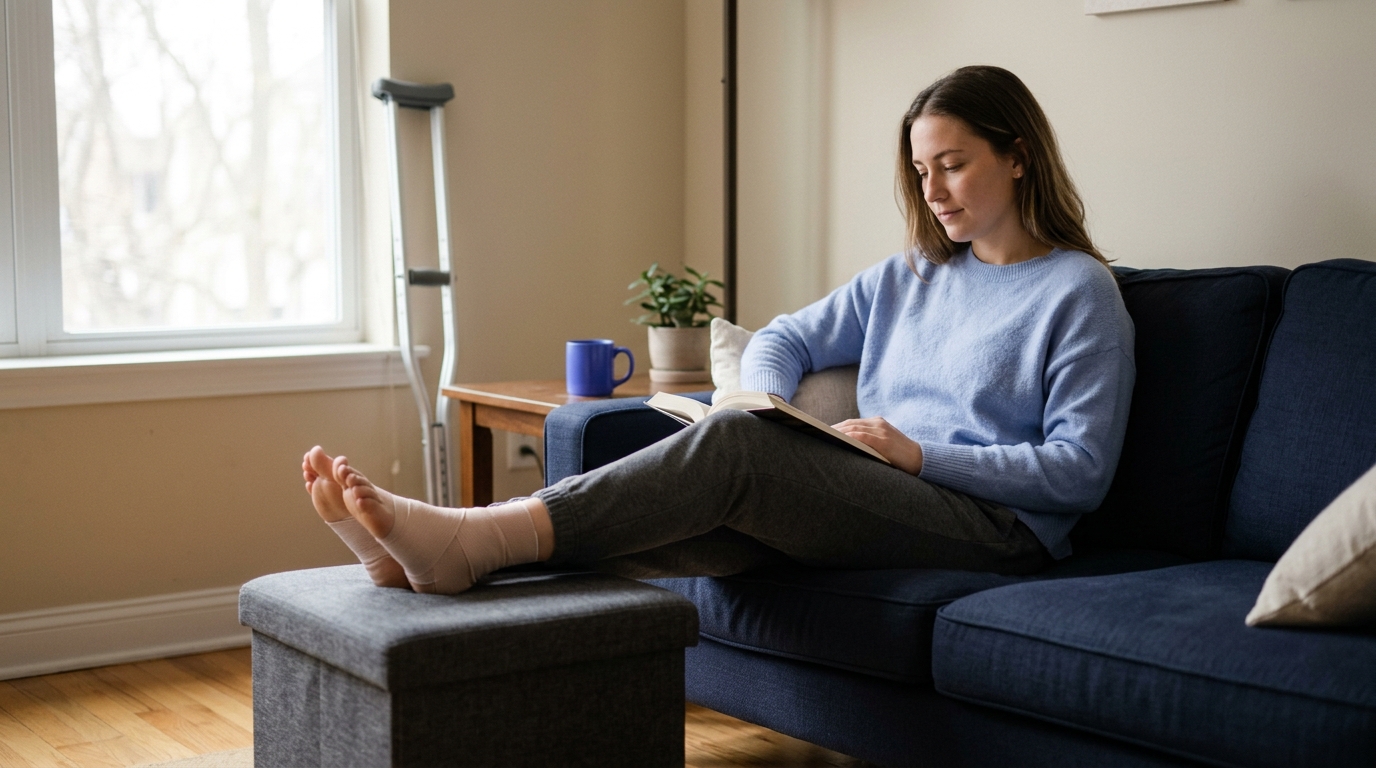
A 58-year-old walker recovering from ankle surgery encounters a sidewalk closure. A temporary sign directs pedestrians down an unpaved, gravel-strewn incline toward a street crossing.
Application: The walker evaluates their current ankle strength and balance against the loose gravel surface. Concluding that the unstable slope presents an unnecessary risk for an unhealed joint, the walker chooses to turn around, walk half a block back to an established crosswalk, and cross the street on a level surface. You can learn more about joint mechanics during recovery in our guide to mobility and movement principles.
A 68-year-old walker notices that over the past two months, their toe has caught the edge of curb cuts three times, resulting in close-call stumbles. The walker checks their shoes and finds that the outsoles are in good condition.
Application: Instead of assuming these stumbles are harmless, the walker recognizes a pattern of reduced toe clearance. The walker uses the recovery step to schedule an appointment with a physical therapist for a gait and balance assessment. The therapist identifies mild weakness in the anterior tibialis muscle and prescribes targeted strengthening exercises to improve foot lift during walking.
While managing immediate environmental hazards is essential, maintaining your body's physical capacity provides long-term protection against outdoor falls.
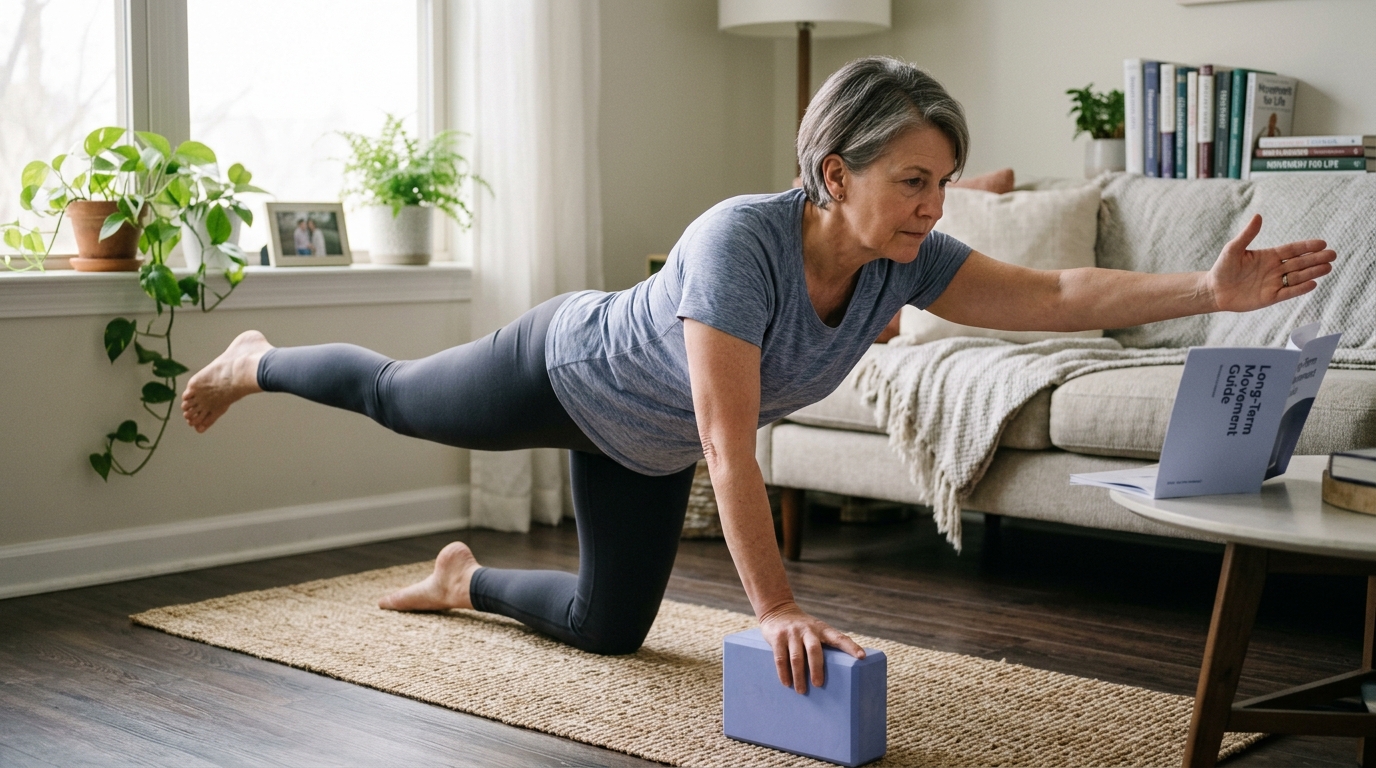
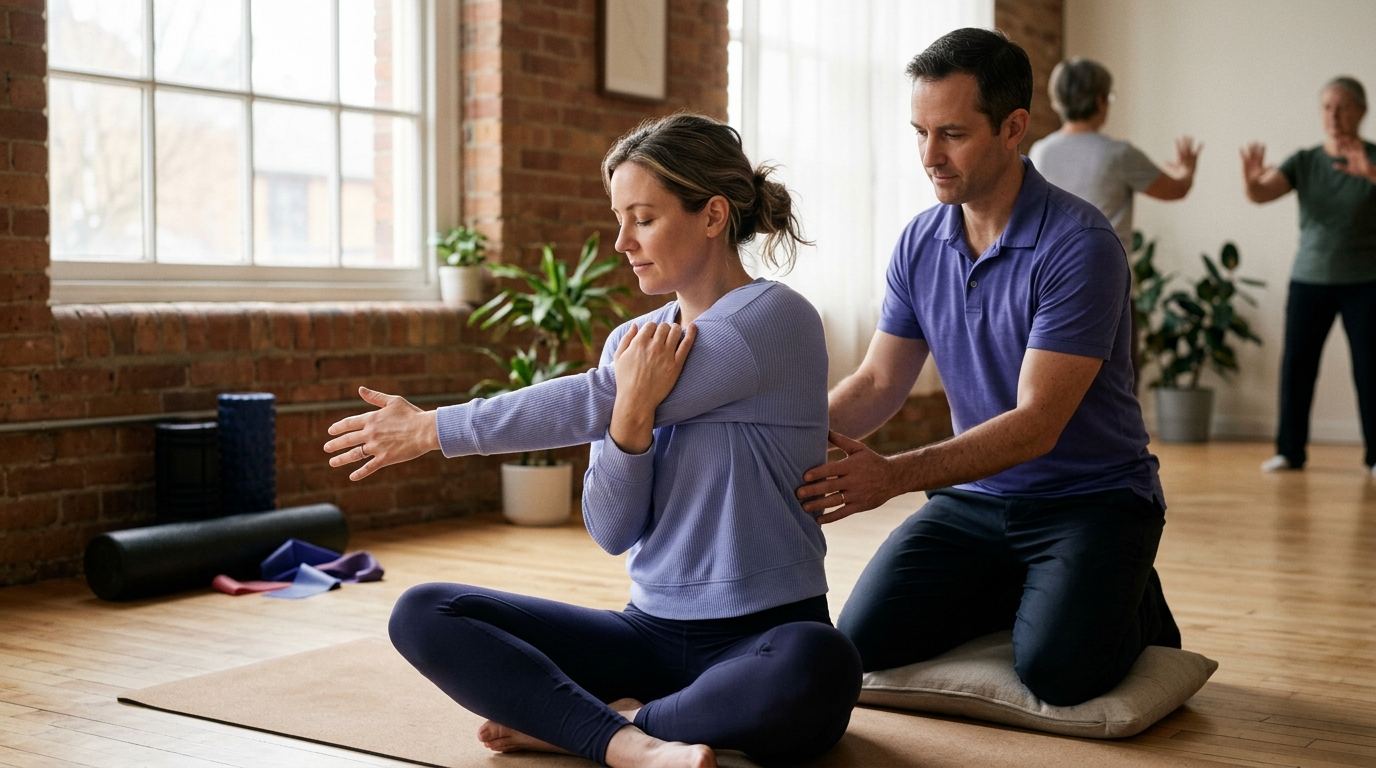
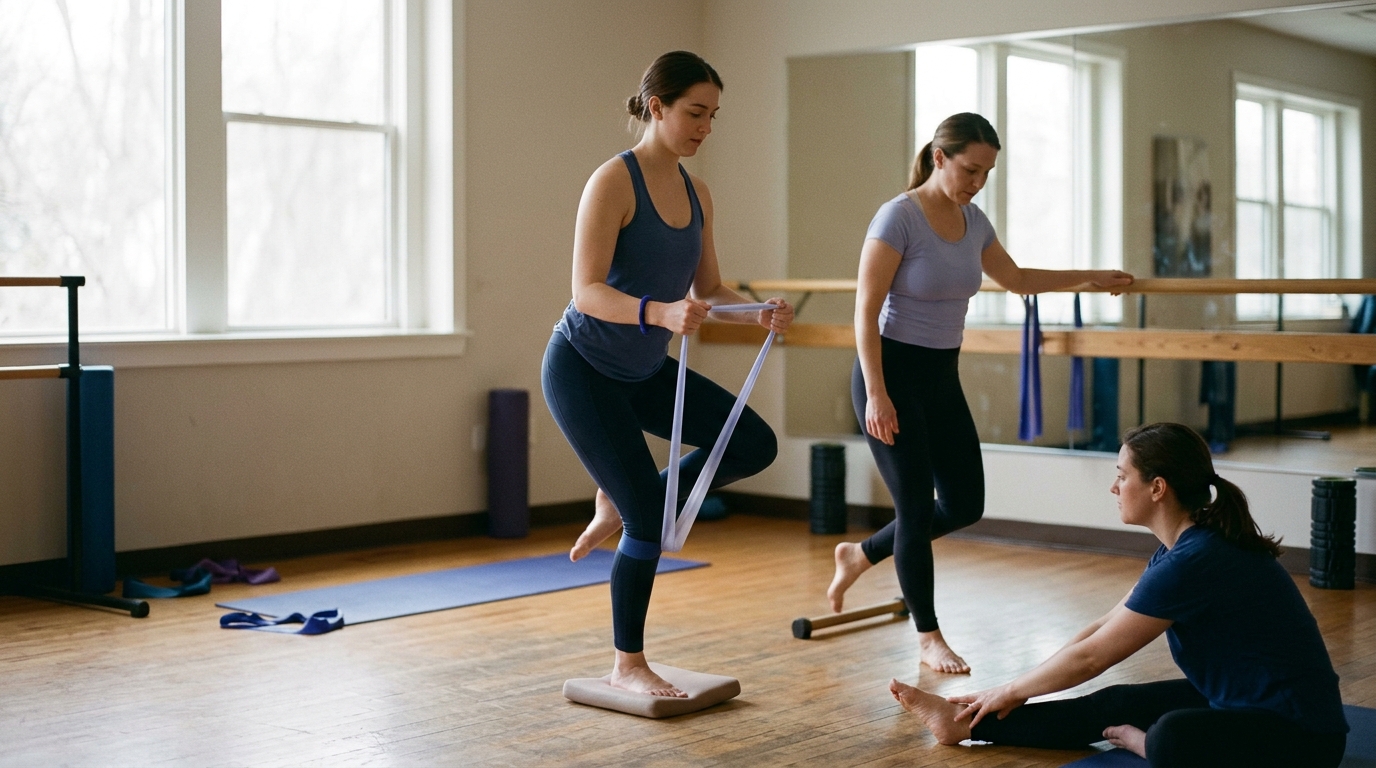
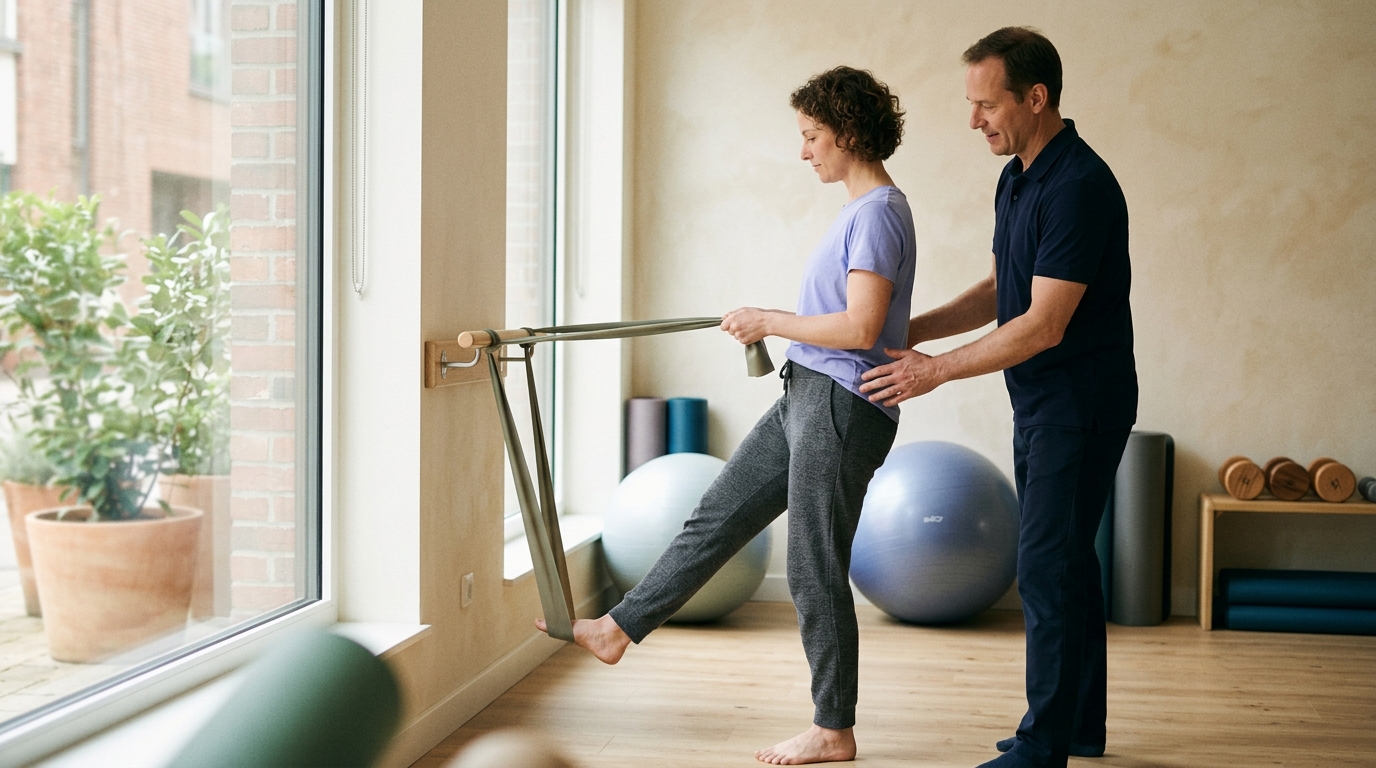
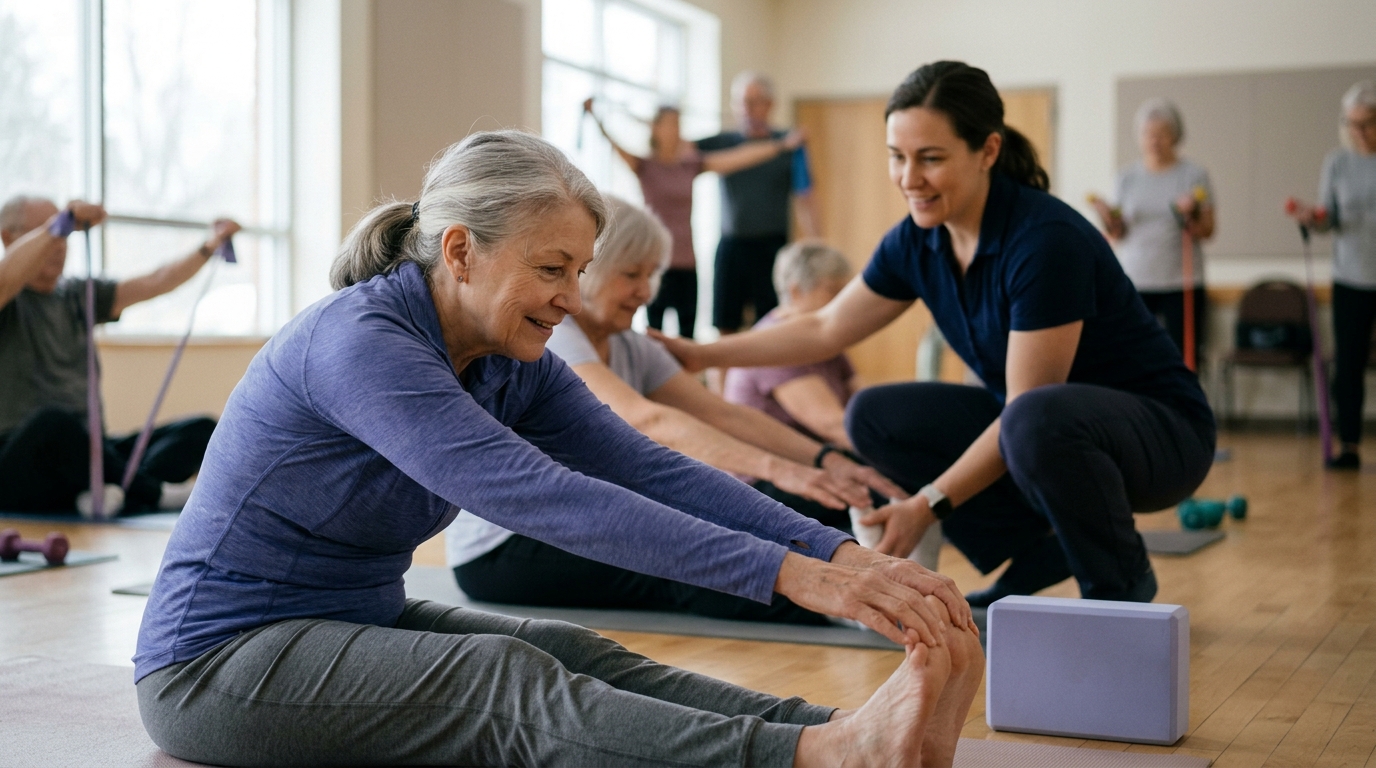
Guidelines from NICE (NG249) recommend structured, progressive exercise programs for individuals at elevated risk of falls. Effective programs focus on several core physical components:
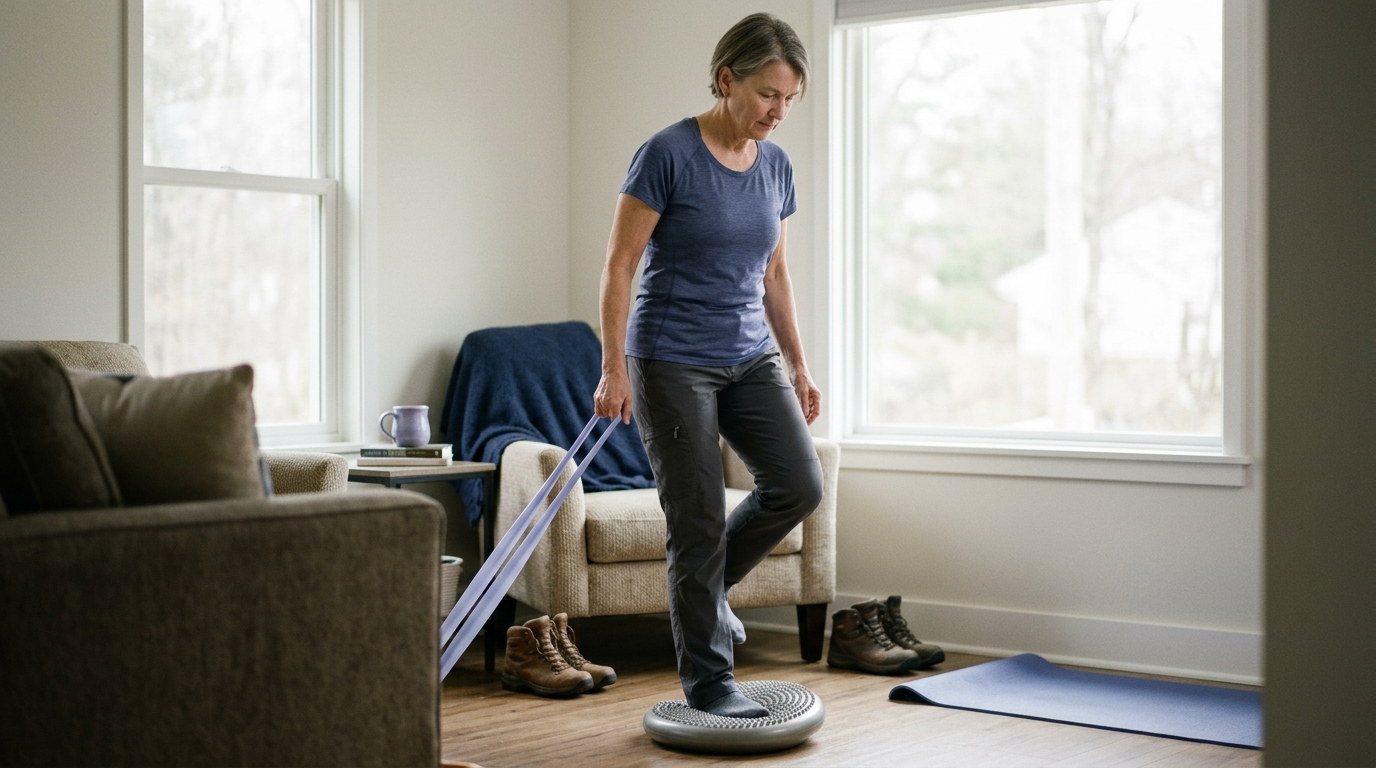
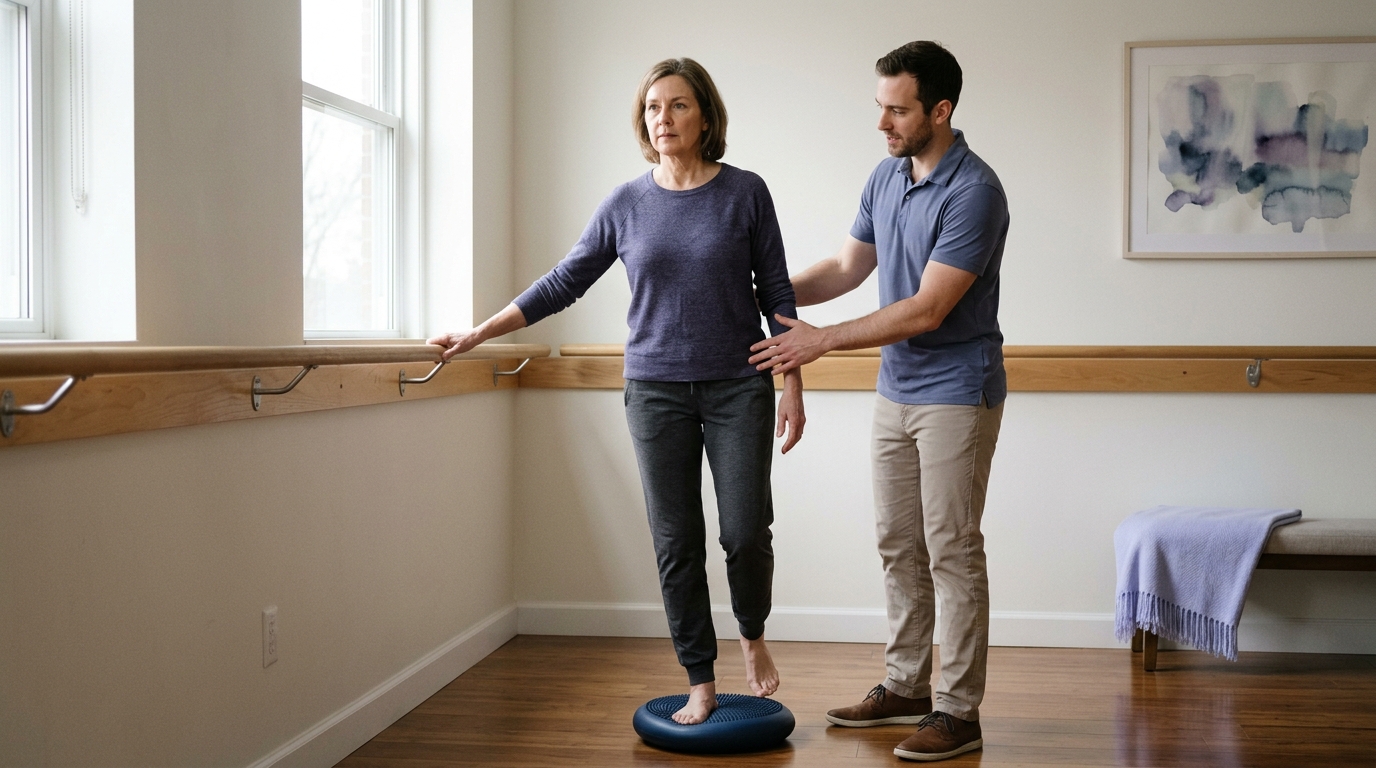
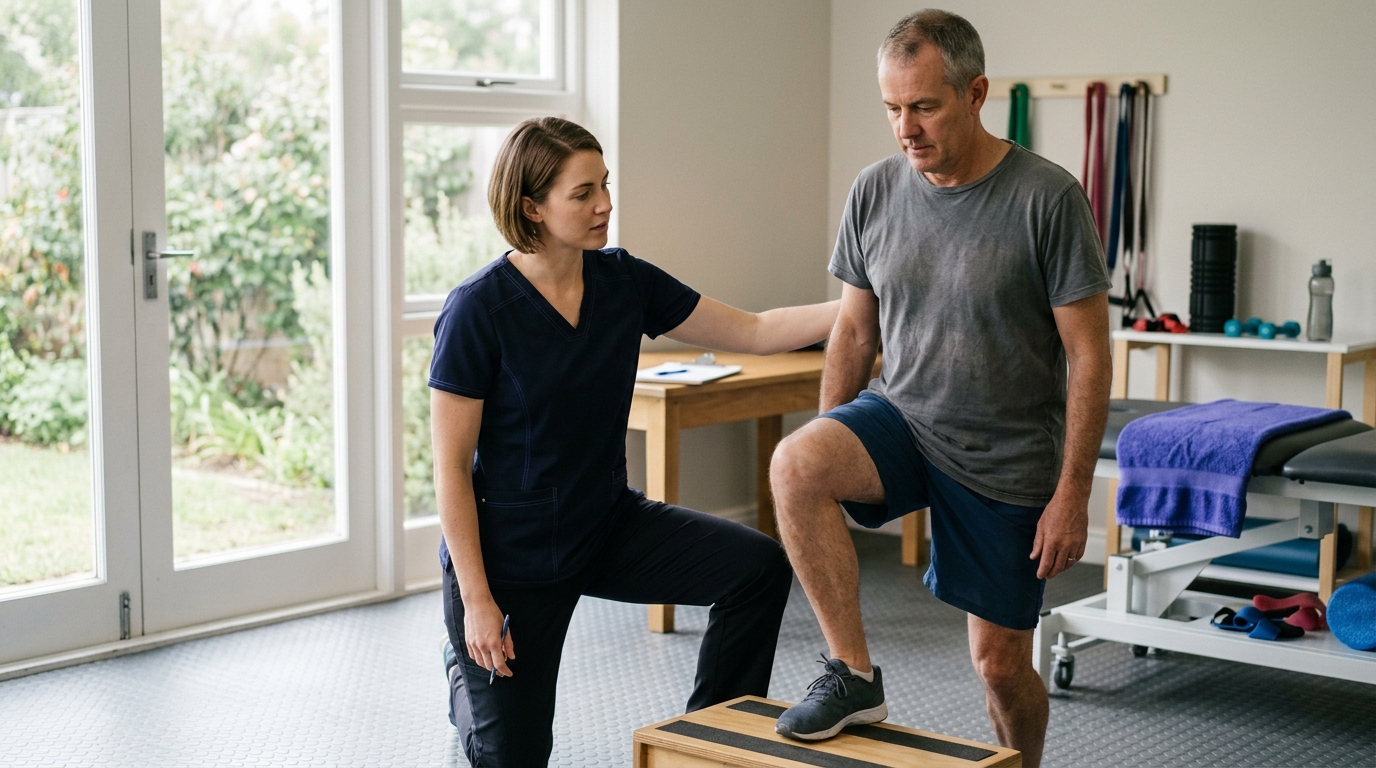
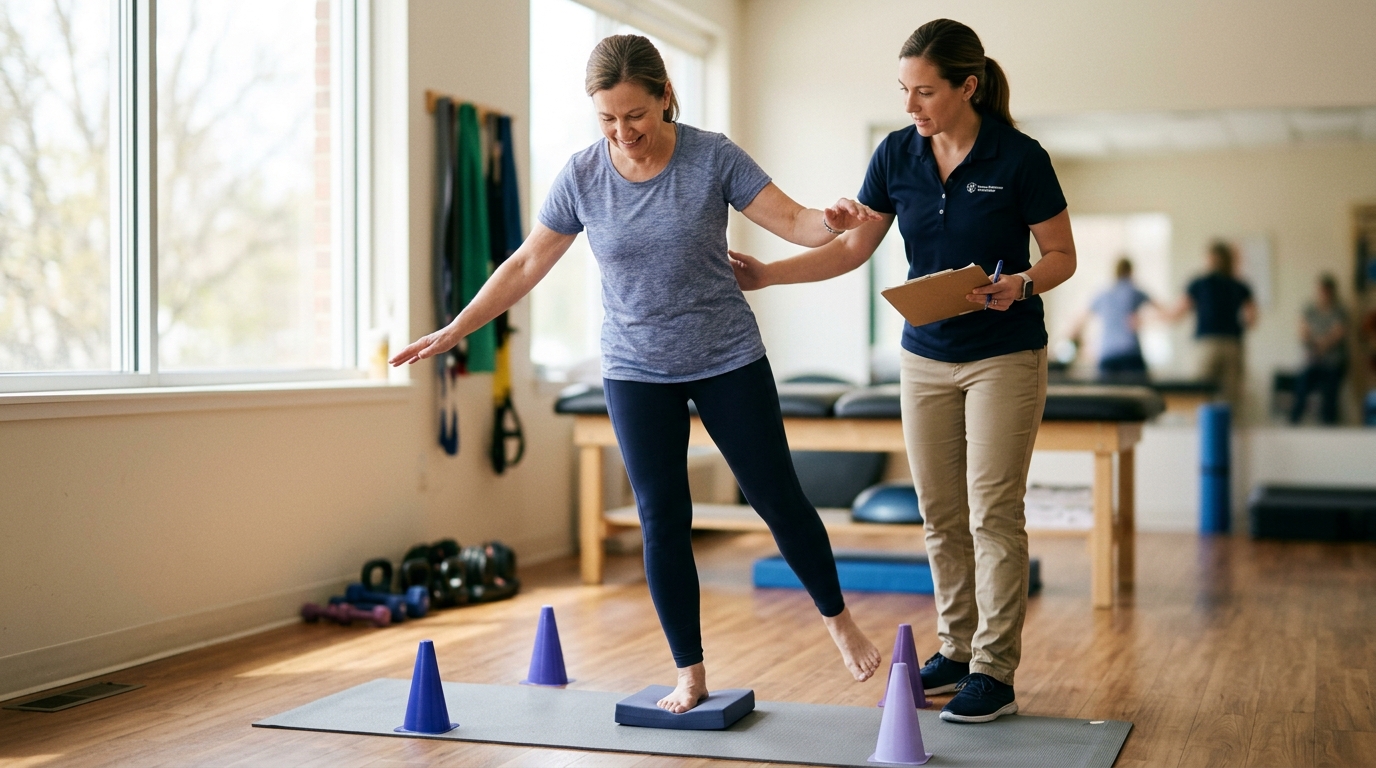
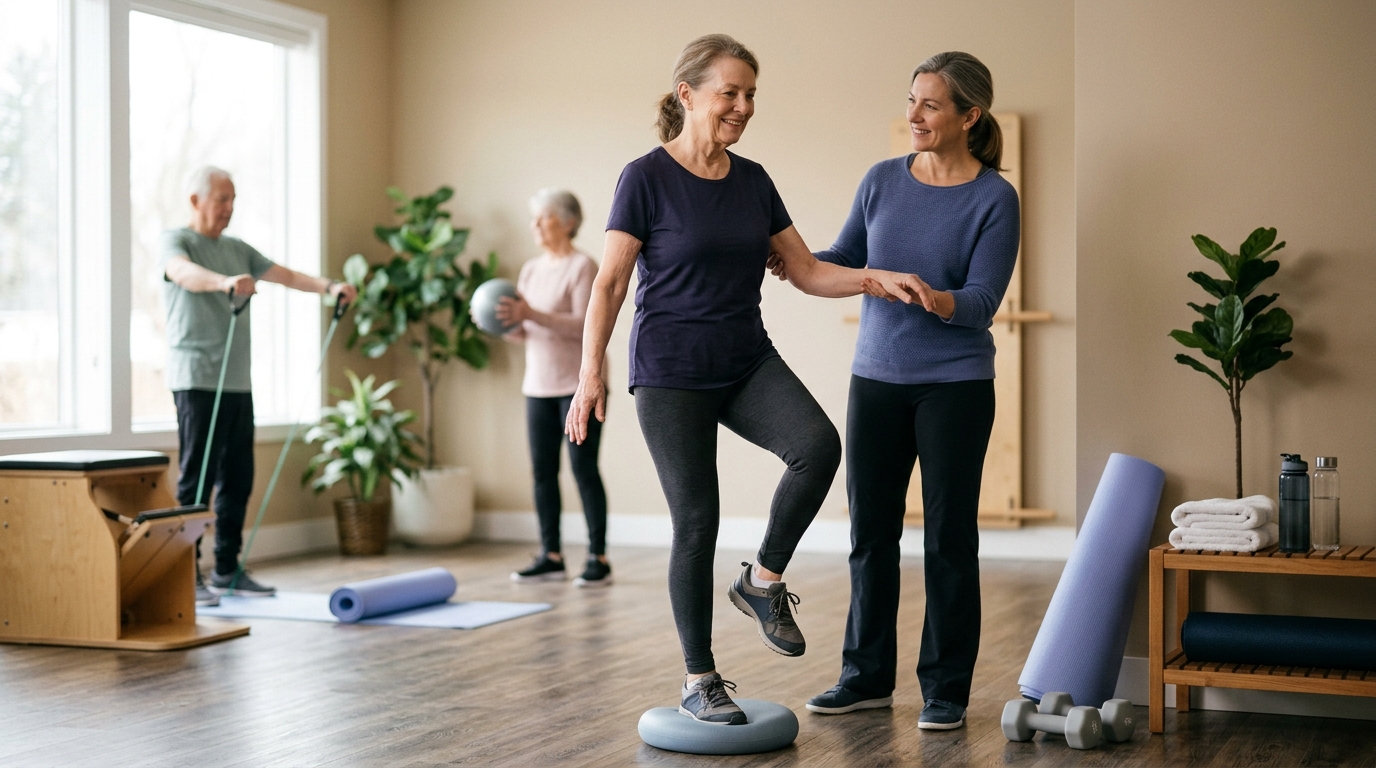
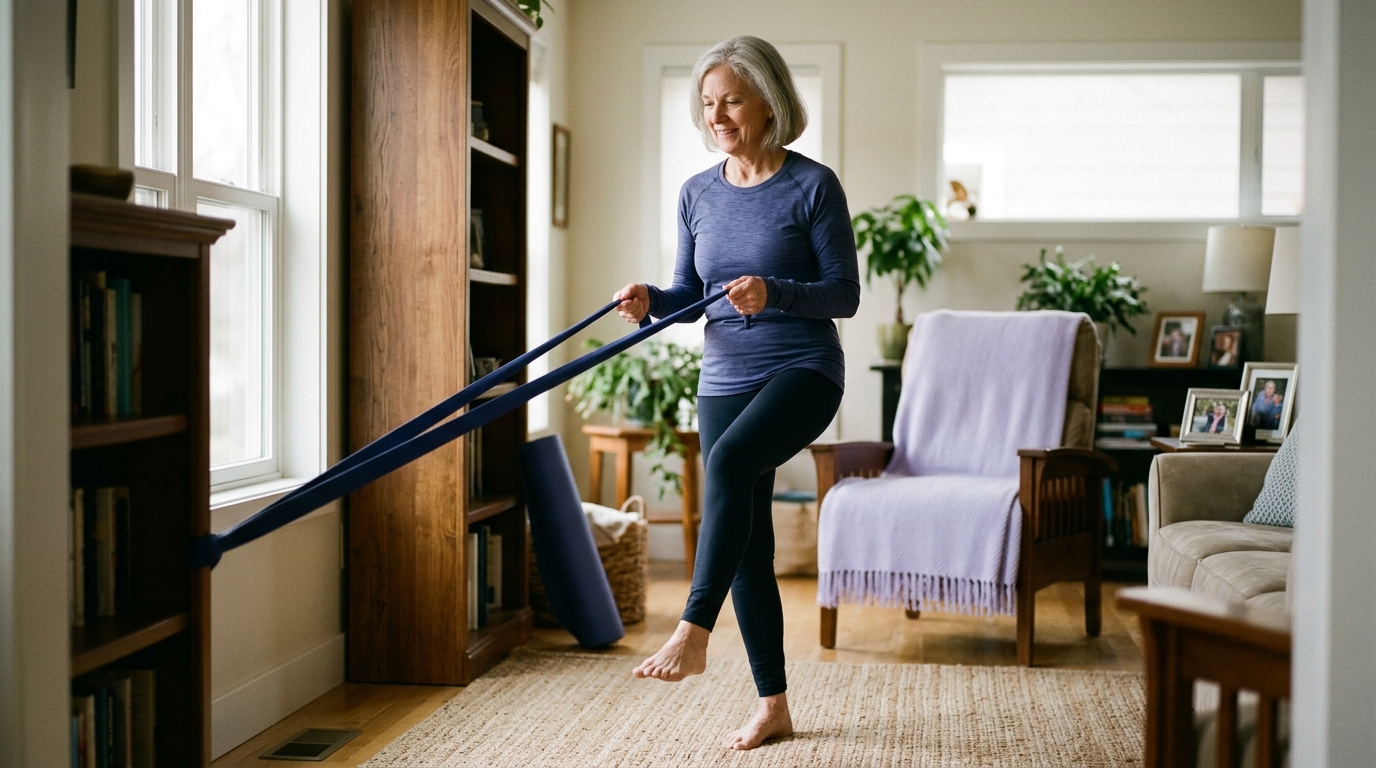
Challenging your balance forces your nervous system to refine postural corrections. Exercises that reduce your base of support, such as tandem standing (one foot directly in front of the other) or single-leg balance, improve static stability. Dynamic balance exercises, such as stepping over low hurdles or walking in curved paths, translate directly to outdoor walking.
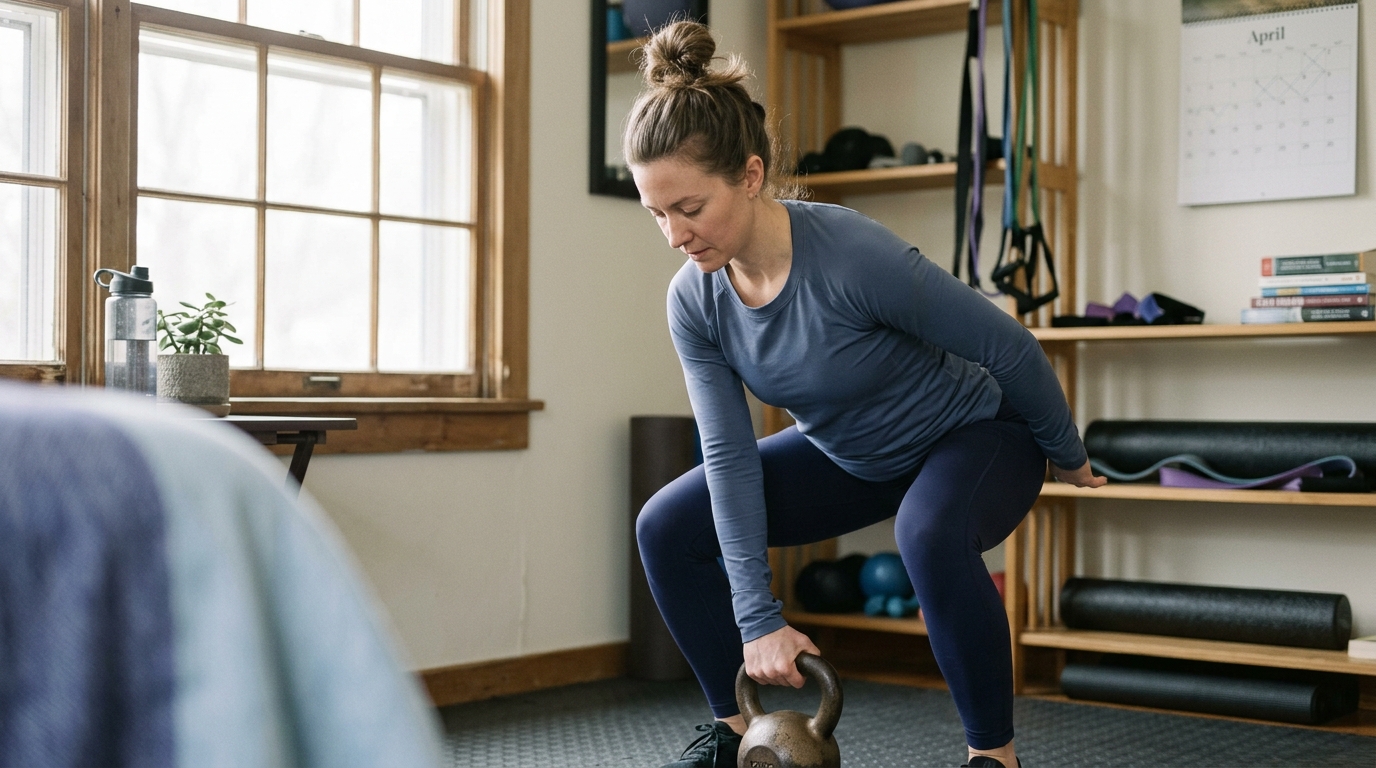
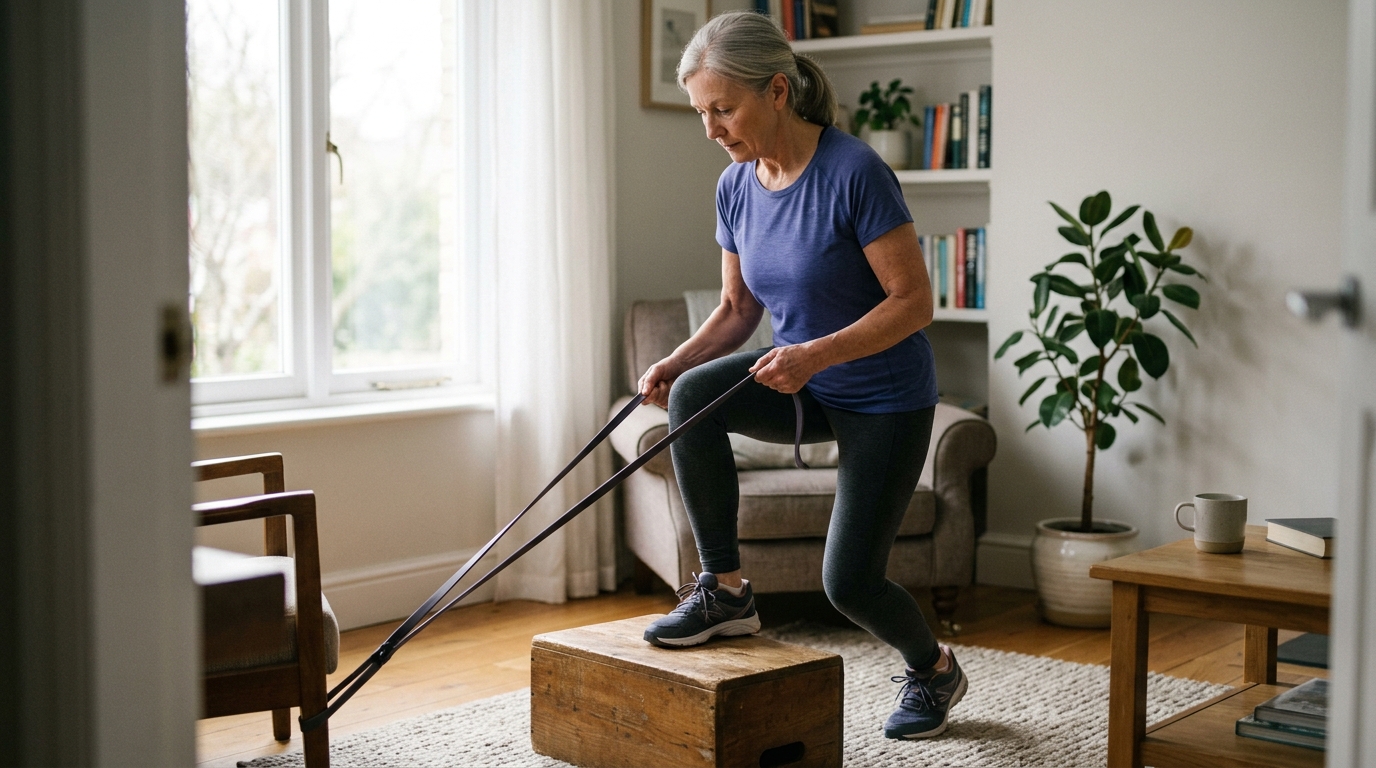
Maintaining strength in your quadriceps, gluteal muscles, hamstrings, and calves supports joint stability and step clearance. Strength training allows you to generate rapid force when you need to take a quick recovery step to prevent a fall.
The World Health Organization highlights Tai Chi as an effective intervention for older adults. Tai Chi emphasizes slow, deliberate weight shifts, rotational trunk movements, and continuous body awareness. These movement patterns strengthen lower-limb muscles and enhance joint position awareness.
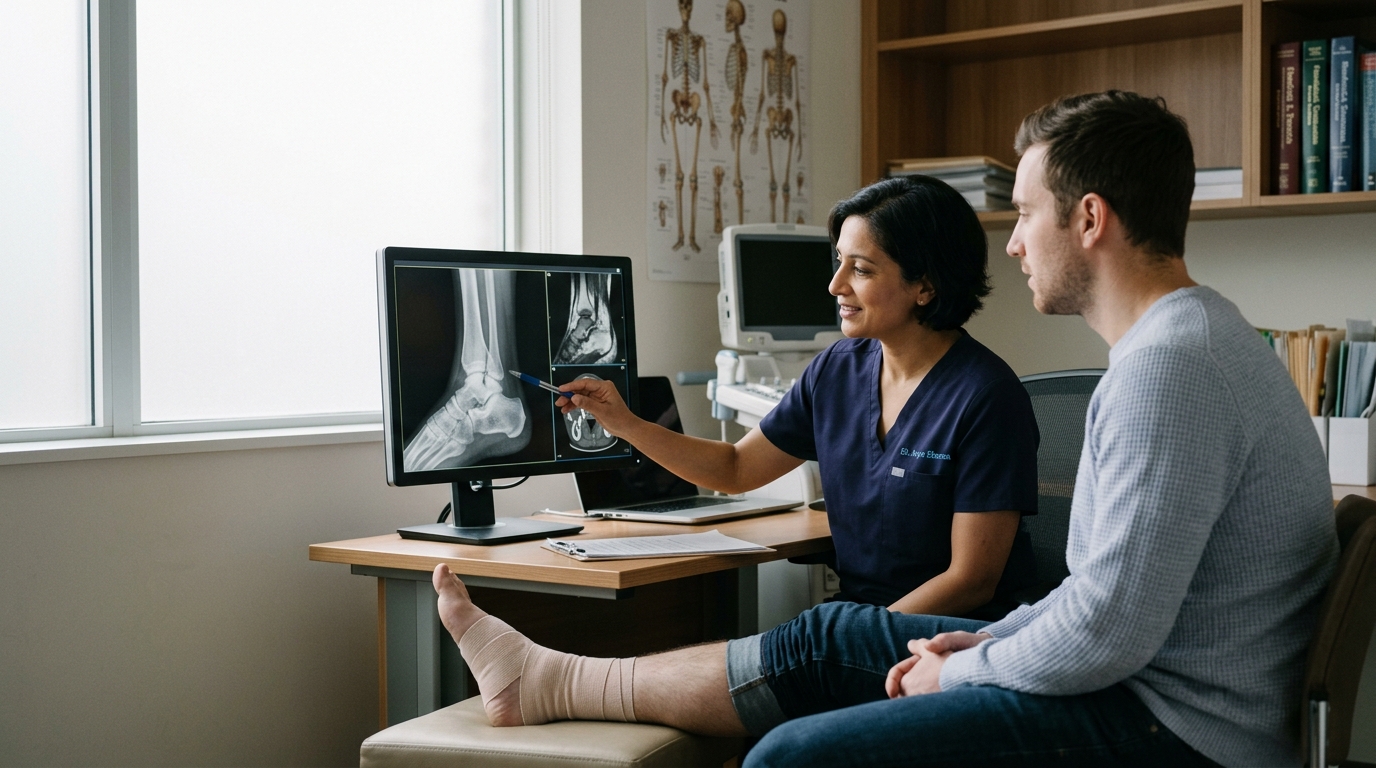
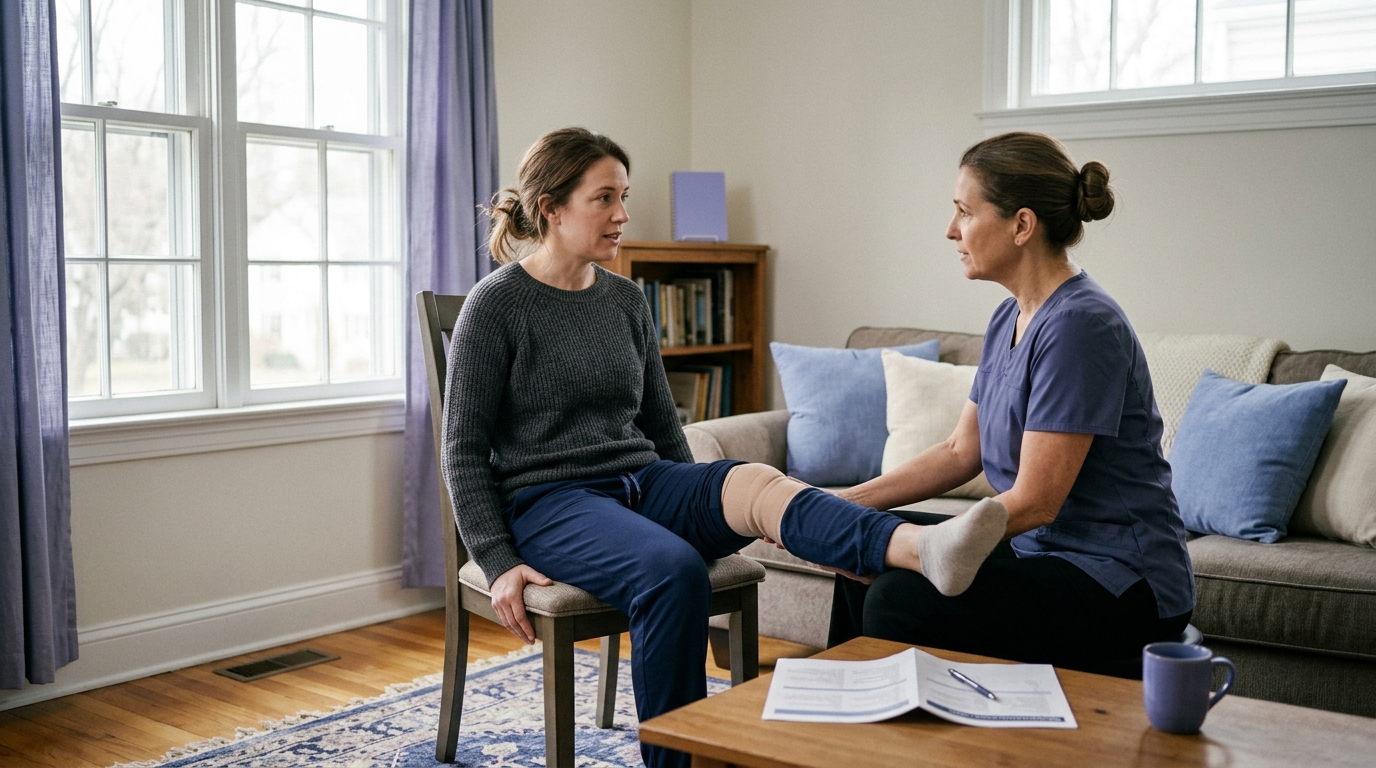
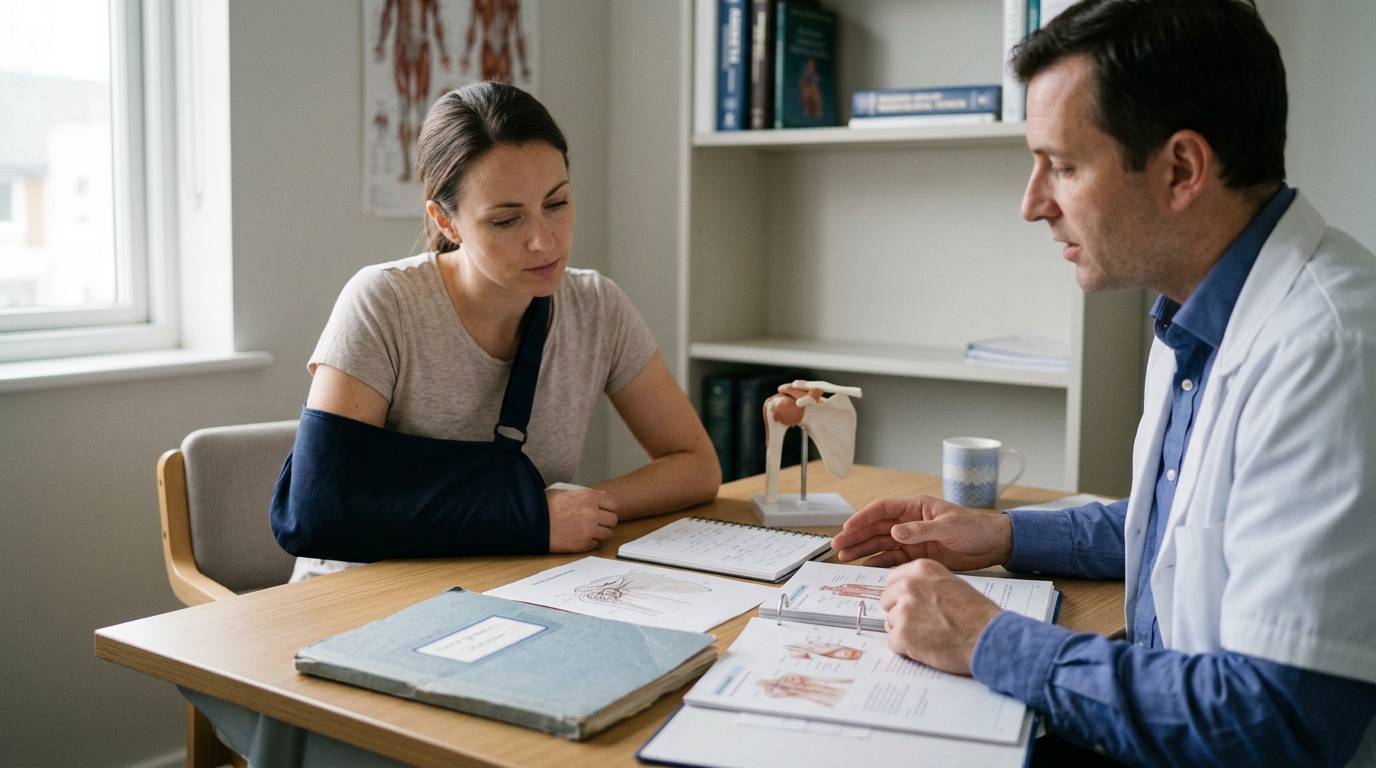
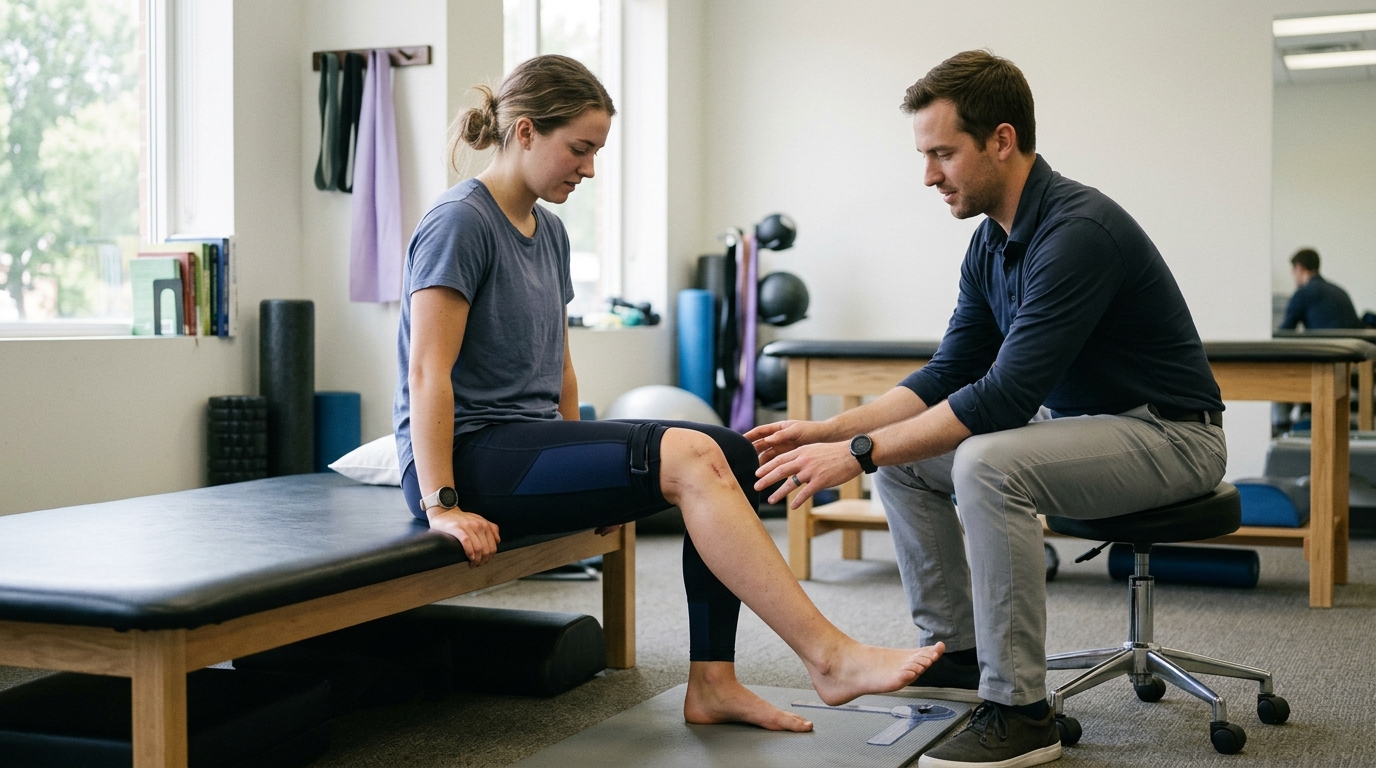
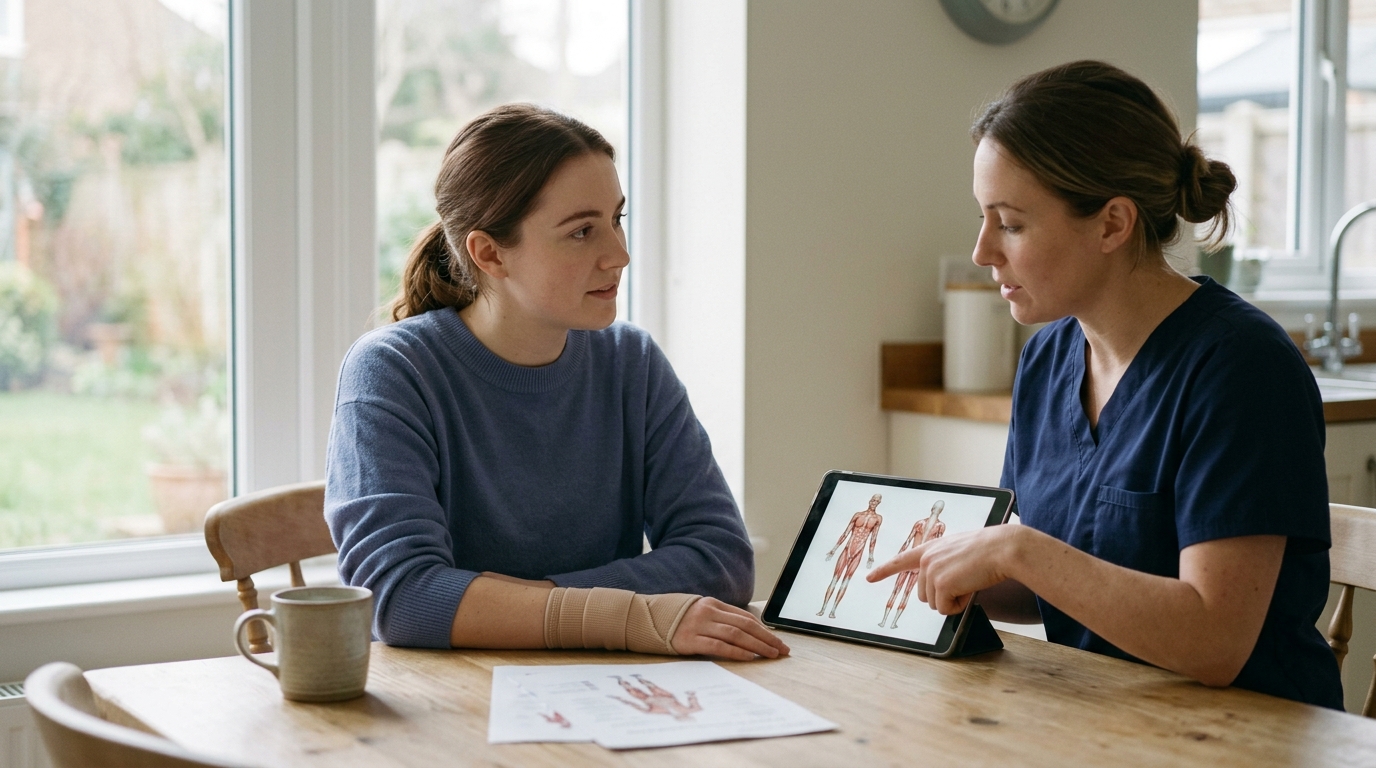
If you have experienced a fall, frequent near-falls, or feel unsteady when walking outdoors, consulting a healthcare professional is an important next step. The CDC STEADI guidelines emphasize that a comprehensive evaluation can identify modifiable risk factors before an injurious fall occurs.
Consider bringing the following specific questions to your next appointment:
Outdoor walking provides substantial physical, mental, and social health benefits. While outdoor environments present unavoidable hazards like broken pavement, wet leaves, and changing light, you can manage these challenges through thoughtful preparation and route awareness.
Fall risk is an ongoing interaction between your personal physical capacity, the walking task, and the environment. By paying attention to surface conditions, choosing supportive footwear, adjusting your walking pace, and building lower-body strength, you can navigate changing outdoor conditions with confidence and realistic expectations.
When to revisit this resource: Review these principles whenever you change your walking footwear, begin recovering from an orthopedic setback, experience a seasonal weather transition, or notice changes in your walking steadiness.
Managing outdoor fall risk is an active, ongoing practice of matching your daily movement choices to the conditions directly beneath your feet.

Use ReboundBody resources to understand common recovery stages, rehab terms, movement limits and strength rebuilding. Each guide is designed to make a complex comeback easier to understand.


Read practical guidance on injury recovery, rehabilitation, mobility and rebuilding strength as you work your way back to activity.
Explore Resources